Politics
CPD’s Increasing Use of Force Threatens Consent Decree Push: Illinois Attorney General
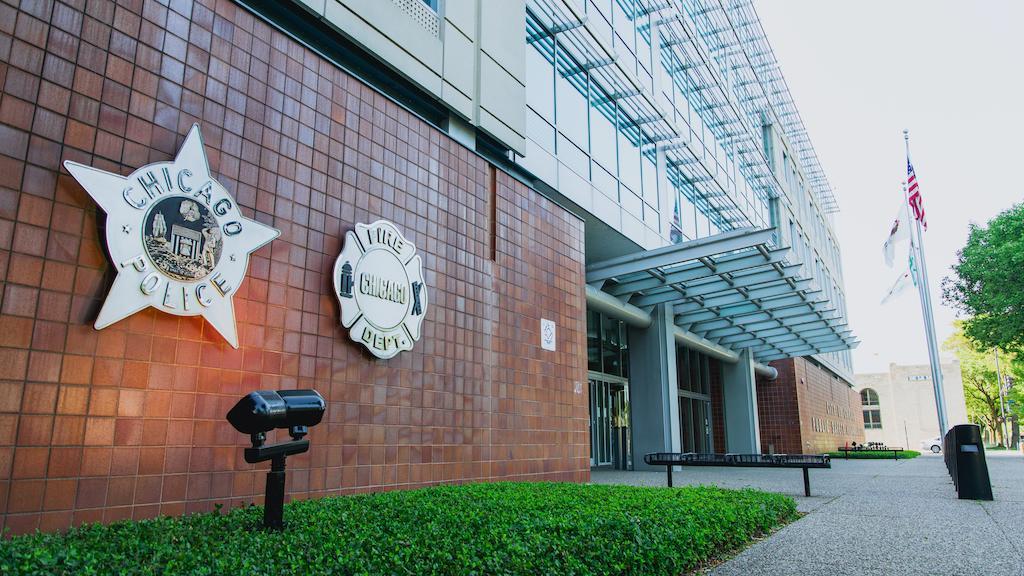 (Michael Izquierdo / WTTW News)
The significant increase in the number of times Chicago police officers have used force against Chicagoans since 2022 threatens the effort to reform the Chicago Police Department, Illinois Attorney General Kwame Raoul’s office told a federal judge on Tuesday.
The coalition of police reform groups, which forced the city to agree to federal court oversight, told U.S. District Judge Rebecca Pallmeyer in September that the number of times officers have shot, tased, struck and choked a member of the public violates the consent decree, the federal court order requiring officers to stop routinely violating Black and Latino residents’ constitutional rights.
Assistant Attorney General Mike Tresnowski told Pallmeyer that Raoul’s office shares the coalition’s concerns and said immediate steps must be taken to ensure that the reform push that has cost Chicago taxpayers hundreds of millions of dollars results in meaningful change in the lives of ordinary Chicagoans.
It is unclear whether the nearly seven years CPD has spent developing a system to train officers on when, and how, they are allowed to use force against Chicagoans, and then review those decisions, has resulted in meaningful change on Chicago’s streets, Tresnowski said.
CPD is now at a “crucial point in the consent decree process,” Tresnowski said during a hearing Tuesday about the city’s progress in complying with the consent decree, which requires CPD to overhaul the way it trains, supervises and disciplines officers.
“Now, all eyes turn towards the facts on the ground,” Tresnowski said. “The crucial question is, have these policies, these trainings, these systems, resulted in measurable change on the ground? Has CPD’s sound policy improved its practices? This is a question that sits at the forefront of all the party’s minds.”
CPD officers so far this year have shot 17 people, killing eight, more than in all of last year, records show. In 2024, CPD officers shot 12 people, killing six, records show.
Approximately an hour before the hearing began, officers shot a man after a foot chase in Washington Park on the South Side. The man, who officers attempted to stop because they believed he had a gun, “sustained a graze wound to the abdomen and the right arm” and was initially reported in good condition, according to a CPD statement.
“The use of deadly force has increased from 2022 to 2024, and CPD is pointing guns at community members more often,” Tresnowski told the judge. “These are increases based on CPD’s own data collection. These are not the patterns and trends we would expect from a department that’s approaching full compliance with the use of force section of the consent decree.”
CPD officers used the highest level of force against a member of the public — including a gunshot, chokehold or a baton strike to the head or neck — 84 times in 2024, more than double the number of times officers used the highest level of force in 2023, according to CPD data.
Tresnowski said the attorney general’s office was also alarmed by the results of the third community survey from the monitoring team charged with enforcing the consent decree, which will mark its seventh birthday in February.
Even though the consent decree requires CPD officers to use de-escalation techniques to reduce the need for force whenever safe and feasible, the number of Chicagoans who said CPD officers were doing a good job de-escalating tense situations dropped 10% between 2022 and 2024, according to the survey.
“A department that is de-escalating tense situations effectively would not show the increases we’re seeing in uses of force in deadly force, and incidents where officers point weapons at people,” Tresnowski said. “The trends are not heading in the right direction.”
CPD must make “concrete improvements,” Tresnowski said.
“From the Office of the Attorney General’s perspective, the most crucial work of the use of force section, changing practices on the ground, lies ahead,” Tresnowski said.
The coalition has urged CPD to agree to “clear, enforceable, numerical benchmarks” to ensure that CPD reduces the number of times officers use force against members of the public, with specific requirements for the use of force against Black and Latino Chicagoans, children, youth and those with disabilities as part of a “binding implementation plan.”
Wally Hilke, an assistant professor of law at Northwestern University and the interim director of the Community Justice and Civil Rights Clinic, told Pallmeyer the coalition has been “raising the alarm” about the increasing number of times CPD officers have used force against members of the public for much of the past year.
“When will the Chicago Police Department demonstrate urgency around the huge increases in use of force that its own data show over the past two years?” Hilke said, adding that he was frustrated that much of CPD’s presentation during Tuesday’s hearing focused on efforts to police large gatherings tied to the Democratic National Convention, which took place in August 2024.
“That is not the urgency that this problem demands,” Hilke said. “That is not the urgency that the community members, the survivors of police violence, and other Chicago residents are demanding from the Chicago Police Department.”
CPD leaders have been “dismissive” about their concerns, Hilke said.
“What we haven’t seen today is a true accounting, or accountability for these very large increases in use of force,” Hilke said.
The coalition and the Office of the Attorney General sued the city in 2017 after a probe by the U.S. Department of Justice found CPD had engaged in a pattern of unconstitutional use of force that led to the murder of Laquan McDonald by former Officer Jason Van Dyke.
The terms of the agreement designed to stop those violations gives both the coalition and the attorney general the ability to keep tabs on CPD’s reform efforts and allows them to ask Pallmeyer to step in and order changes to CPD operations. An independent monitoring team led by attorney Maggie Hickey is charged with determining whether the city is making good on its promises of reform.
Chicago Police Supt. Larry Snelling told Pallmeyer during the hearing that he does not believe that CPD officers are actually using force against Chicagoans more often, but simply reporting those incidents accurately for the first time as compliance with the consent decree ramps up.
“We’re not spiking the football,” Snelling said. “We do know we’ve got a long way to go, but things are trending in the right direction. I wish we could snap our fingers and just turn the department around 100% completely, but we all know it doesn’t work that way. Change is slow, especially if it’s going to be effective.”
The increase in the number of times officers used force against Chicagoans appears more significant than it actually is because of the significant drop in all policing during the COVID-19 pandemic, Snelling told Pallmeyer.
However, the data cited by the attorney general’s office compared the number of times officers used force against Chicagoans in 2022 — after the pandemic had waned and all restrictions were lifted — and the number of times force was used by officers in 2024.
Snelling also acknowledged that CPD officers are also using force more often against children, but said that was due to the jump in large teen gatherings.
“So, there are times when our officers have to put hands on these young people, take them into custody, break up fights,” Snelling said, noting that CPD rules before 2021 did not require those incidents to be reported as a formal use of force.
“I’m proud to say that the Chicago Police Department is moving in the right direction, but I’m also under the complete understanding that we still have a lot of work to do and a long way to go,” Snelling said.
Six and a half years after the consent decree was implemented, CPD had fully complied with 22% of its requirements by the end of June, according to the court-appointed monitoring team charged with keeping track of reform efforts.
As she concluded the hearing, Pallmeyer praised Snelling’s commitment to reform, saying he had “demonstrated over and over that you are not resistant, and in fact, very much on the team with respect to trying to get things right.”
“I think all of us recognize that there’s a lot of work to be done and that we can certainly recognize progress, and we also recognize that the road is long ahead of us,” Pallmeyer said. “We can’t, as you point out, rest on our laurels here, but we certainly know that this group, everybody here, wants to see things improve, and we’re all pulling in the same direction.”
WTTW News coverage of policing and police reform is supported by The Joyce Foundation.
Contact Heather Cherone: @HeatherCherone | (773) 569-1863 | [email protected]