Politics
Property Tax Bills for South, West Side Homeowners Set to Jump 30%: Study
 (WTTW News)
The median homeowners in 15 neighborhoods on Chicago’s West and South sides saw their property tax bills rise an average of 30% this year, according to a study released Monday by Cook County Treasurer Maria Pappas’ office.
The most recent reassessment of the value of Chicago properties shifted more of the city’s property tax burden from business owners to homeowners, resulting in a “record-setting” 16.7% increase in the median homeowner’s bill, with far larger increases in neighborhoods home to a majority of Black and Latino residents, according to a new analysis from Pappas’ research team.
That is the largest percentage increase in at least 30 years, according to the study.
See the data that was used to craft the study.
The study blames increase in property tax bills for homeowners on the declining value of properties in the Loop, where the commercial real estate market was upended by the COVID-19 pandemic and the shift to remote work.
“When the Loop gets cold, the rest of the city gets pneumonia,” said Pappas, who is running for reelection as Cook County treasurer and is weighing a bid for Chicago mayor in 2027. “Homeowners across the city are paying the price. I’m particularly concerned how lower-income homeowners in struggling communities are going to be able to pay their bills.”
The increases — sure to give homeowners what Pappas called “sticker shock” — are reflected in the second installment of 2024 property taxes, which are due by Dec. 15.
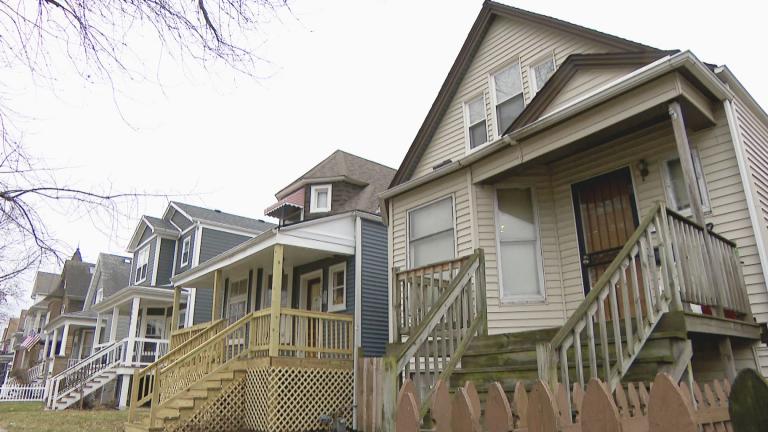
In nine neighborhoods on Chicago’s West and South sides, median residential property tax bills went up by more than 50%, according to the study. The value of homes in those neighborhoods have soared since the COVID-19 pandemic, according to the study.
In West Garfield Park, the median residential property tax bill jumped by approximately $2,000, or 133%, according to the study.
However, the median assessed value of a West Garfield Park home — $19,700 — is still less than the median assessed value of a home in the same neighborhood in 2006, according to the study.
In North Lawndale, the median residential property tax bill jumped by approximately $1,900, or 99%, according to the study.
In Englewood, the median residential property tax bill jumped by approximately 82.5%, or $609, according to the study.
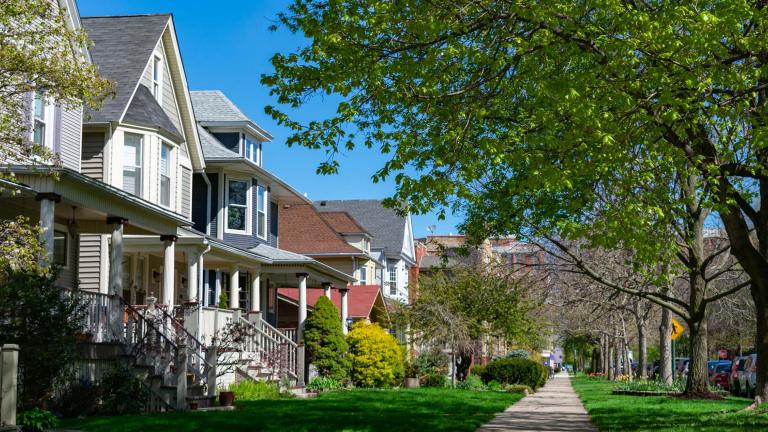
By comparison, the median residential property tax bill in Lincoln Park, one of the city’s most affluent neighborhoods and home to a majority of White residents, rose by 5.9%, according to the study.
The massive increase follows the 2024 reassessment of the value of all properties in Chicago. Cook County Assessor Fritz Kaegi recalculates the value of every property in the county every three years.
Kaegi, who is running for reelection, has vowed to more accurately pinpoint the value of commercial properties to ease the size of property tax burden on homeowners.
But that effort was once again largely thwarted by the Cook County Board of Review, a government agency made up of three elected commissioners, which frequently rules in favor of commercial property owners who object to Kaegi’s determination of their properties’ value, reducing their tax bills.
Property taxes fund a host of critical public services, including schools, park districts and libraries. Individual bills are calculated based on the tax levies set by government agencies and how the assessed value of the property changed, as compared with other properties in the area.
Residents of Chicago are set to see increases of 3.53% on their 2024 property tax bills, fueled by increases approved by the Chicago Board of Education and for properties within Tax Increment Financing districts, areas considered to be blighted by officials, according to the analysis. The city did not increase property taxes on existing homeowners in 2024.
In all, property taxes across Cook County rose approximately $872 million, to $19.1 billion, according to the analysis. That’s 4.8% higher than the previous year, and more than the 3.5% rate of inflation for 2024.
Approximately 76% of that increase will be paid by homeowners, who must pay nearly $661.1 million in new taxes, according to the analysis.
Contact Heather Cherone: @HeatherCherone | (773) 569-1863 | [email protected]