Politics
City Lawyers Recommend Paying $950K to CPD Lieutenant Who Blew Whistle on ‘Illegal’ Traffic Stops
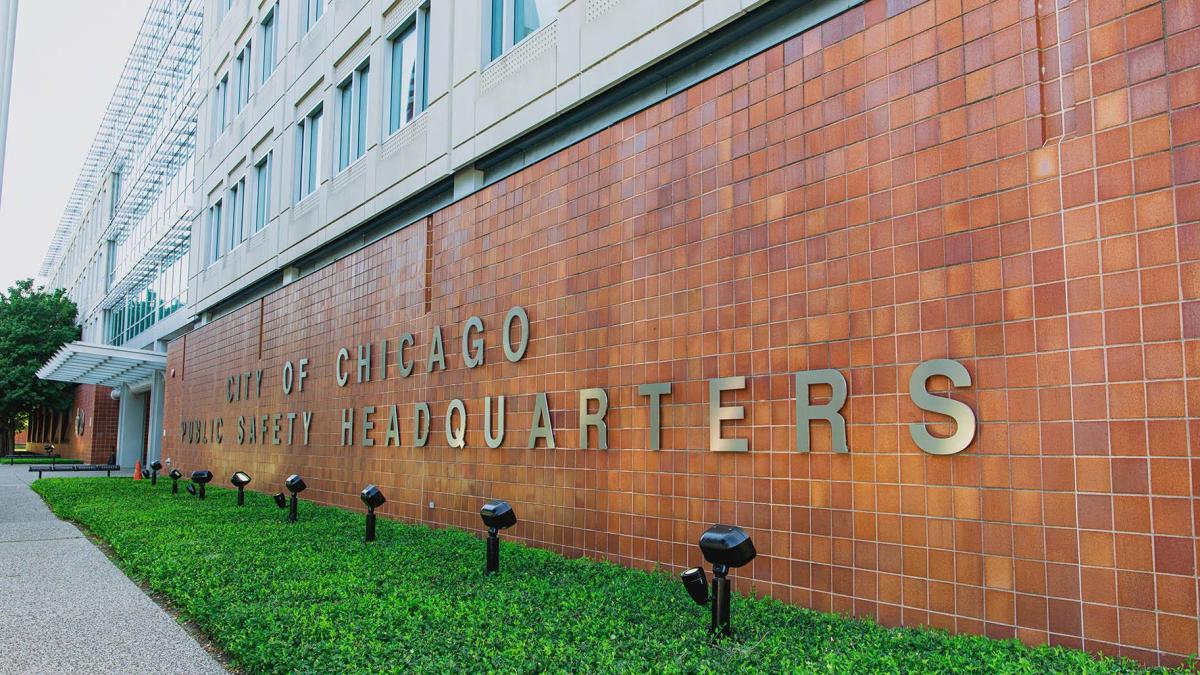 (Michael Izquierdo / WTTW News)
Taxpayers should pay $950,000 to a former Chicago Police Department lieutenant who said his supervisors retaliated against him after he resisted orders to make “illegal” traffic stops, city lawyers recommended.
Lt. Franklin Paz accused CPD officials of violating the state’s Whistleblower Act by reassigning him to the overnight shift in a South Side police district after he objected when former Commander Michael Barz demanded that Paz order the members of the citywide Community Safety Team he supervised to stop at least 10 Chicago drivers every day.
The city paid nearly $681,000 to private attorneys to defend Paz’s lawsuit, according to records obtained by WTTW News through a Freedom of Information Act request.
State law bans law enforcement agencies from requiring officers to make a certain number of traffic stops. A CPD spokesman told WTTW News in a statement the department does not “utilize quotas” for traffic stops.
That did not stop Barz from pushing members of the team to demonstrate high levels of “activity,” according to the lawsuit.
“When a unit engaged in a high number of stops, Barz congratulated the supervisors of the unit by telling them that their units were ‘crushing the numbers,’” according to the lawsuit. “By the ‘numbers,’ Barz meant traffic stops, arrests, citations, and other documented contacts with people on the street.”
Barz, who was named commander of the 18th District in June 2023, left the department in April 2025 at the rank of captain and was placed on the ineligible for rehiring list after two sustained complaints that he created a “hostile work environment,” according to records obtained by WTTW News through a Freedom of Information Act request.
In a statement to WTTW News, Barz said that the document provided by the Department of Human Resources to WTTW News, which was signed by Chicago Police Supt. Larry Snelling, erroneously stated that the complaints against him were sustained.
Barz said he has appealed his inclusion on the ineligible for rehiring list and has made a formal complaint with CPD officials.
Representatives of CPD did not immediately respond to a request for comment from WTTW News about Barz’s statements.
Barz is now collecting a taxpayer-funded pension of nearly $132,000, according to records obtained by WTTW News.
CPD’s traffic stop policy, which is now being revised, requires officers to document every time they stop a driver regardless of the reason by not only notifying dispatchers but also filling out a form that is better known as a “blue card.”
Barz told Paz that the officers under his supervision should bring in a minimum of 10 blue cards per day, according to the lawsuit.
Former Chicago Police Supt. David Brown created the Community Safety Team, better known as the CST, in 2020 in response to surging violence across Chicago in 2020. It has since been disbanded.
“Paz reasonably believed Barz was insisting that the police officers on the CST engage in illegal activity,” according to the lawsuit. “By demanding a certain number of stops without regard to the criminal activity justifying those stops, Barz was effectively requiring officers to engage in unlawful profiling, seizures of people that were not justified by probable cause, and violations of the civil rights of persons they encountered.”
More than 44% of all drivers stopped by police officers in 2024 were Black, and nearly 35% of drivers pulled over by Chicago police officers were Latino. By comparison, just 14.8% of drivers stopped by Chicago police were White, according to a report from a coalition of groups advocating for police reform.
The population of Chicago is 31.4% White, 29.9% Latino, 28.7% Black and 6.9% Asian, according to the 2020 U.S. census.
Black drivers were more likely to be searched during a traffic stop, and Black drivers represented more than 56% of people arrested by CPD after a traffic stop, according to the report.
Snelling agreed 16 months ago to allow a federal court order requiring CPD to change the way it trains, supervises and disciplines officers — known as the consent decree — to expand to include traffic stops.
That will require any new traffic stop policy to win the support of not just the Community Commission for Public Safety and Accountability but also the Illinois Attorney General’s Office as well as the independent monitoring team charged with enforcing the court-ordered reforms. U.S. District Court Judge Rebecca Pallmeyer, the judge overseeing the reform push, has the power to resolve any disputes.
Traffic stops have long been a flashpoint in the half-dozen serious efforts to reform CPD, since they put officers in close contact with Chicagoans, often under tense circumstances.
The city is facing a class-action lawsuit that accuses CPD of targeting Black and Latino drivers with a massive campaign of traffic stops. The suit calls it the latest chapter of the city’s “long and sordid history” of racist discrimination.
Three of the named plaintiffs in that case have been stopped repeatedly since they filed the lawsuit in July 2023, court records show.
The judge in that case has already ruled there is enough evidence that the city intentionally discriminated against Black and Latino drivers because of their race, and that the mass traffic stop program unlawfully burdens Black and Latino drivers disproportionately, for the lawsuit to proceed, court records show. The judge is weighing whether to expand the lawsuit to include all Black and Latino drivers in Chicago.
Chicago taxpayers have already paid $1.46 million to defend that lawsuit, which accuses the CPD of making more than 1.5 million traffic stops between 2016 and 2023 based on dubious evidence of minor violations that took direct aim at Black and Latino Chicagoans but spared White Chicagoans, according to records obtained by WTTW News.
Snelling has defended a proposed policy that would allow officers to continue making traffic stops based on minor registration or equipment violations that are designed to find evidence of “unrelated” crimes.
If police officers are prevented from stopping drivers for improper or expired registration plates or stickers and headlight, taillight and license plate light offenses, Chicago’s streets will become more “dangerous for everyone who are driving,” Snelling said.
The number of traffic stops conducted by Chicago police officers surged 600% between 2015 and 2022, after department officials agreed to curtail the use of stop-and-frisk as part of an agreement with the ACLU after the civil rights organization released a report in March 2015 that found officers stopped Black Chicagoans at a far higher rate than Latino or White Chicagoans.
The lawsuit cites a June 2023 report by the team overseeing court-ordered reforms of the Chicago Police Department that found evidence to suggest a direct correlation between the significant increase in the rate of reported traffic stops by police officers and a nearly equal drop in the number of pedestrian stops.
The ACLU contends that the Chicago Police Department has simply used traffic stops to replace stop-and-frisk when that policy fell into disrepute and was curtailed.
Contact Heather Cherone: @HeatherCherone | (773) 569-1863 | [email protected]