Science & Nature
Mega Data Centers Could Drain Water Supplies in Great Lakes Region if Protections Aren’t Put in Place: Report
It’s easy for residents of the Great Lakes to look at thirsty states like Colorado, Nevada and Arizona and feel smug about water.
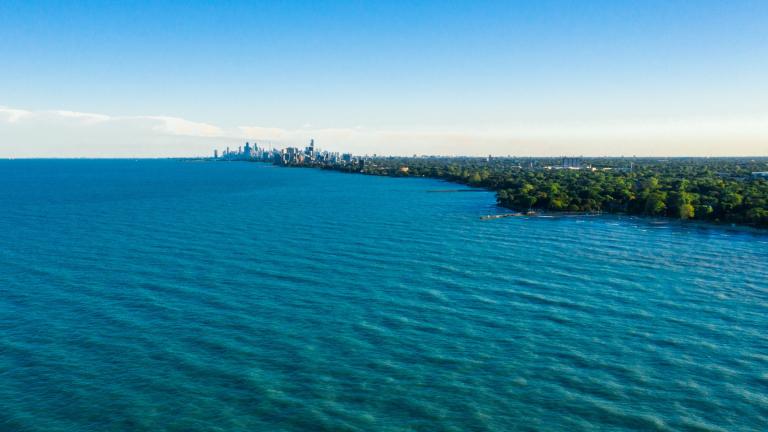
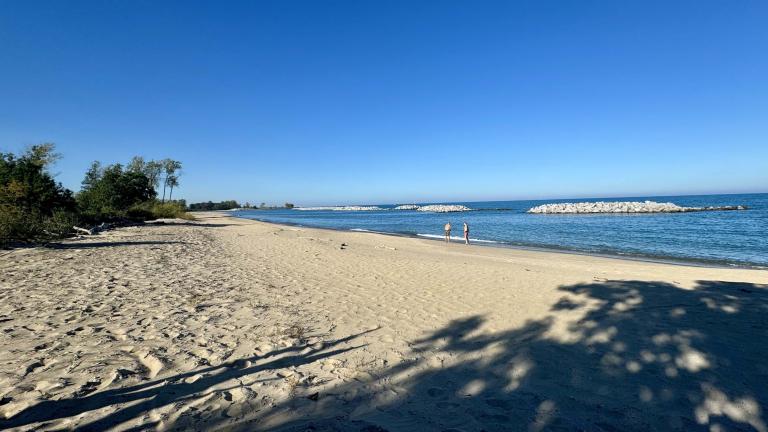
The Great Lakes is a water-rich region, holding some 20% of the planet’s surface freshwater, a gift from departing glaciers as they retreated and melted thousands of years ago.
But that doesn’t mean cities across Illinois, Indiana, Wisconsin, Michigan, Ohio, Minnesota, Pennsylvania and New York couldn’t turn into the next Phoenix.
Just ask Joliet, where the aquifer the city draws its water from is expected to run dry by 2030.
Some 20% to 40% of water flowing into and out of the Great Lakes originates as groundwater.
“Which is not something that people think about — the water that’s under their feet,” said Helena Volzer, senior source water policy manager with the Alliance for the Great Lakes, a nonpartisan nonprofit working to protect the Great Lakes.
Volzer is the author of a new report that explores how unprecedented levels of consumption by heavy water users — namely “hyperscale” data centers — could lead to conflicts over and even shortages of a resource that’s largely been taken for granted.
In some places, that future is already playing out.
“There is a need for speed,” Volzer said, when it comes to drafting policies that ensure Great Lakes states don’t squander their Ice Age legacy.
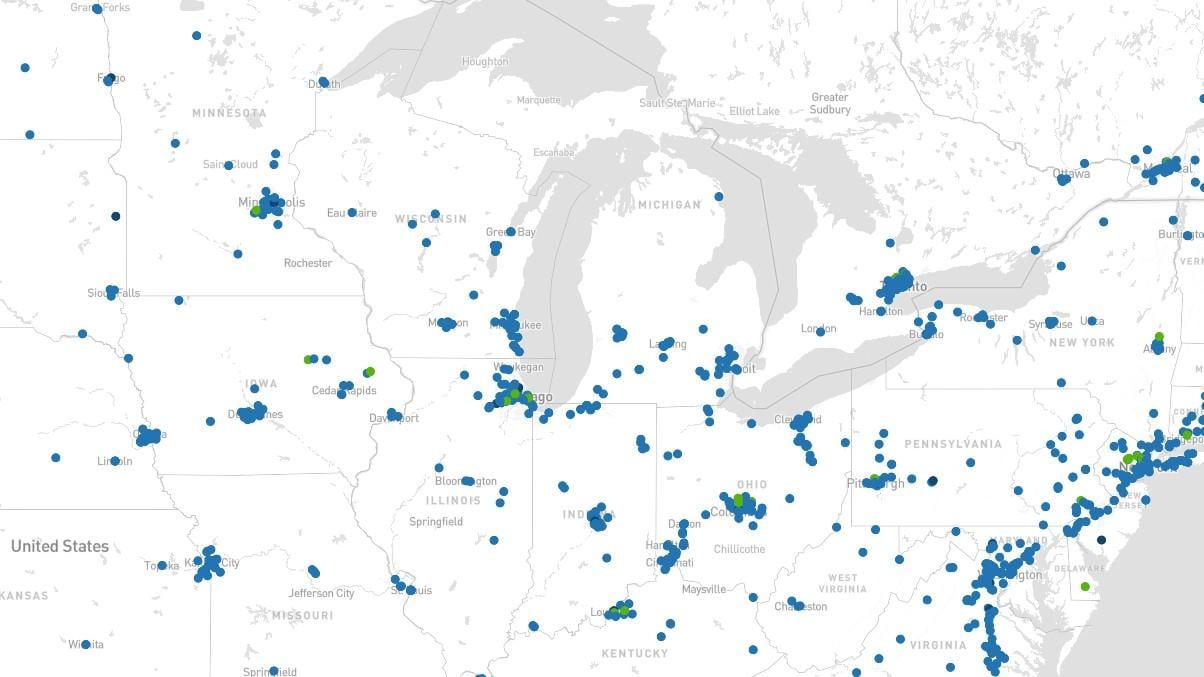 Illinois and Ohio rank fourth and fifth in the nation in terms of the number of data centers. (datacentermap.com)
The Great Lakes Compact, signed into law in 2008, prohibits diversions of Great Lakes surface and groundwater outside the basin.
In short, “our water is staying here at home,” said Volzer.
While the average Chicagoan might think that translates into an unending supply of tap water, bathwater or dishwater, such household use is a drop in the proverbial bucket.
Officials in Great Lakes states have touted the region’s “blue economy,” and lured data centers to locate in the region, offering tax breaks and other incentives on top of the promise of all the water these centers need to cool their energy-intensive computing equipment.
In essence, the water can’t leave the basin, so bring the users to the basin.
The ploy worked.
Illinois and Ohio rank fourth and fifth in the nation behind Virginia, Texas and California in terms of the number of data centers they house, whether that purpose is crypto mining, cloud computing or generative artificial intelligence.
In the past year or two, as the AI arms race has heated up, the size and scope of these centers has mushroomed, as has the pace at which these behemoths are being built, Volzer said.
A single hyperscale center of the sort operated by tech giants such as Meta or Microsoft — 10,000 square feet or more, with 5,000-plus servers — can consume 1 million to 5 million gallons of water each day. That’s 365 million gallons of water a year, Volzer said, or as much as 12,000 Americans’ annual use put together.
Not a single Great Lakes state currently has water management mechanisms in place to curb over-extraction, or what could be termed “de-watering,” before it happens, she said. The first step could be revising state groundwater management laws.
Otherwise, scenarios like the one playing out in rural Georgia — “Their Water Taps Ran Dry When Meta Built Next Door” — aren’t outside the realm of possibility.
“We’re just on this cusp,” Volzer said. “Those are the kinds of impacts we will begin to see.”
Layer on other water guzzling uses such as extractive mining for the metals needed to fuel the transition to electric vehicles, or the increased need for irrigation as climate change wreaks havoc with rainfall patterns, and the future begins to appear more than a little dystopian, Volzer said.
Which is why, she said, it’s important to put protections in place while there’s still time to conserve resources.
“From my perspective, I try to focus on the proactive long-term things that states could change now to be better prepared for this increasing demand,” Volzer said.
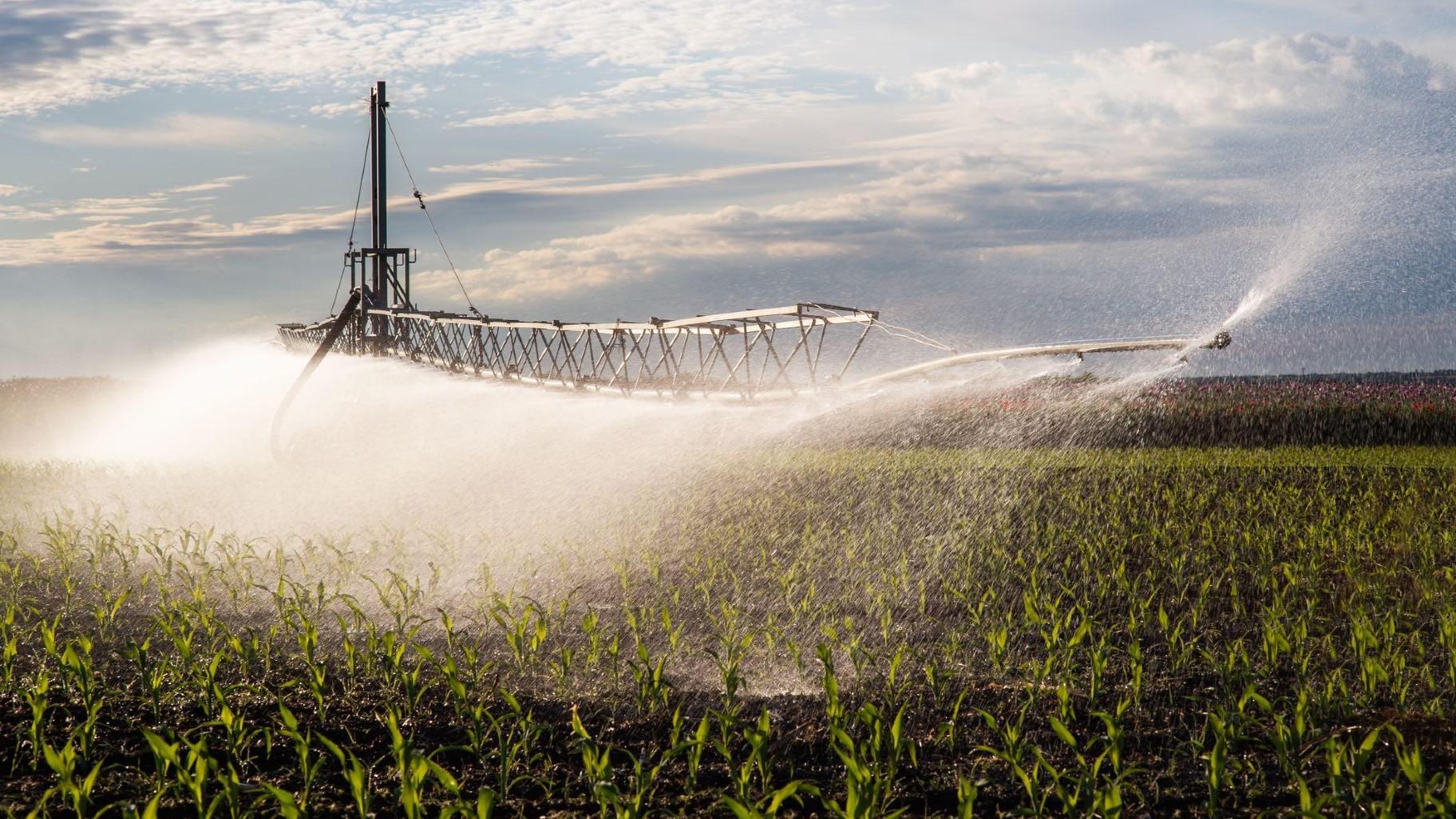 Agriculture will compete with data centers and mining operations for water resources. (Fotokostic / iStock)
In the report, Volzer identifies a number of vulnerabilities and outlines solutions, some of which are already being enacted in one state or another but require broader region-wide adoption.
For starters, she said, there’s a need for greater transparency from data centers about their water consumption, both when centers are still in the proposal phase and then later when they’re operating at full capacity.
Currently, this usage is either buried in larger consumption reports or hidden behind non-disclosure agreements.
“There’s a lot more that we don’t know than we do,” Volzer said.
But access to such information is crucial if state and local officials are to be able to accurately assess the potential impact of a data center or other large user, such as a semi-conductor chip manufacturer, on water resources.
To that end, Volzer said states should be mapping their groundwater — showing where water is available, and how much — and using this data in tandem with a large user’s anticipated water needs to determine whether a given site is appropriate for certain types of development.
Any assessment of water availability and water demands, she added, should take into account ecosystem impacts, a factor that is often ignored.
“What kind of water level is needed to sustain a fish population? Make that part of the demand study,” Volzer said.
She also recommended that states not only reverse course on offering incentives to data centers — a stance Ohio’s legislature adopted, but Gov. Mike DeWine vetoed — but also negotiate benefits for communities, including mandating water conservation and efficiency standards.
“I’m hopeful this report prompts states to take a look at this issue because there’s been so much energy and attention focused on the electricity side of the equation when it comes to data centers,” Volzer said.
The water side demands no less attention, she argued.
“We’re blessed with this resource,” Volzer said of the Great Lakes, "but it’s something that requires constant managing.”
Read the complete report: A Finite Resource: Managing the Growing Water Needs of Data Centers, Critical Minerals Mining, and Agriculture in the Great Lakes Region
Contact Patty Wetli: [email protected]