Arts & Entertainment
‘She Changed So Many Of Our Lives’: Longtime HIV/AIDS Activist and LGBTQ+ Community Advocate Lori Cannon Dies at 74
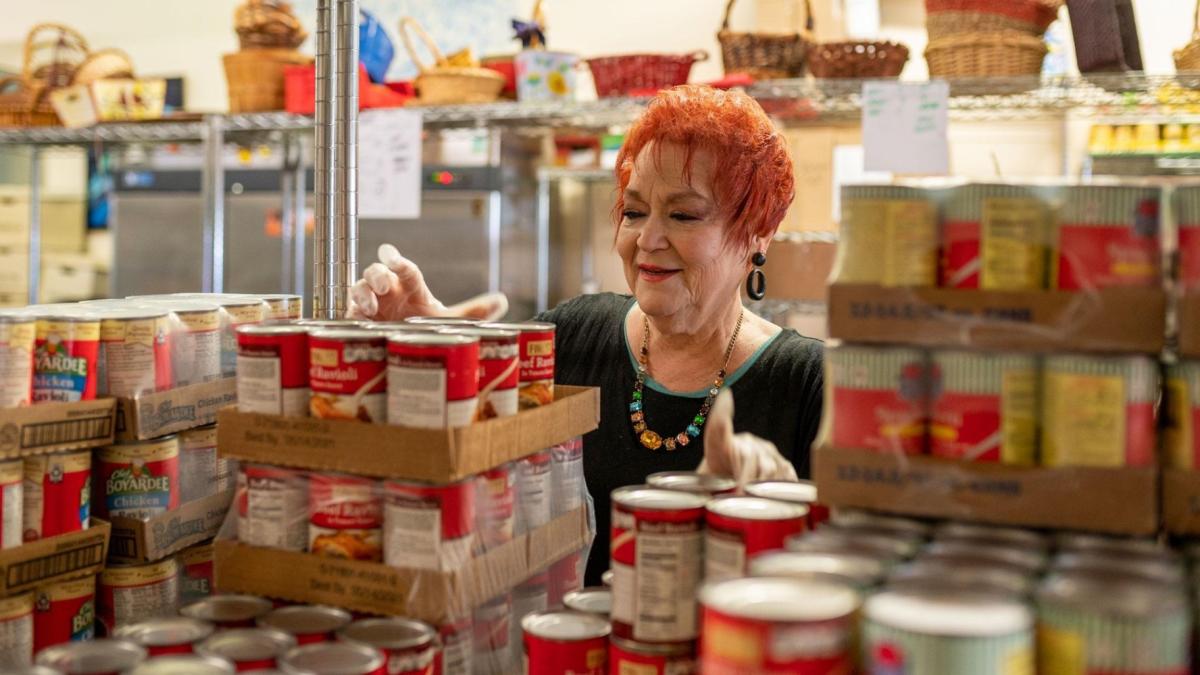 Longtime HIV/AIDS activist Lori Cannon in 2020 for WTTW’s Firsthand: Coronavirus. (WTTW)
Lori Cannon, a longtime HIV/AIDS activist and advocate for the LGBTQ+ community in Chicago, died Sunday following complications from pancreatic cancer. She was 74.
Cannon was known for her advocacy work with ACT UP Chicago, the AIDS Coalition To Unleash Power, in the 1980s. She co-founded Open Hand Chicago, an in-home meal delivery program for people living with HIV/AIDS.
Sidetrack bar co-owner and friend Art Johnston, who knew Cannon from her activism with ACT UP Chicago, said he thinks about the thousands of people with HIV/AIDS who Cannon saved or helped make more comfortable in their final days.
“She did everything for everyone with such love and such care and such concern,” Johnston said. “Even those of us with the most expansive imaginations cannot envision a world that does not have Lori Cannon.”
Until the end of her life, Cannon continued serving clients at the food pantry, which was renamed to Vital Bridges, and most recently Groceryland. The food pantry was on the brink of closure following a restructuring of its umbrella organization Heartland Alliance, but ultimately stayed open, reported the Windy City Times.
Longtime friend Sharyl Holtzman described Cannon as a “one-woman community hub” at the food pantry, with an unrivaled passion and determination. Holtzman met Cannon while volunteering for the nonprofit organization Chicago House, which supports individuals impacted by HIV/AIDS.
“She was fierce in her devotion,” Holtzman said. “For all the words that there are to say about Lori Cannon, they’re hard to find because her presence and everything that she did was so big. She changed so many of our lives.”
“When you hear those sayings ‘Larger than life,’ ‘Iconic,’ ‘Like no other,’ those are all phrases that are made for someone like Lori Cannon,” Holtzman continued. “She was just a giant of a person, a giant of a spirit, a giant of a human being in every single way and everything that she did.”
In the early days of the COVID-19 pandemic, Cannon’s work at the food pantry helped feed a new generation of sick and homebound Chicagoans. Cannon’s story was featured in WTTW’s Firsthand: Coronavirus in 2020.
“Nobody cared about AIDS in the '80s,” Cannon told WTTW. “The grief, the pain, the sadness — we all had to bear a lot. A generation of gay men were almost wiped off the face of the earth. Numbers weren’t given. The name AIDS wasn’t spoken. Nobody cared. We cared. We cared and responded when no one else would.”
Cannon was active with ACT UP Chicago, Johnston said, in the fight against “government and societal inaction” for people with HIV/AIDS. She was close friends with fellow HIV/AIDS activist and political cartoonist Danny Sotomayor.
Johnston, whose bar will sometimes collect donations for Groceryland, described Cannon as being a “getaway driver” and waiting at the police station to make sure Sotomayor was bailed out after demonstrations.
Cannon’s friends also remember her for her unique looks and personality. She was known for her red hair (“You couldn’t miss Lori,” Johnston said. “Lori had red hair of a color red that does not exist in nature.”) and accessories, along with a sense of humor and sharp memory.
Longtime friends described how she would remember personal details of food pantry clients and how she rarely wrote anything down.
After Cannon died, longtime friend and fellow member of ACT UP Chicago Tim Miller said he discovered Cannon’s phone only had about four numbers. “She had memorized everybody’s phone number that she talked to,” Miller said. “We were at a loss on how to reach a variety of people, but she just had it all in her head.”
Miller said he credits the activism of ACT UP Chicago as instrumental in getting services and funding for HIV/AIDS patients.
Cannon was a throughline in the HIV/AIDS and gay movements in Chicago, according to Tracy Baim, Windy City Times’ co-founder, who described Cannon as a role model and admired her for her consistency.
“She was there on those front lines being an activist and then being a friend — a loyal friend — to individual gay men, but also the community at large,” Baim said. “There’s no comparison to another ally that has done as much for as long as Lori Cannon.”
In an interview with WTTW in 2020, Cannon reflected on her advocacy work for people living with HIV/AIDS.
“I was the one that was there at the end of so many boys' lives,” Cannon said. “Their mothers just couldn’t find a way to accept their gay son who had AIDS. I honor all of them. They should be here today, but they’re not. They won’t be forgotten.”
Contact Eunice Alpasan: [email protected]