Science & Nature
2024’s Fall Color Forecast is More Unpredictable Than Ever Thanks to Chicago’s Wet Spring, Dry Summer, Hot Autumn
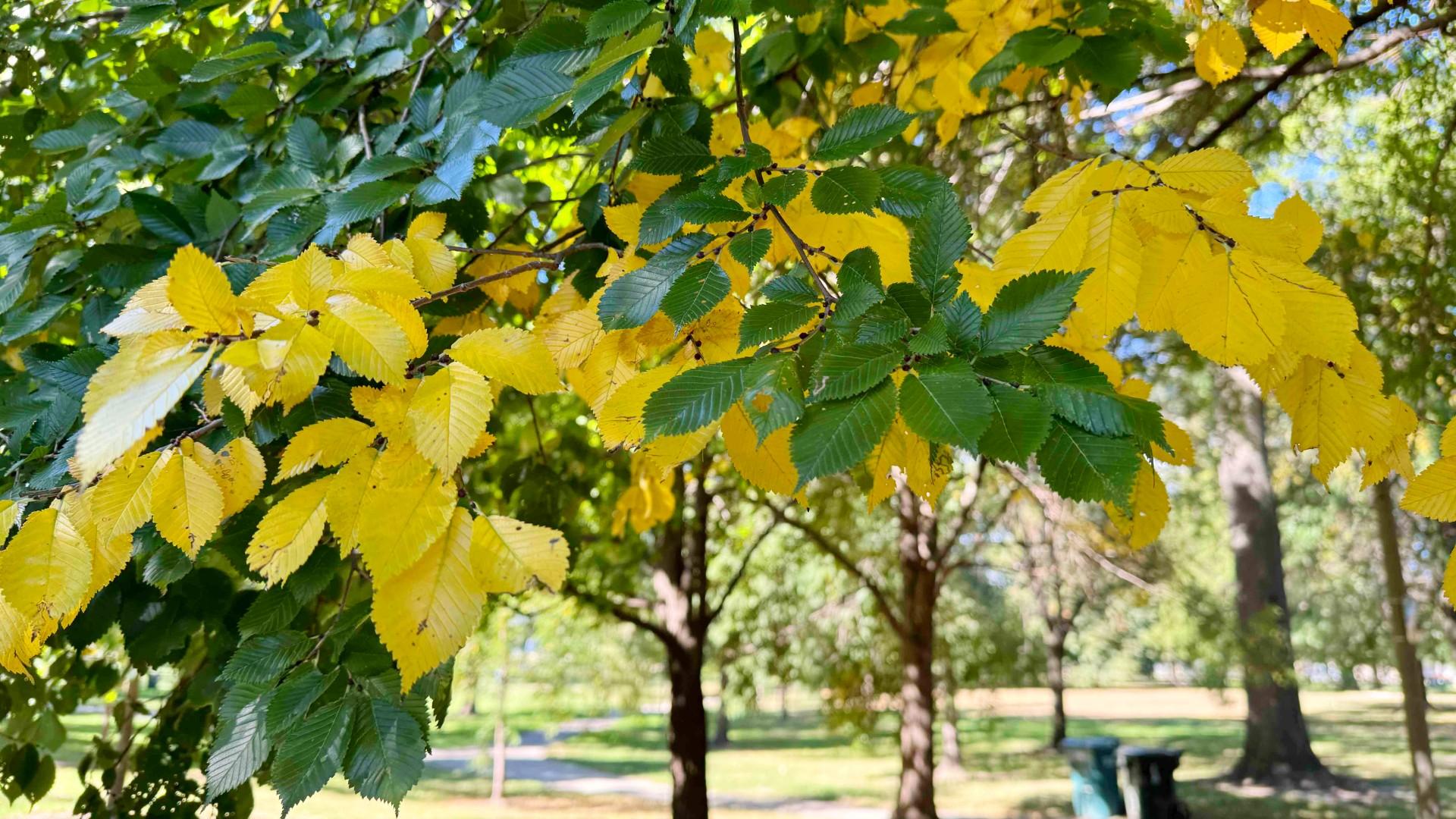 Green is still the dominant tree color in Chicago, but things are starting to change, as seen in River Park on the city’s North Side, Oct. 7, 2024. (Patty Wetli / WTTW News)
The only thing typical about the 2024 fall color season in Chicago is that it is, per usual, unpredictable.
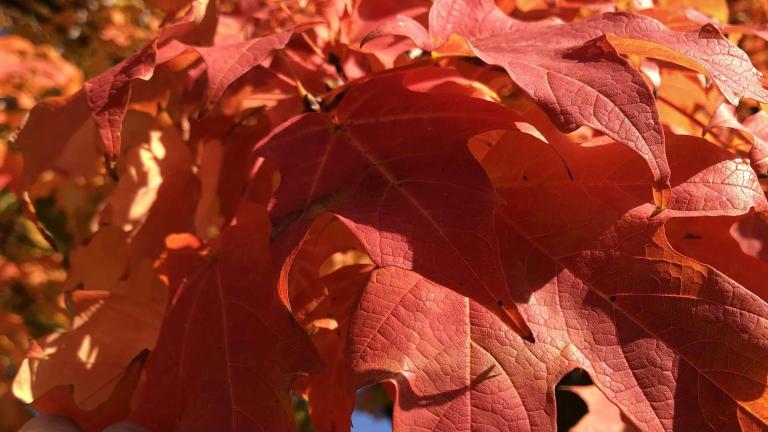
Here’s what we know: Over the next few weeks, foliage will turn from green to a kaleidoscope of red, orange and yellow.
Here’s what’s up in the air: When, exactly, will the change happen? How long will the color last? And how intense will it be?
Hard to say, according to experts, particularly in a year that’s experienced its share of weather irregularities.
“This has been kind of an extreme and somewhat stressful year for a lot of plants,” said Tom Tiddens, supervisor of plant health care at the Chicago Botanic Garden.
After a wet start to spring and early summer, the spigot turned off in the Chicago region, with rainfall totals in August and September a combined 3.5 inches below normal.
“One thing (plants) really don’t like are ups and downs as far as wetness then dryness, wetness then dryness,” Tiddens said.
Warm sunny days, cool nights and lots of available water — a consistent half inch a week — are the ideal conditions for peak fall color, according to Spencer Campbell, plant clinic manager at Morton Arboretum.
Chicago has had sunny days in spades, but daytime and overnight temperatures in September were uncommonly high, and aside from a handful of rainy days, water’s been in short supply.
High temperatures, dry winds and low soil moisture can cause leaves to transpire more water than usual, Campbell said, and if they can’t draw enough water from the soil to compensate, leaf tissue will die back around the edges — what’s known as “leaf scorch.”
“It’s not lasting damage to the tree, it just means that at this moment it doesn’t have enough water to maintain the greenness,” Campbell said. “Sometimes it can be the tree doesn’t have enough for the entire leaf and leaves can fall down” as the tree diverts resources elsewhere.
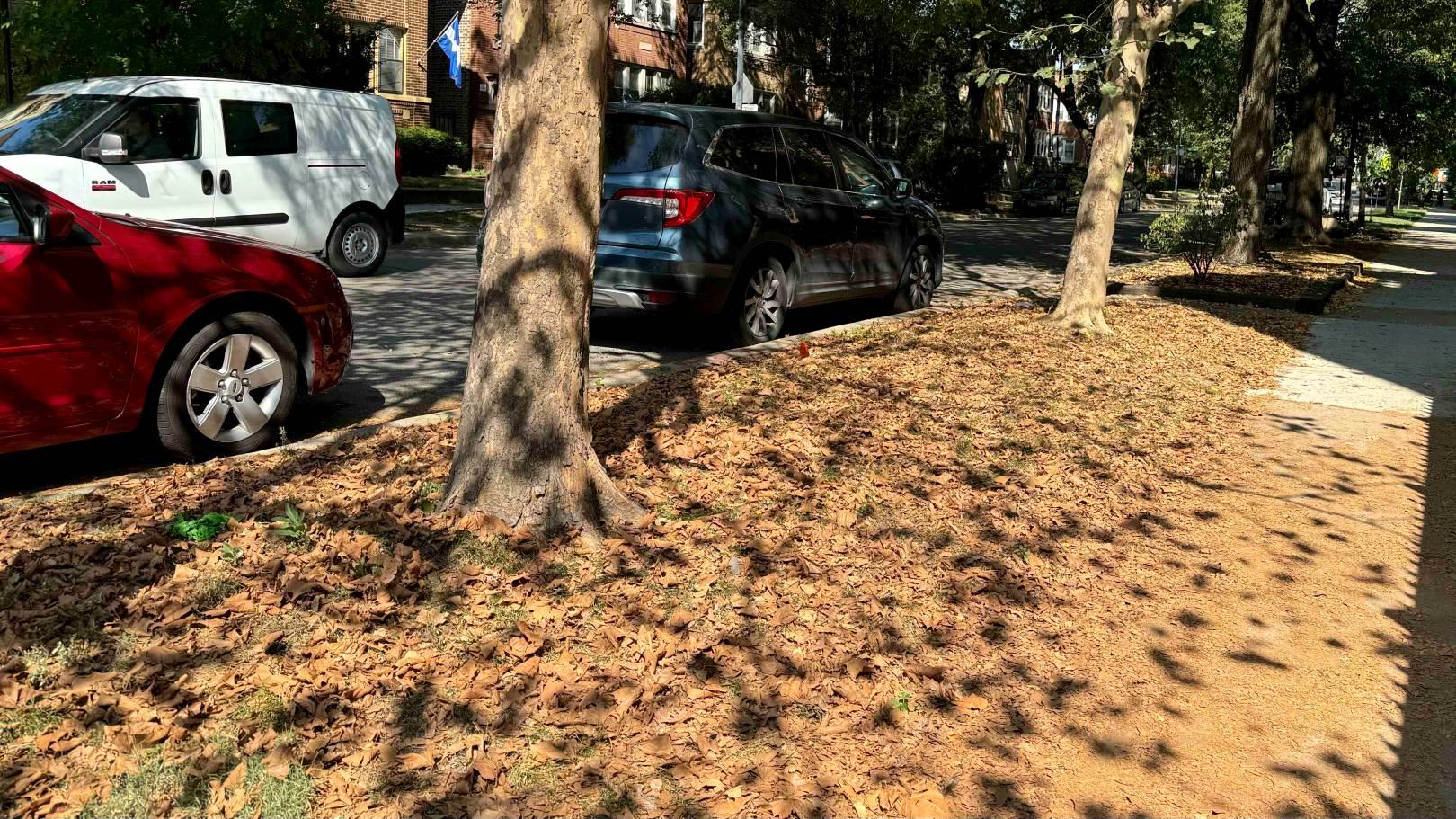 Some stressed trees started shedding their leaves as early as mid-September. (Patty Wetli / WTTW News)
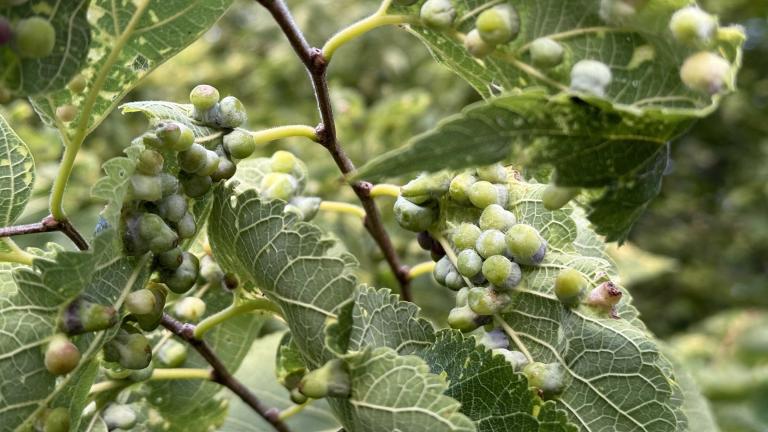
On the flip side, other trees have been suffering from diseases linked to spring’s downpours, which created conditions ripe for fungi to thrive.
“I saw apple scab like I hadn’t seen in years and years,” Tiddens said of a fungus that hits crabapples.
Hawthorn rust (which affects a number of species) was also prolific this year, he said, as was a fungus known as anthracnose, which struck sycamores and London planetrees.
By late September, Tiddens noticed a lot of trees under stress at Chicago Botanic Garden had already dropped all their leaves for one reason or another.
“There are so many factors that come into play,” Tiddens said. “I wish trees were more like people and could talk to us. Sometimes it’s like I have to be a CSI agent to try and figure out these things. It gets a little bit scary, but one thing I will say is most of these things are seasonal.”
So what does all of this mean in terms of a fall color forecast in Chicago? Tiddens’ best educated guess is that it will be less intense and shorter-lived than in peak years. But he’s been wrong before.
“Mother Nature has the final call,” Tiddens said.
Click here for Illinois’ fall color report, updated weekly.
Contact Patty Wetli: @pattywetli | (773) 509-5623 | [email protected]