Politics
Homeowner Associations Can’t Ban Native Plants, Thanks to New Illinois Law
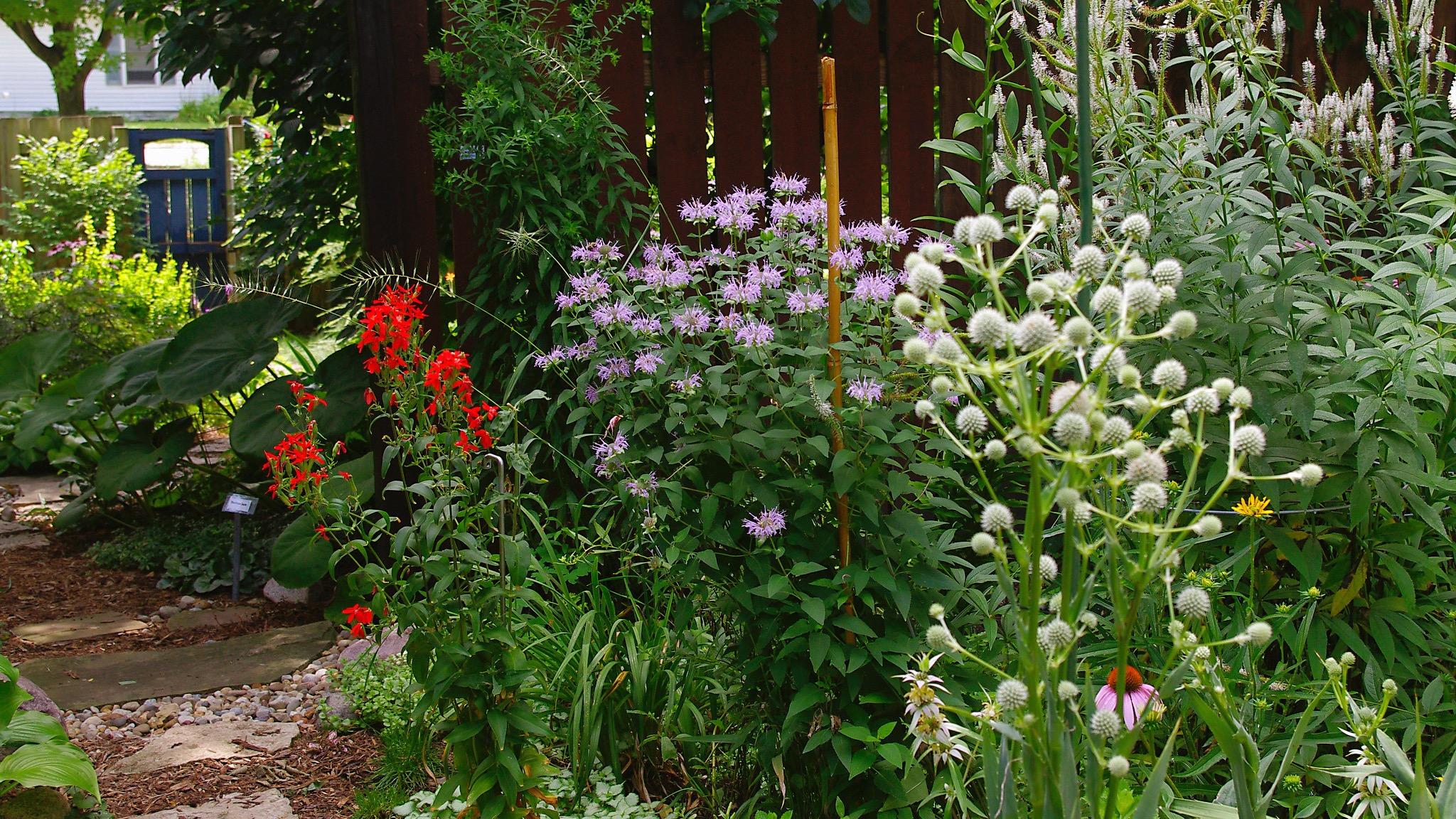 Bee balm, rattlesnake master, horsemint and Culver’s root are among the native plants in this garden that homeowner associations in Illinois can no longer ban. (Ron Frazier / Flickr Creative Commons)
Native plants have been gaining in popularity as more and more gardeners have come to appreciate their ecosystem benefits, which range from supporting endangered wildlife to improving stormwater absorption.
But not everyone is a fan.
Homeowner associations (HOAs) across the country, including many in Illinois, have adopted prohibitions against native plants, enforcing rules through fines, tickets, peer pressure and other means. Among HOAs’ arguments against natives: They’re too tall, too weedy, too unkempt and too attractive to rodents.
The Illinois state legislature has stepped into the breach, passing a new law that in effect bans the bans. HOAs can no longer bar homeowners from planting native gardens.
“This law gives all folks an opportunity to be part of a collective movement,” said state Rep. Laura Faver Dias (D-Grayslake), who introduced the bill in the General Assembly. “The reality of climate change can be debilitating, it’s hard to know where to even start. But now anyone can help restore native habitat right in our own yards.”
Faver Dias and her counterpart in the Illinois Senate, state Sen. Karina Villa (D-West Chicago), were able to push the bill through in a single legislative session — something of a rarity in Springfield — in part because the law, which could have been controversial, was crafted with input from people on both sides of the native garden divide.
“We put a lot of thought into making sure we were addressing concerns versus just putting something out there and seeing what happens. We did work to try to get it right from the get-go,” said Chris Kessler, policy director at Openlands, who helped steer the bill through the state House and Senate.
“When it did ultimately get called for a vote in the Senate and the House, there was no opposition,” Kessler said.
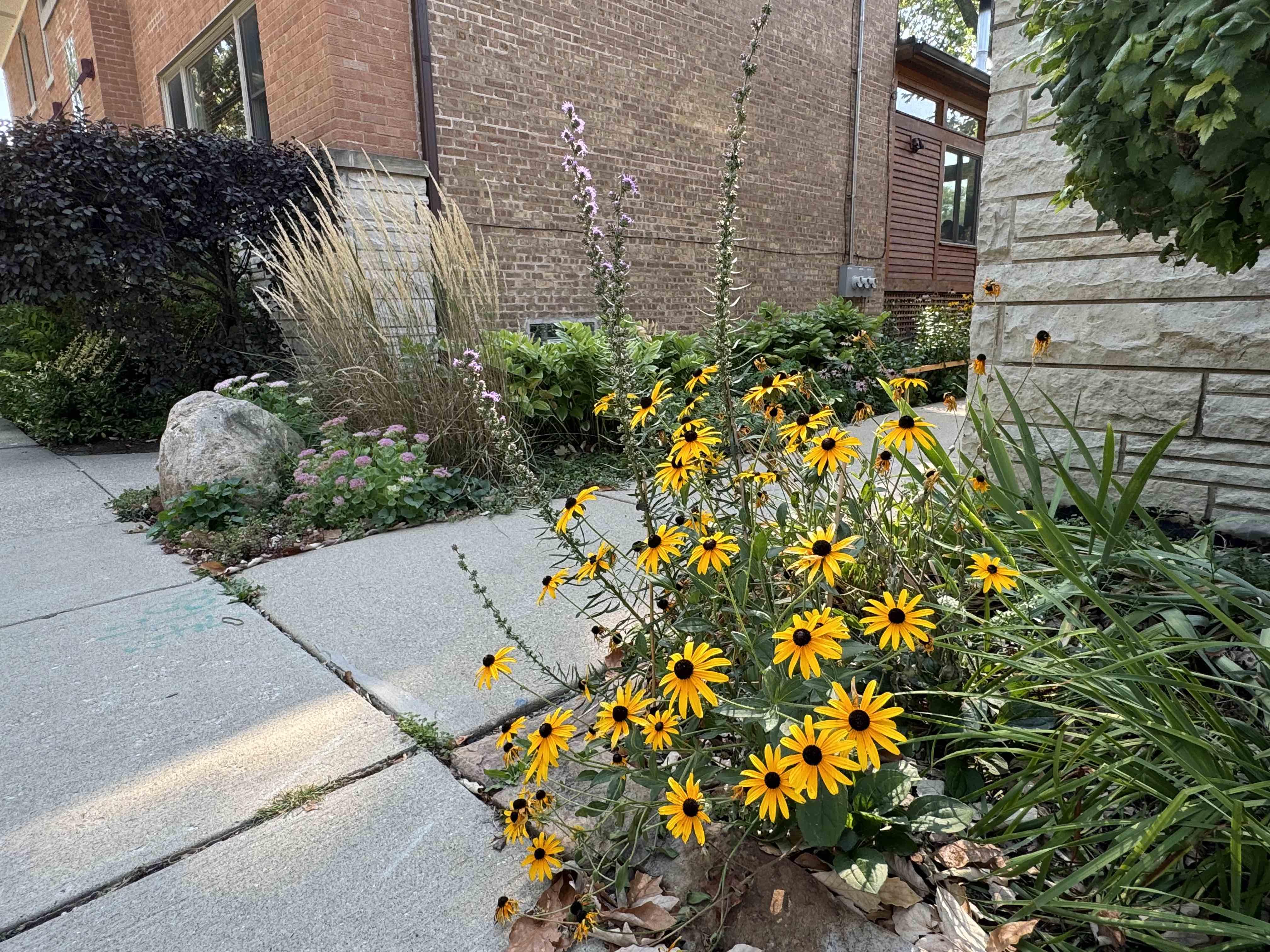 Natives rough blazing star and black-eyed Susan look at home next to more traditional ornamental plants. (Patty Wetli / WTTW News)
While the new law doesn’t eliminate HOAs’ ability to adopt “reasonable” rules and regulations around native landscaping, it does state that imposing height restrictions isn’t an option — height restrictions being one of the most common ways to block the use of natives without explicitly saying so.
“We don’t need unnecessary barriers,” said Kessler. “The more that we can make the process more accessible to people, the better. We’re seeing biodiversity loss, the effects of climate change, all these things. People want to do something, and this empowers them.”
At the same time, the legislation also includes language that addresses several of the most common complaints leveled against native plants.
Caveats incorporated into the Homeowners’ Native Landscaping Act, signed into law in mid-July, include “so long as the area is maintained predominantly free of weeds, invasive species, and trash” and “so long as the vegetation does not extend over or onto neighboring properties, public or common sidewalks,” among other provisions.
What the act acknowledges — in spirit if not in so many words — is that when it comes to native plants, there’s a difference between a landscaped garden and, say, a prairie restoration project undertaken by a forest preserve or the Illinois Department of Natural Resources.
And the difference is that in a residential neighborhood — like it or not, agree with it or not — aesthetics are important.
“When someone’s lucky enough to buy a home in a nice neighborhood, this is generally for most people, their largest financial investment. And they understandably want to protect their investment,” said Sarah Surroz, director of Openlands Lake County programs, who consulted with Kessler on the legislation, providing key on-the-ground experience and insights.
“When people first started rebelling, so to speak, against ‘sterile’ yards, some of them were very enthusiastic and had a lot of fun with reintroducing a whole bunch of different species on their property,” Surroz said. “And, for neighbors, sometimes that just became a little too wild-looking and untidy.”
Without regular, ongoing management, some of these gardens eventually became so large and what Surroz called “rambunctious” that they crossed the line over into weeds.
“I think that’s where it really gets challenging: if there’s a lot of species and it’s a very loose design or loose arrangement,” Surroz said.
To avoid that outcome, natives can be planted as conventionally as non-natives, Surroz said — “You can put native plants in a row” — which doesn’t diminish their environmental impact, but rather might actually increase it by inspiring neighbors to follow suit who might otherwise have been opposed to natives.
Or a person could plant a native oak tree, which no one ever complains about, Surroz noted, and call it a day. (Native plants include trees, shrubs and grasses, not just perennial flowers.)
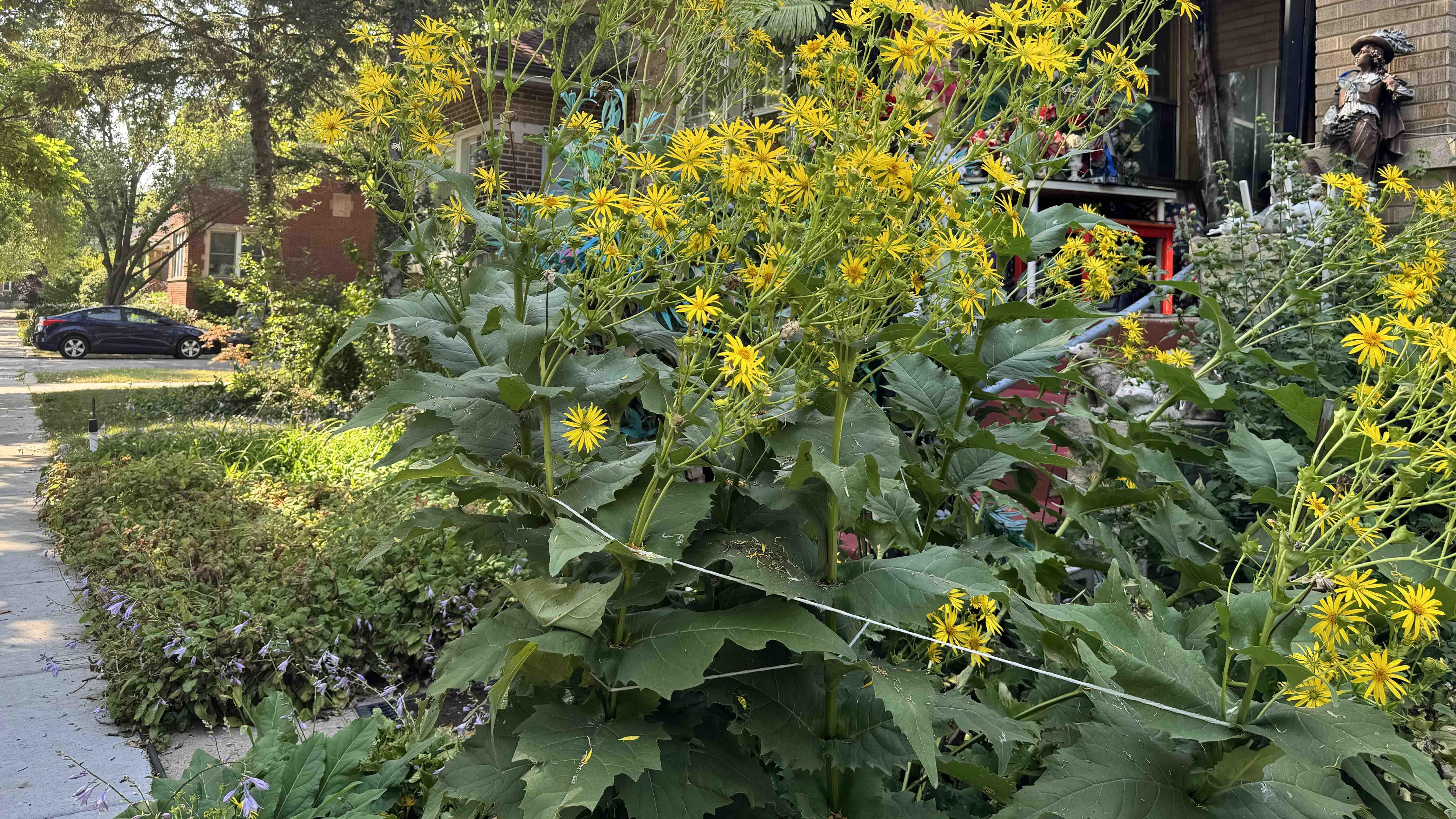 One complaint against natives is that they’re too tall and flop onto sidewalks. This gardener shows how to control towering plants. (Patty Wetli / WTTW News)
For those new to native gardening, Openlands maintains a section on its website devoted to attractive natives. Surroz’s advice: Start small.
“Think of it kind of like adopting a puppy,” she said. “Do you want 10 puppies or do you want one? What’s your property suitable for — a chihuahua or a Doberman? How big is this puppy going to be getting in a couple of years? And what’s its temperament?”
Gardeners also need to ensure that their plants are indeed native to Illinois, which is what the new HOA landscaping act specifies. Not “pollinator-friendly” or “natural” but “native,” and not native to the United States or the Midwest even, but native to Illinois, Surroz said.
What that means, she explained, is that the species was found in Illinois prior to European settlement.
There are a number of resources people can turn to help identify native species, particularly when a plant’s common name adds to the confusion.
“Some plants, like quaking Aspen, it’s native to most of North America. Then there’s something like the Colorado blue spruce — not native to Illinois — but Virgina creeper is. So these common names can really throw a person off,” Surroz said.
And don’t be put off by the term “weed.”
Milkweed is a highly desirable native plant, in large part because it’s absolutely vital to the survival of the monarch butterfly. But its name has led to a serious image problem.
Years ago, Surroz argued for a change.
“I was at Field Museum meetings when we were creating the monarch recovery plan for the central United States. And I said, ‘We’ve got to rename these things (milkweed plants).’ We’ve got to do what fishermen did. They renamed a bunch of fish — these fish that had terrible-sounding names — and now all of a sudden people wanted to eat these fish,” she said, referencing fish like Chilean sea bass (formerly toothfish) and orange roughy (aka slimehead).
“We just need to come up with a new branding campaign for milkweed,” Surroz said, “and people will be happy to have it.”
It’s not clear whether rebranding would work for milkweed — it hasn’t for Asian carp (aka copi) — and the point may be moot, at least in Illinois.
If someone wants to support native ecosystems and help stem the loss of biodiversity by planting milkweed, there’s now a law on the books that says they can.
Contact Patty Wetli: @pattywetli | (773) 509-5623 | [email protected]