Science & Nature
Monarch Winter Numbers Up From Last Year as Endangered Butterflies Begin Northern Migration
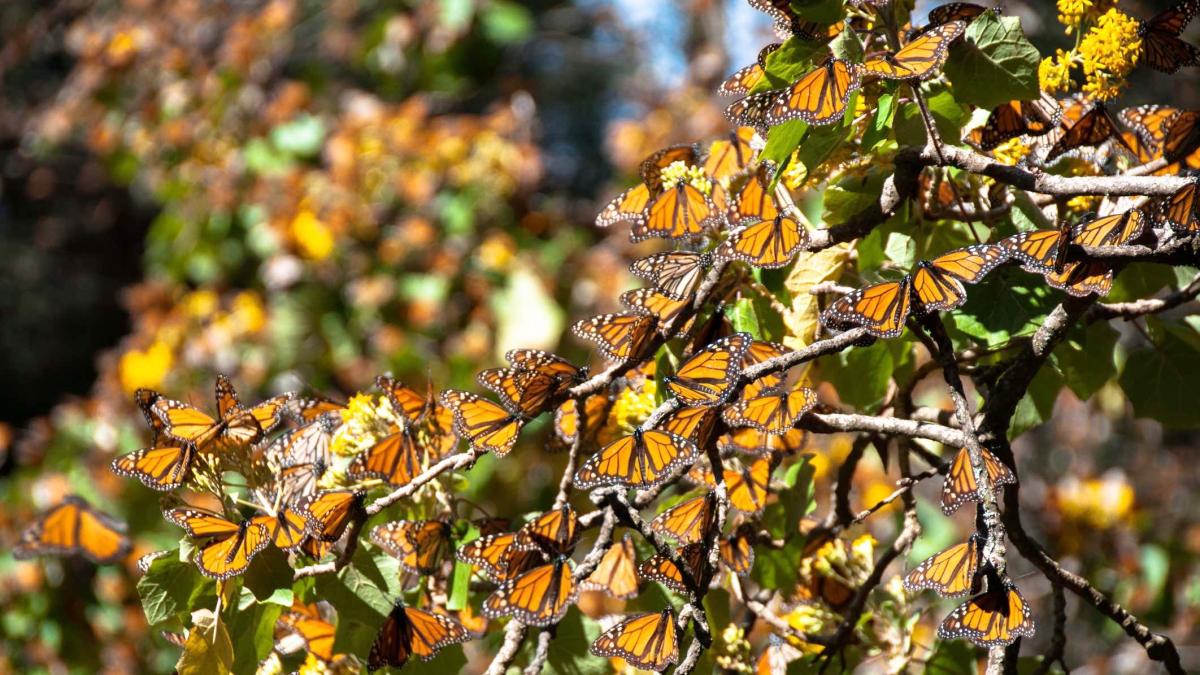 Monarch butterflies roosting. (Alberto Loyo / iStock)
Monarch butterflies have begun their long journey north, and there are more of them making the trip than last year.
A newly released survey of the eastern monarch’s 2025-26 winter population in Mexico showed a 64% increase over 2024-25, according to the World Wildlife Fund (WWF), which leads the annual count.
This year, monarchs occupied 7.24 acres of forest compared with 4.42 acres last year. (The forest area is commonly presented in hectares: 2.93 hectares this year vs. 1.79 hectares last year.)
Officials were cautiously optimistic regarding the promising sign of recovery.
“These reports indicate conservation measures are going in the right direction,” Maria Jose Villanueva, WWF-Mexico director general, said in a statement. “We also need to remain vigilant and not forget that this unique migration continues to face many challenges.”
Those challenges include habitat loss across the monarch’s range — from its breeding sites and migratory routes in Canada and the United States to its winter home in Mexico. Pesticide exposure and extreme weather also threaten the monarch at various points in its life cycle.
Strong forest management in Mexico and grassland restoration projects in the U.S. are among the efforts promoted by conservationists, and World Wildlife Fund is among the organizations lobbying to limit the use of neonicotinoid pesticides.
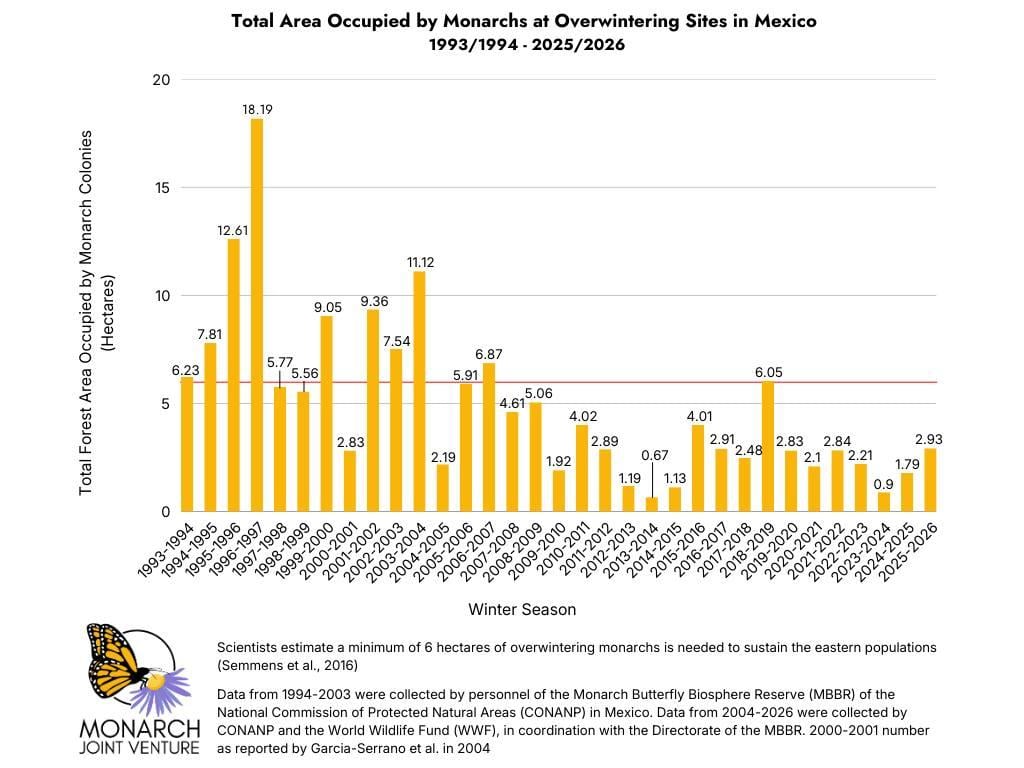 A history of monarch winter populations, presented in hectares. (Monarch Joint Venture)
Year-to-year fluctuations in the monarch population indicate how sensitive the insect is to any changes in its environment.
In assessing the 2025-26 winter count for Monarch Joint Venture, researcher Karen Oberhauser said weather likely played a significant role in the improvement over 2024-25.
She pointed to heat and drought in the monarch’s Upper Midwest breeding grounds in summer 2024, which saw lower numbers of second- and third-generation monarchs surviving, at a point when the population should have been growing. The depleted cohort that headed south continued to encounter drought along its migration route, which didn’t improve until the monarchs hit Mexico.
In 2025, conditions were markedly improved in monarch breeding areas and along the flyway, Oberhauser said.
While the minor rebound in 2025-26 is encouraging, the latest survey count is still well below the number scientists say is needed for a stable population. And it’s a far cry from the nearly 45 acres of forest monarchs occupied at their peak in 1996-97.
Monitors in Mexico captured video of the monarchs as they began to depart their winter home.
Contact Patty Wetli: [email protected]