Science & Nature
What’s Left of Hurricane Beryl Is Heading Toward Chicago, Bringing a Chance for Heavy Rain and Flooding
 (WTTW News)
After leaving a path of destruction in its wake in the Caribbean and slamming the Texas Gulf Coast, what’s left of Hurricane Beryl is aiming toward Chicago.
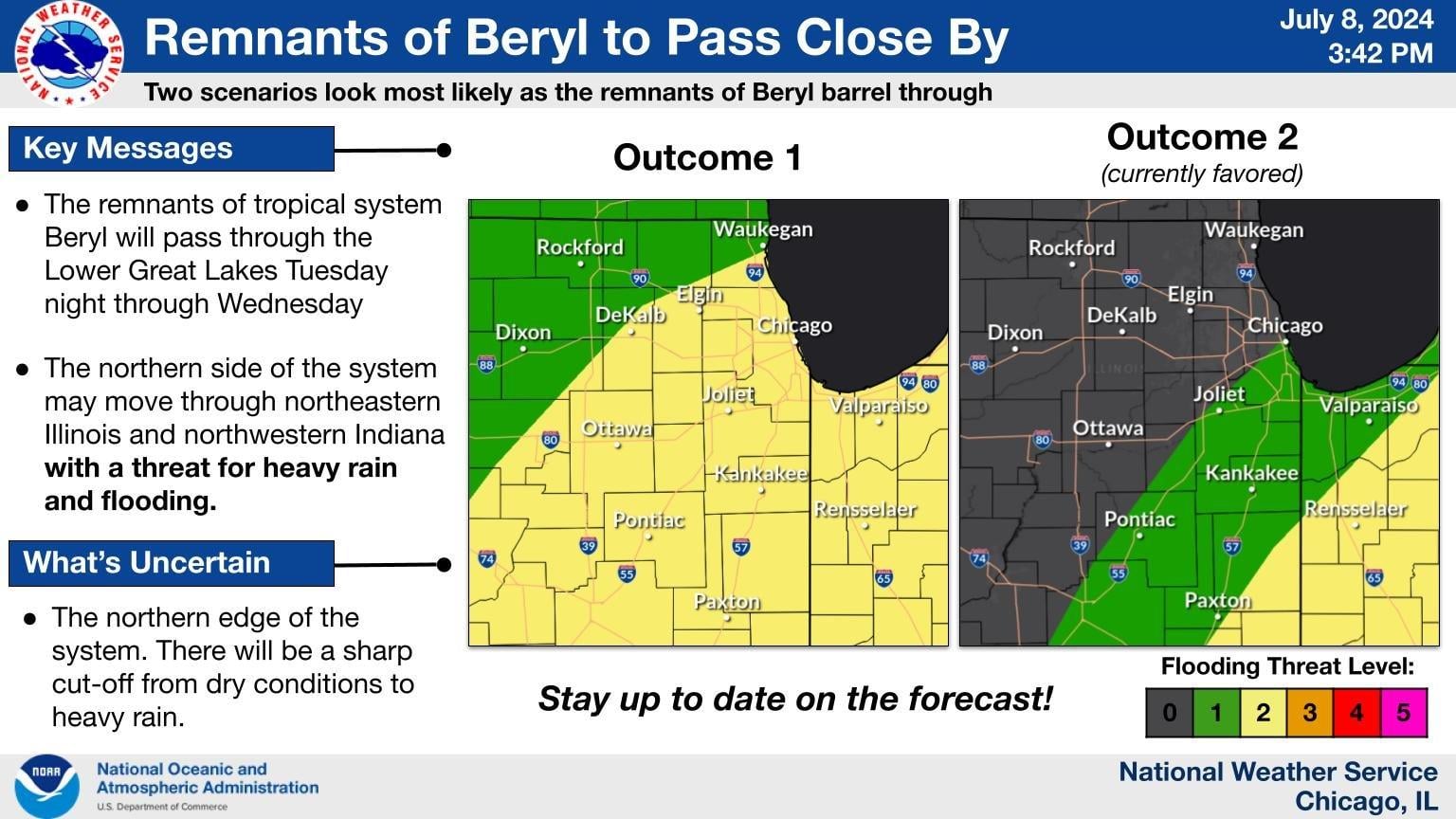
The remnants of Beryl are expected to sideswipe northeastern Illinois and northwestern Indiana, according to the National Weather Service’s Chicago office, bringing the potential for a narrow band of heavy rain and flooding, predicted to hit the region Tuesday evening into Wednesday morning.
Numerous alerts and warnings have been issued in advance of the storm’s arrival.
Meteorologists are looking at two possible scenarios, with an added degree of uncertainty owing to a separate system also moving into the Great Lakes, the weather service said.
There will likely be a sharp edge between areas that see heavy downpours and those that remain dry.
 (National Weather Service Chicago)
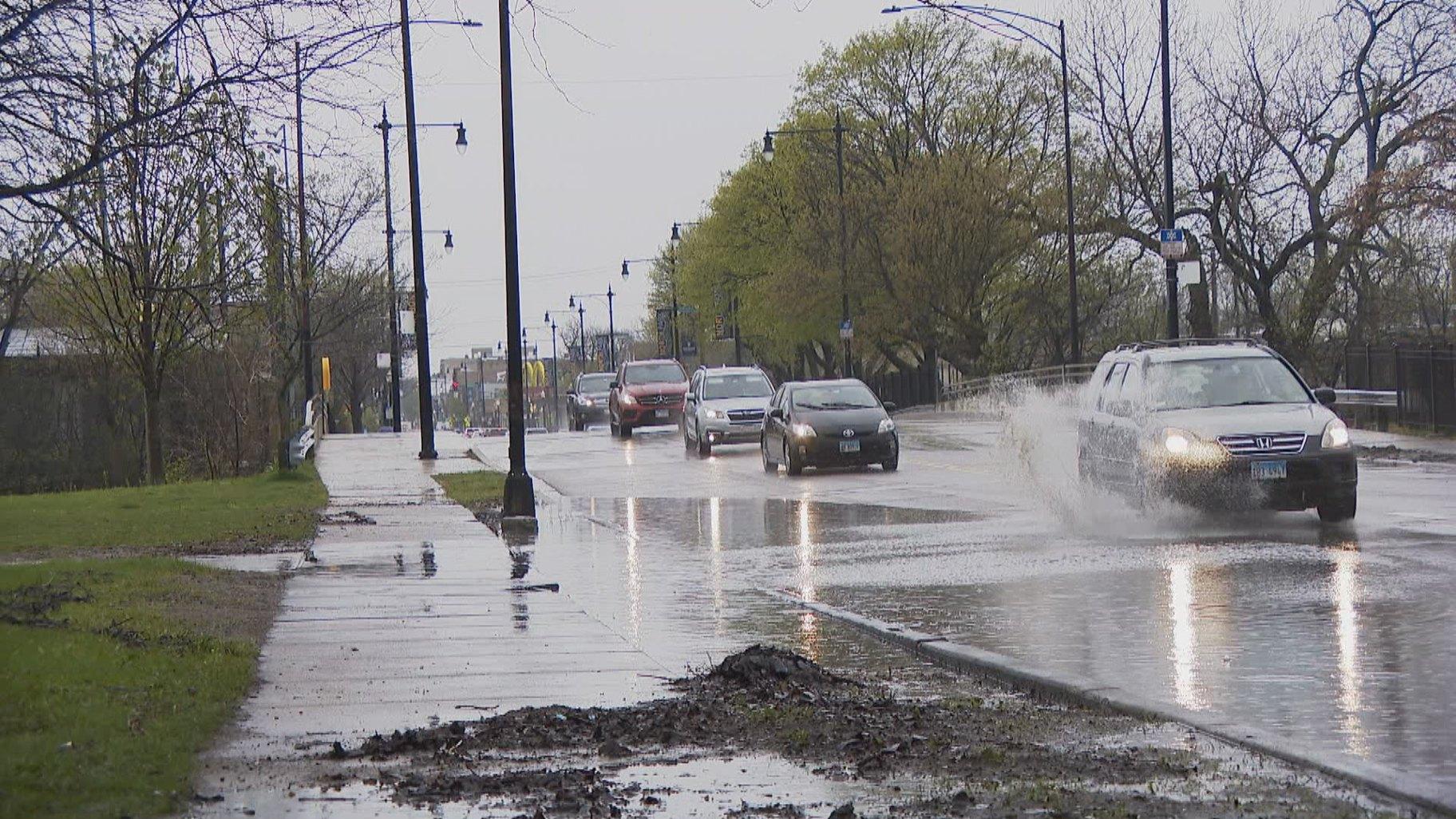
Rates of rain could exceed 1 inch per hour, with the heaviest totals along and southeast of I-55, according to forecasters.
The storm is likely to be characterized by “popcorn” showers and thunderstorms, which are brief but intense.
A flood watch has been issued, with soaking downpours likely to pool on roads and low-lying areas and to create a rapid rise in rivers and streams. The weather service is advising people to keep an eye on basements and to proactively move valuables to higher floors.
On Tuesday afternoon, DuPage County was added to the flood watch, which already encompassed Cook, Will, Ford, Grundy, Iroquois, Kankakee and Livingston counties in Illinois, along with northwest Indiana.
The storm system will also bring high winds, creating dangerous swimming and boating conditions along the Illinois and Indiana lakefront, with waves of 4 to 6 feet and “life-threatening currents,” the weather service said.
Heavy rains in urban areas are a recipe for flooding, which is why the Metropolitan Water District of Great Chicago has issued an “overflow action day” alert on Tuesday, recommending that people reduce their use of water for activities such as taking showers, doing laundry or running a dishwasher. The goal is to keep as much wastewater as possible out of the city’s combined sewer system in order to leave capacity for storm runoff.
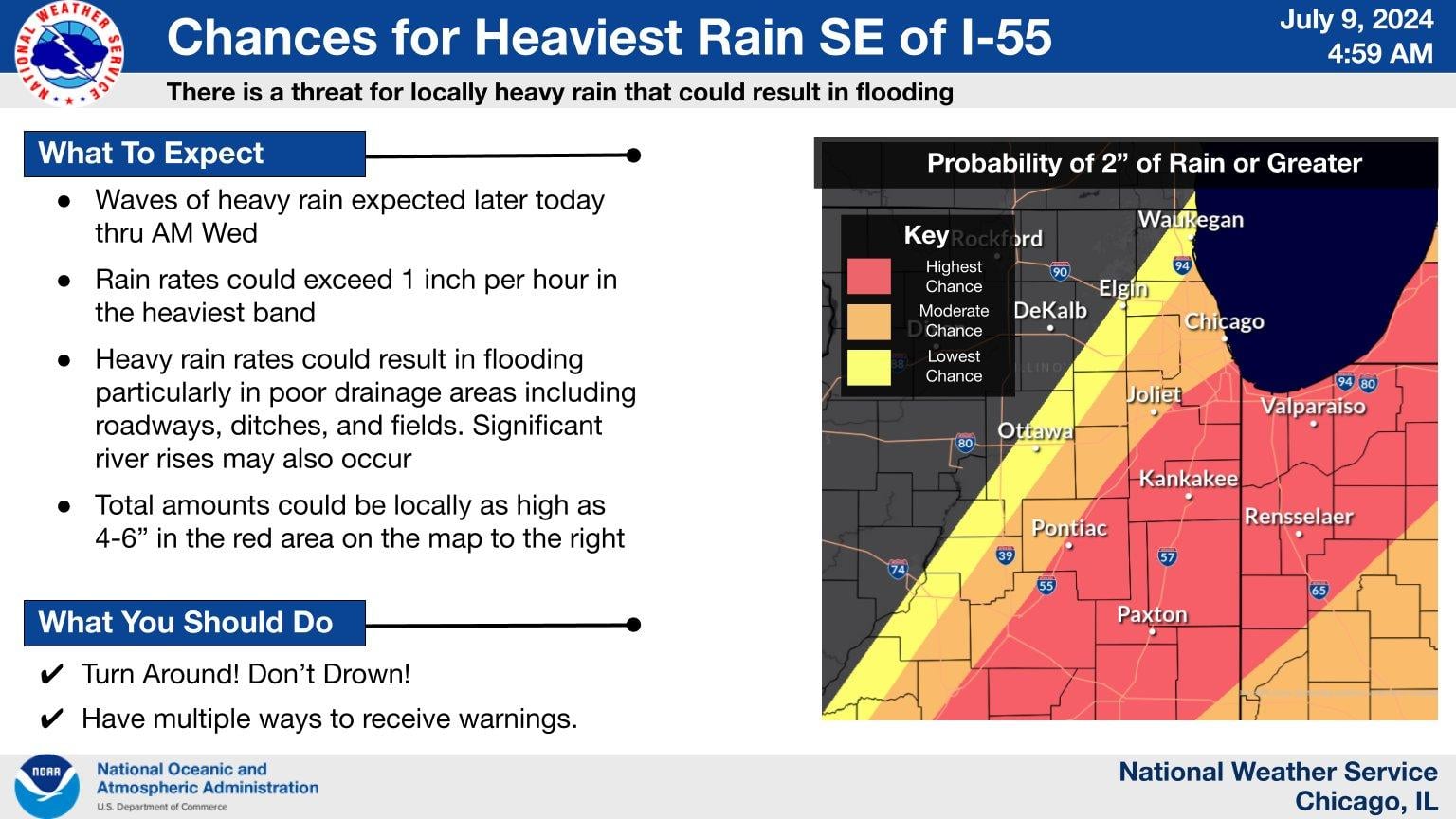 (National Weather Service Chicago)
This article originally published July 8 and has been updated with new information.
Contact Patty Wetli: @pattywetli | (773) 509-5623 | [email protected]