

Pension
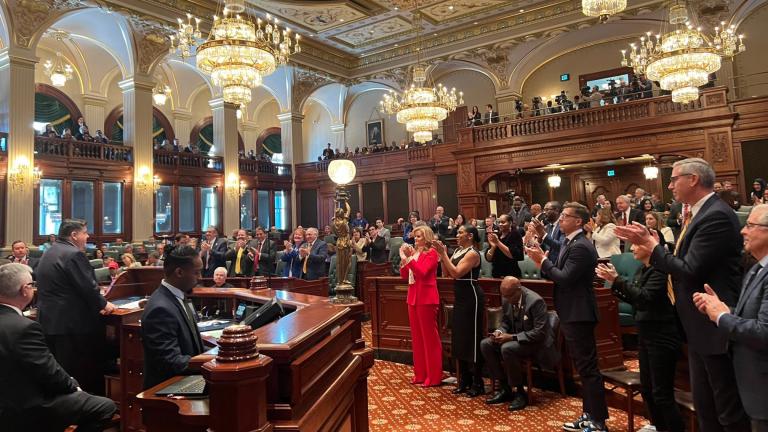

Pritzker’s budget team provided a rosier projection of an extra $1.5 billion in revenue growth, meaning he has to cover a $1.7 billion budget gap to balance the budget, rather than the $3.2 billion deficit previously estimated.

The General Assembly Retirement System of Illinois sent the former Illinois Speaker of the House notice by mail, according to the State Retirement Systems. The suspension comes days after Madigan was convicted on 10 felony counts of bribery, conspiracy and wire fraud in his landmark corruption trial.

Changes that would make Illinois pension systems compliant with Social Security by improving benefits for government employees hired since 2011 could be on the table when lawmakers return to Springfield in January.

Illinois public workers who began their positions before 2011 are in Tier 1, which offers better benefits. Those hired after Jan. 1, 2011, are in Tier 2. They have to work longer and upon retirement receive a smaller payout.
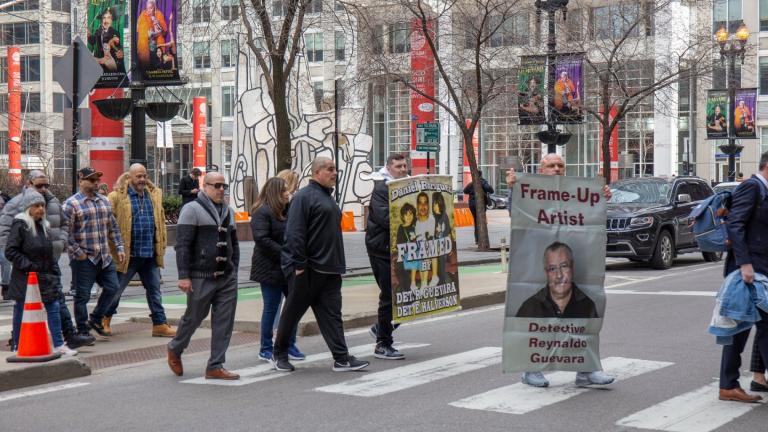
In all, it has already cost Chicago taxpayers more than $98 million to defend former Chicago Police Detective Reynaldo Guevara, investigate his conduct and resolve lawsuits that allege he violated dozens of Chicagoans’ civil rights, according to WTTW News’ analysis.
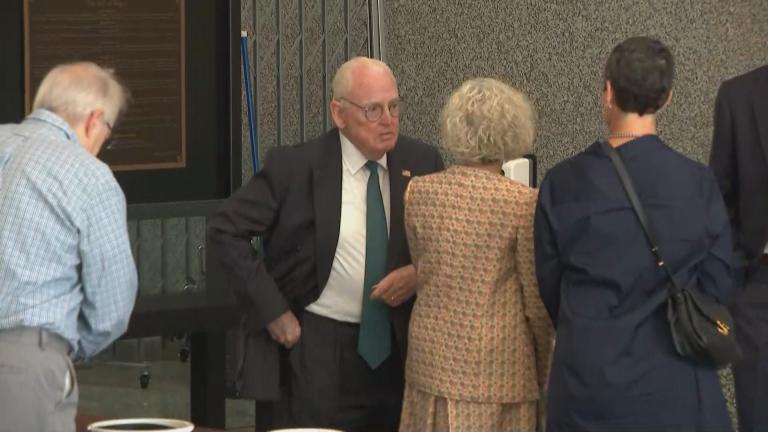
The board of the Municipal Employees’ Annuity & Benefit Fund of Chicago voted at its June meeting to suspend the former alderperson’s pension once he was sentenced on 13 counts of racketeering, attempted extortion and attempted bribery.

In all, Chicago owes $37.2 billion to its four employee pension funds representing police officers, firefighters, municipal employees and laborers, according to the 2023 Annual Comprehensive Financial Report.
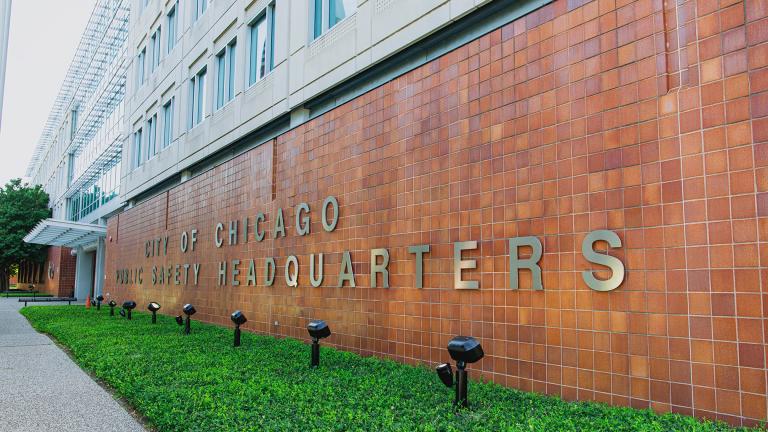
The former Chicago detective has banked more than $1.4 million in pension payments since he retired, according to records obtained by WTTW News through a Freedom of Information Act request.
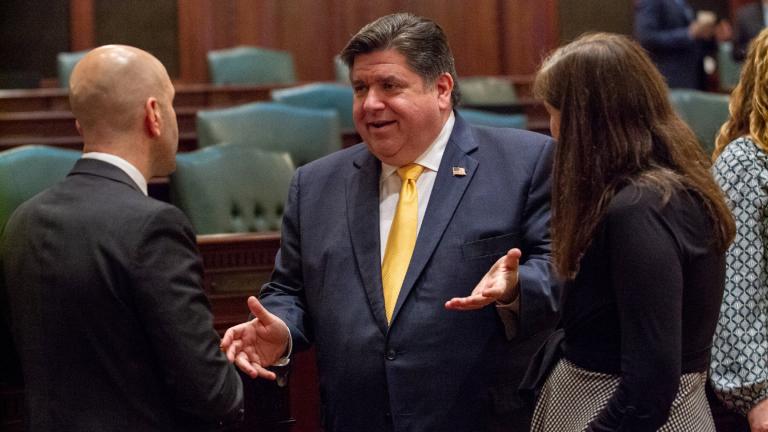
With a month and a half left in the General Assembly’s spring session, Gov. J.B. Pritzker’s administration is readying its proposal to address Illinois’ chronically underfunded pension system.
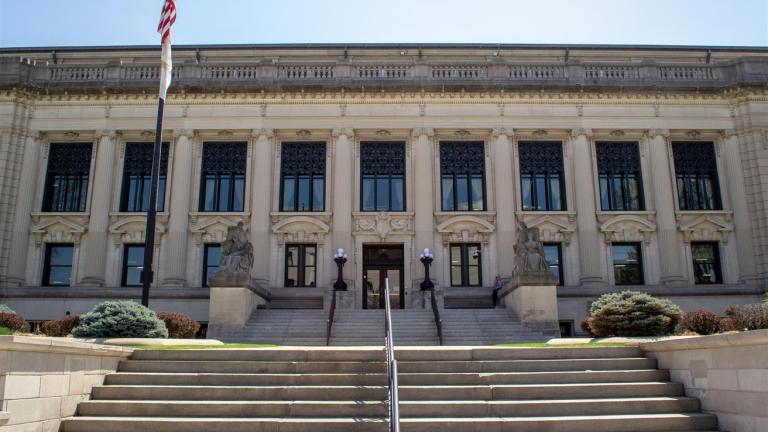
The 2019 law consolidated some 650 retirement funds for municipal public safety workers into two funds — one for firefighters and another for police officers. Chicago is not included.
The nearly three-dozen pensioners and 17 individual pension funds that sued have already lost twice in lower court. But their attorney was insistent the retired police and firefighters were wronged when Gov. J.B. Pritzker signed the law – passed with overwhelming bipartisan support.

You may have heard Chicago has a pension problem … to the tune of more than $35 billion of debt. Pensions affect nearly everyone — even if you’re not a public employee. Taxpayers have already been footing the bill to alleviate the pension debt.

State Sen. Rob Martwick, the measure's author, praised Mayor Brandon Johnson for confronting Chicago’s pension woes. The bill ensures that all retired Chicago police officers get a 3% annual cost-of-living increase, regardless of whether they were born before or after Jan. 1, 1966.
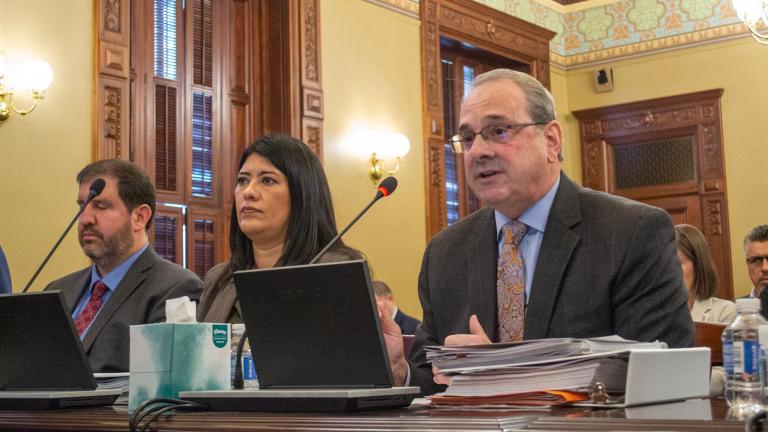
The upgrade came from Fitch Ratings, the last remaining holdout of the nation’s three major credit reporting agencies to advance the state’s status to “A” grade. Collectively, Fitch, S&P Global Ratings and Moody’s Investors Service have given the state nine credit upgrades since 2021.
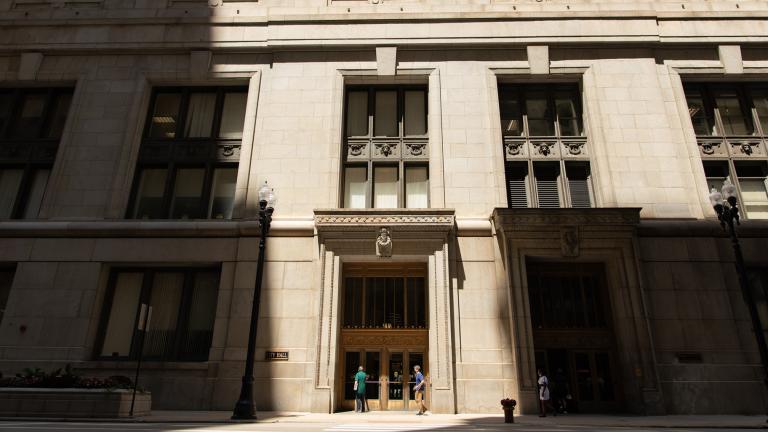
The working group formed by Mayor Brandon Johnson in June to tackle Chicago’s acutely underfunded pensions has yet to craft a comprehensive plan to address one of the major fiscal challenges facing the city.

The analysis by Fitch said the rating upgrade “is driven by a decline in the city’s long-term liability burden stemming from steady growth in the economic resource base and improved debt management practices.”
Trending
2026 Chicago Festival Guide

CPD Officer Who Fired 3 Shots at Suspected Carjacker on 606 Trail Faces Firing: Records

Interim NITA Director Earning $350K Salary While Also Collecting $213K Annual City Pension, Records Show

Firm Set to Buy Chicago’s Parking Meters Sells Airline That Carried Out Deportations

Chicago Woman Accused of Social Security Fraud After Hiding Mother’s Body in Freezer for 2 Years
Sign up for the WTTW News newsletter