

Chicago Budget
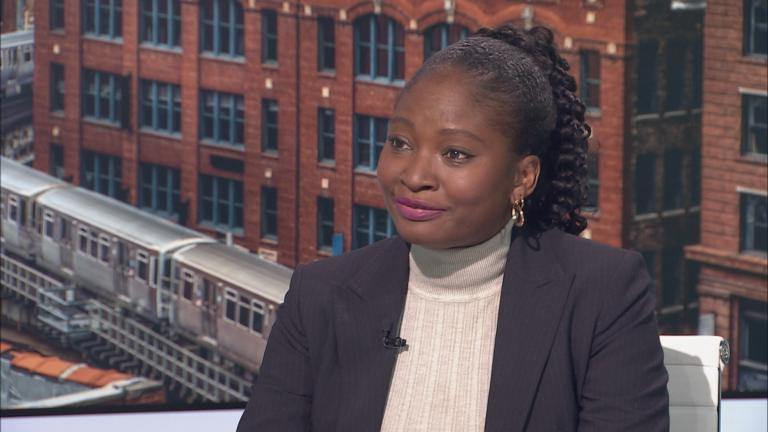

Mayor Brandon Johnson’s spending plan for 2025 earmarks nearly $700 million for the Chicago Department of Public Health, which is charged with fighting the spread of communicable diseases, providing mental health care and ensuring the safety of food at restaurants and festivals.
Chief Financial Officer Jill Jaworski told members of the City Council’s Budget and Government Operations Committee on Wednesday that the $17.3 billion spending plan “prioritizes the city’s long-term fiscal stability.”
Mayor Brandon Johnson said proposing the tax hike, the second largest in modern Chicago history after the $588 million property tax hike pushed through by former Mayor Rahm Emanuel in 2016, was a “difficult decision” that was the result of an "excruciating process.”

Between March 2021 and June 2024, Chicago spent more than $238.8 million on a host of programs including affordable housing, mental health, violence prevention, youth job programs and help for unhoused Chicagoans, according to the most recent reports filed with the U.S. Department of the Treasury as required by federal law.
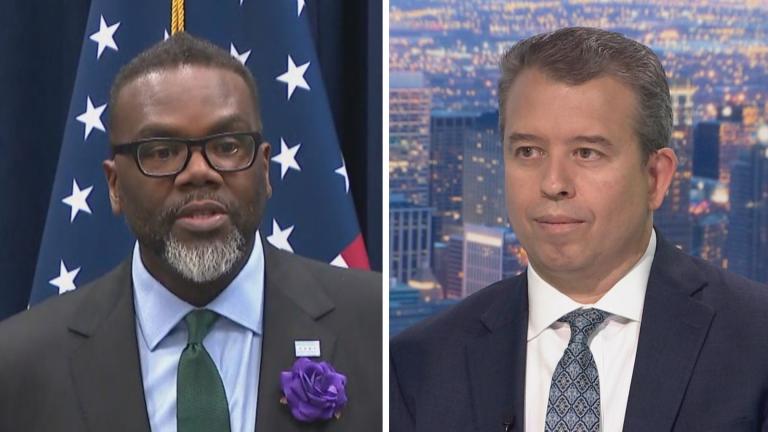
No current or former members of the Chicago Board of Education attended Wednesday's marathon session of the City Council’s Education Committee, even after some City Council members threatened to hit them with subpoenas to require them to appear.
“A generation-long persistence in structurally imbalanced budgets, coupled with high pension and debt burdens, mean the city will face enormous budget shortfalls in the coming years,” wrote Joseph Ferguson, the head of the nonpartisan budget watchdog group and the city’s former inspector general.
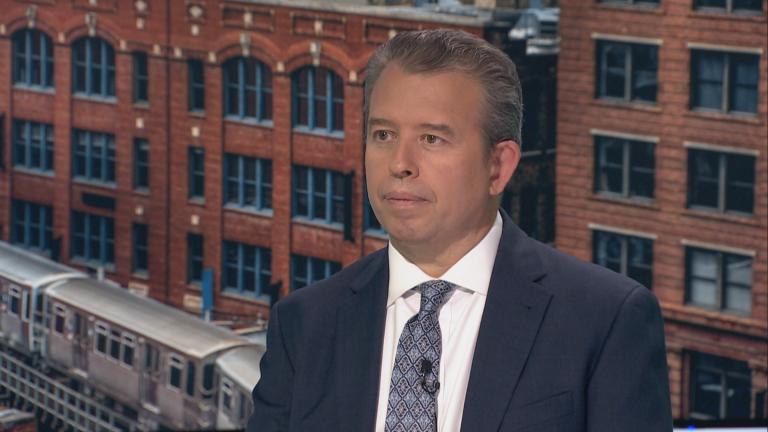
CPS CEO Pedro Martinez said during an appearance on WTTW News’ “Chicago Tonight” he has repeatedly urged the mayor to use funds from the city’s TIF districts instead of borrowing money or making cuts to classrooms.
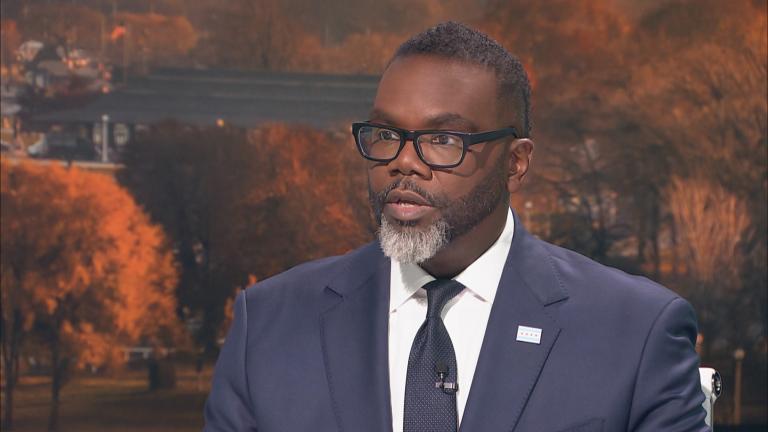
“I’m not going to cut, and take away, layoff, fire, privatize so that other people can benefit, and the people of Chicago can lose,” Mayor Brandon Johnson said. “Not under my watch.”
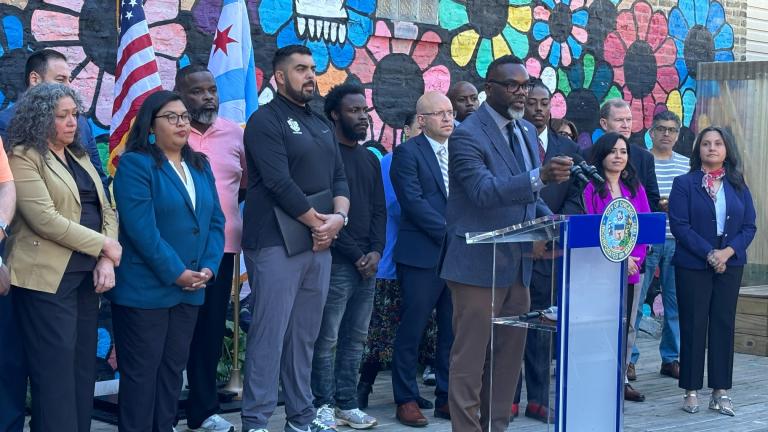
“This is still very much a frustration I have,” Mayor Brandon Johnson said. “I’ve been in conversations with the superintendent, with our budget director to come up with better systems.”
The city is on pace to spend at least $258 million on police overtime by the end of the year, even as officials imposed limits on overtime for all city departments, except for police and the Chicago Fire Department, amid a massive budget crunch.
During the past week, CPS CEO Pedro Martinez has written three times to parents, staff and students, and in each letter, he has promised that he will not close any schools while at the helm of CPS, even as he acknowledged compiling a list of schools that could be closed as part of an effort to compile a five-year strategic plan.
A spokesperson for Mayor Brandon Johnson declined to comment on whether he had asked CPS CEO Pedro Martinez to resign, citing the mayor’s policy of not commenting on personnel matters. A spokesperson for Martinez declined to comment.
The move was announced Monday by Annette Guzman, the city’s budget director, and comes as city leaders stare down a $222.9 million deficit this year and a projected $982 million shortfall in the 2025 fiscal year.
“There are sacrifices that will be made,” Mayor Brandon Johnson said.
In all, Chicago owes $37.2 billion to its four employee pension funds representing police officers, firefighters, municipal employees and laborers, according to the 2023 Annual Comprehensive Financial Report.
As the mayor ramps up work on his second budget proposal, a newly formed Chicago City Council subcommittee is set to meet at noon Wednesday to start examining the dozens of proposals to increase the amount of money officials have on hand to spend starting in 2025.
Trending
2026 Chicago Festival Guide

CPD Sergeant Who Led Botched Raid at Home of Anjanette Young Now Working as a Suburban Police Detective

Woman Charged With Fatally Stabbing 7-Year-Old Girl Walking in Chicago Saturday

Key City Panel Unanimously Agrees to Pay $260.8M to Resolve 16 Lawsuits Tied to Disgraced Ex-CPD Detective Reynaldo Guevara
Marimar Martinez Hopes New Lawsuit Could Spur Criminal Charges 1 Year After Border Patrol Agent Shot Her

Sign up for the WTTW News newsletter