Politics
‘Much Ado About Nothing’: Mayor, Acting Chief Financial Officer Dismiss Dispute That Led to Resignation
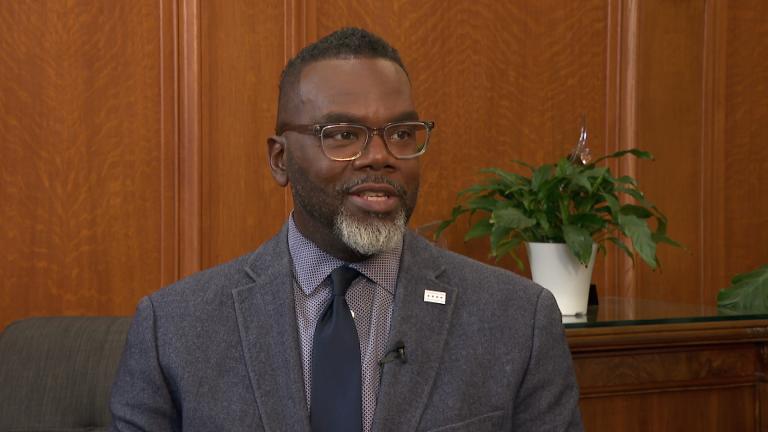
 Mayor Brandon Johnson, left, and Acting CFO Mike Belsky take questions from the news media on Tuesday, Nov. 17, 2026. (Heather Cherone / WTTW News)
Mayor Brandon Johnson and Comptroller Michael Belsky, who is also the city’s newly minted acting chief financial officer, dismissed the conflict that led to the abrupt resignation of former Chief Financial Officer Ashlee Gabrysch as a technical dispute that is “much ado about nothing.”
Chicagoans can trust that his administration has accurately depicted the financial assessments the budget relies on, Johnson said at a news conference Tuesday, holding thick copies of the city’s annual certified financial reports from the last several years after aides handed out photocopies of a certificate of achievement for excellence in financial reporting from the Government Finance Officers Association for the city’s 2024 report.
When he unveiled his budget, Johnson and administration officials said 76% of the budget gap would be closed with structural fixes that would bring expenses in line with revenues. That could help the city avoid another credit downgrade.
But Gabrysch told the City Council on Oct. 26 that the decision to borrow $481 million to cover the cost of resolving police misconduct lawsuits changed that calculation, reducing the amount the gap closed with revenue the city can count on in future years to just 56%.
As recently as September, Johnson told reporters the city would not borrow to cover those costs, and blamed the Chicago Police Department’s decades of scandals, misconduct and brutality for swelling the deficit to an initial projection of $882.4 million.
By deciding to borrow to cover the cost of resolving those lawsuits, Johnson’s team only had to close a gap of $652.5 million, according to updated budget documents spotlighted by Johnson and his team Tuesday.
That amounted to a “technical difference of interpretation,” said Johnson, who repeated the word technical five times in the hour-long news conference.
Belsky, the former mayor of Highland Park who worked for Fitch Ratings, one of the Wall Street ratings agencies that measures the city’s credit worthiness, and helped recruit Gabrysch to the city, backed Johnson’s interpretation.
“In my personal view, it is much ado about nothing,” said Belsky, sitting alongside the mayor.
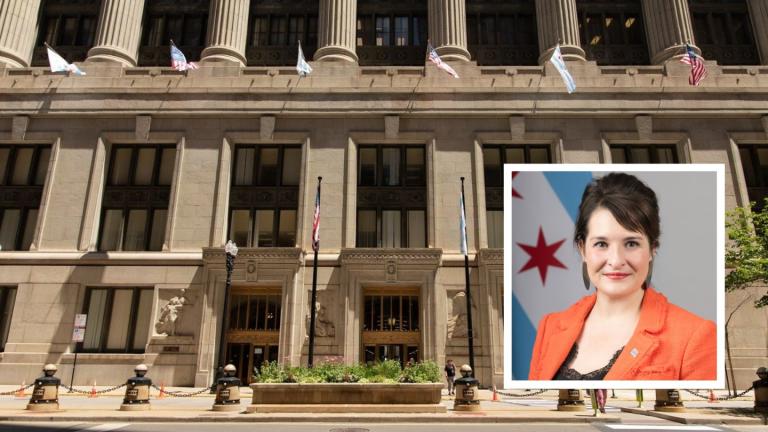
But the controversy that has complicated already fraught negotiations over Johnson’s proposed $17.6 billion spending plan prompted Gabrysch to resign, saying that “to continue in this role would be to compromise my integrity and professional obligations.”
After Gabrysch’s resignation on Friday, a spokesperson for Johnson accused her of mismanagement, saying she was “was largely absent during critical periods of the city’s budget preparation process” and directed the “city treasurer to issue a $75 million payment without proper legal authority or following the required processes.”
The Chicago City Council voted 44-6 on Nov. 2 to use those funds to make an extra payment to the city’s woefully underfunded pension funds, opening a new gap in the 2027 spending plan. However, that ordinance is not yet in effect, since city ordinance gives Johnson until the next City Council meeting to sign or veto measures. The next regular meeting of the City Council is not scheduled until December.
Gabrysch ordered City Treasurer Melissa Conyears-Ervin to make that payment on Nov. 6, prompting Acting Corporation Counsel Renee Hatcher to tell her in an email “you acted without the necessary legal authority,” records show.
Johnson twice called Gabrysch’s actions “illegal” during the news conference.
Gabrysch said in a statement Friday afternoon that the mayor’s office’s attempt “to deflect from the serious issues at stake and attack those who attempt to hold them accountable is disappointing but not surprising. I stand by my statement and will continue to operate in accordance with my values and integrity.”
Saying he wanted to “recenter” the debate over the city’s 2027 budget, Johnson held his ground on his proposal to impose a $25 per month per employee tax on all firms that have more than 125 employees and hike the city’s personal property lease tax.
The so-called head tax is projected to generate approximately $100 million — after exempting firms whose employees work in areas of the city designated by the federal government to be “socioeconomically disadvantaged,” which includes much of the city’s South and West sides, according to Johnson’s proposal.
Johnson’s plan proposes a hike of the personal property lease tax from 15% to 20% to generate $234 million. That tax, which gets added to car and equipment rentals as well as cloud-based software, will ensure that “big tech” firms pay their fair share, Johnson said.
A majority of alderpeople have ruled out voting for a budget that contains either proposal, leaving the two sides $409 million apart, with just 42 days until the deadline for the City Council to pass a budget.
Johnson said Tuesday that while he had met with some members of City Council who proposed different ways to balance the budget, those proposals were not big enough to bridge the remaining gap.
While Johnson’s critics have said the mayor must come up with a new proposal, Johnson said Tuesday he had put forward a budget that is balanced, but “not on the backs of working people.”
The City Council must pass a budget for 2027 by the end of December. Officials cannot pass a short-term ordinance to keep City Hall functioning while negotiations continue, officials said. That means without a budget agreement, more than 30,000 workers will not be paid and city services will stop.
Contact Heather Cherone: @HeatherCherone | (773) 569-1863 | [email protected]