Politics
Replacing Mendoza: Candidates Vie to Be State’s First New Comptroller in a Decade
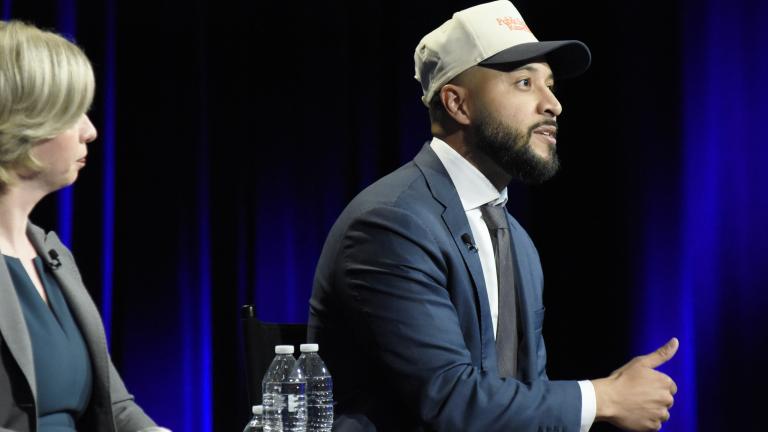
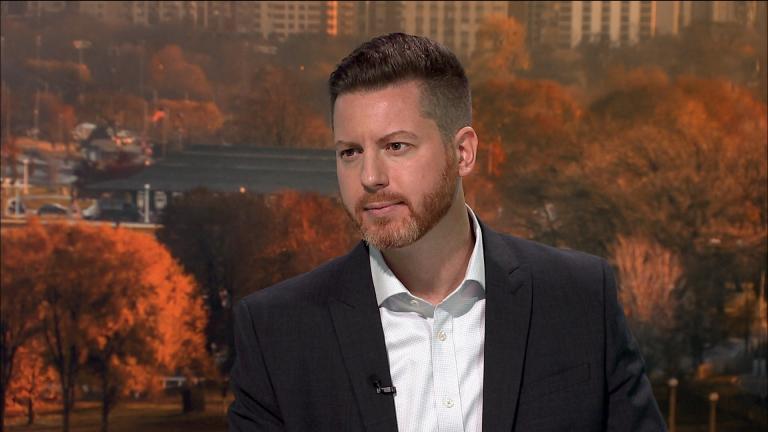
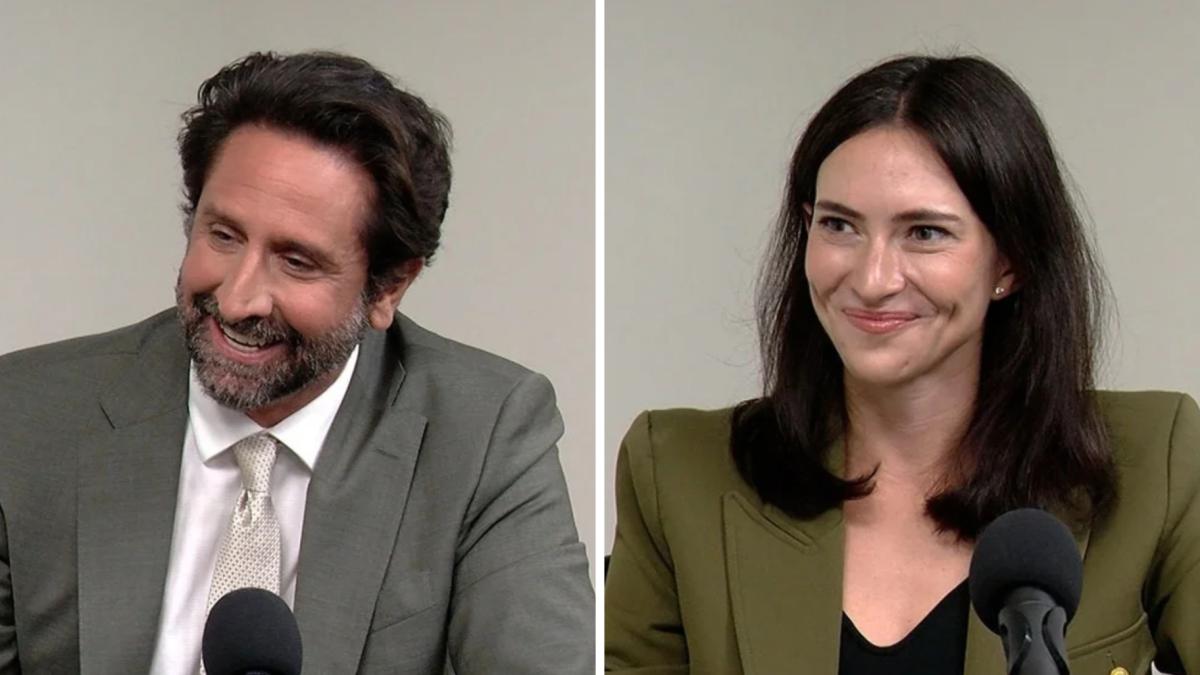 Republican Bryan Drew (left) and Democratic Rep. Margaret Croke are running to succeed comptroller Susana Mendoza. (Andrew Campbell / Capitol News Illinois)
SPRINGFIELD — In January, there will be a new person writing the state's checks.
Democrat Margaret Croke, a state representative from Chicago, and Republican Bryan Drew, an attorney from Benton, are competing to succeed incumbent Comptroller Susana Mendoza, a Chicago Democrat who's held the job since late 2016 but is forgoing a reelection bid to focus on a second campaign for mayor of the nation's third-largest city.
“I'm walking into a really well-run office if I'm lucky enough to win in November, and I get to build on those things, and that's an opportunity that I'm excited for, and that I really appreciate her kind of setting me up for success,” Croke told Capitol News Illinois in an interview earlier this month.
Croke has six years of legislative experience under her belt, which has included work on various financial issues and processes within state government. Before getting elected in 2020, she held leadership positions in the Department of Commerce and Economic Opportunity and was on Gov. JB Pritzker's 2018 campaign staff.
Drew has been a personal injury and civil litigation attorney in southern Illinois for more than 25 years. He's also a small business owner. He's served for eight years as an elected trustee of the Rend Lake Community College Board, including two has its chairman. And in 2024, he finished second in the Republican primary for a circuit court judgeship.
Though limited in his experience in state government and finance, Drew said owning a cafe with his wife has exposed him to the impact of high taxes on small businesses. He said he would use the "bully pulpit" of the office to act as a watchdog for taxpayers.
"If the comptroller's office really is a watchdog for the taxpayers, then I think it is an essential office because it really is the one independent place that the taxpayers can go to find out where their money's going," Drew said.
Watching the Books
The comptroller serves as the state's chief fiscal officer, directing funds to and from state accounts. It's a serious but mundane responsibility that makes whoever holds the office perhaps the most under-the-radar of Illinois' statewide officers.
Still, the comptroller has been cast into the spotlight at times in recent decades given the state's tumultuous financial straits.
Months into Mendoza's tenure, for example, the state's bill backlog ballooned to nearly $17 billion and its credit rating dropped to one notch above junk status amid a two-year budget impasse.
This forced Mendoza to exercise some discretion as to which bills got paid first. Where she had authority, she ensured social service agencies were at the front of the line and state lawmakers’ paychecks at the back, for example. She also worked to expose executive agency delays in submitting vouchers for payment.
But state lawmakers have since clawed Illinois back from the brink of financial ruin, approving balanced budgets that have helped the state achieve a dozen credit rating upgrades since 2021 and reduce the backlog to the point where Mendoza's office can pay the bills as they come in.
Croke, who voted for several of those budgets that have helped Illinois reclaim some fiscal credibility, said she would be “hyper-focused” on state finances in the new role.
“The finances of the state are the backbone to be able to do the things that we care about deeply as Democrats,” she said.
While acknowledging that decisions about state spending are the purview of the governor and the state legislature, Drew said the office can be a greater beacon of transparency for taxpayers. His first action, if elected, would be to improve the comptroller’s website, the current version of which he derided as "nearly impossible to figure out."
"Those websites are supposed to be for the taxpayers, not for public accountants to go on there and figure out where the money's going," Drew said.
Drew said he’d particularly like to make state expenditures on non-government organizations easier to track. There’s no official, readily available tally on grant spending that goes to NGOs, though he pegged the number at "hundreds of millions of dollars,", echoing a claim made by the GOP ticket for governor earlier this year.
Independence?
Croke won a tight, four-way Democratic primary earlier this year, in part relying on the political muscle of Gov. JB Pritzker, her former boss and a longtime ally. Drew argues that she wouldn’t be able to maintain her independence from the governor despite holding an independent constitutional position. Croke said her primary responsibility is to represent the voters but said positive relationships with other leaders like Pritzker matter too.
Croke said she’s willing to push back on Pritzker if needed.
“The governor does not appreciate 'Yes' people,” she said. “I've seen this as someone who's been around this world. He surrounds himself with people who challenge him, obviously respectfully. But that's how we get better outcomes.”
Drew sees the office differently. If he wins, he views himself as an ombudsman of sorts who can act as a check on government in a state where Democrats hold the governorship and supermajorities in the legislature.
He acknowledged that Mendoza "was not just a rubber stamp for the governor" on at least one or two occasions. But he said he's better suited to be a watchdog as an outsider.
"I'll probably be eating lunch by myself," Drew said, noting that his career as an attorney has prepared him to handle a job where "you don't make everyone happy."
Pensions
In recent upgrades, credit rating agencies have said the state’s pension liability is one of the hurdles holding the state back from additional upgrades.
About 20% of the state’s general revenue budget goes to pensions each year under a 30-year-old payoff ramp that extends until at least 2045. With roughly $145 billion in unfunded pension liabilities, Illinois’ pension systems are about 47% funded.
Mendoza has pushed for additional contributions toward pensions when possible, and the state did so in the years immediately following the COVID-19 pandemic amid unexpected revenue booms.
Croke agreed the state still has a lot of work to do to address its largest budget handicap but said it’s one of many financial priorities the state must balance.
“You can be fiscally responsible, but you can also invest in our most vulnerable communities,” she said. “I don't think you need to choose between the two.”
Croke said sound financial moves like building up the “rainy-day” fund and making statutory pension payments can help lead to credit upgrades. Over time, that can help save the state money on interest payments, which Croke said can help fund the priorities of the Democratic Party.
Drew said he would be happy to serve as a facilitator if lawmakers want to tackle another round of pension reform, though Pritzker and the General Assembly would have to lead the effort.
Regulating the Death Industry
The comptroller’s office also has the responsibility for regulating cemeteries and crematories. The Department of Financial and Professional Regulation handles funeral directors.
The August discovery of 56 decomposing bodies improperly stored at a South Side funeral home has put renewed focus on the state’s regulatory structure of such businesses.
Croke said she supports legislation that would take those responsibilities away from the comptroller.
“These are incredibly caring and empathetic individuals who have gone into this business not for a profit, but because they care about taking care of these families, and every time we have one of these stories, it reflects badly on the entire industry,” Croke said.
Drew said it's "perfectly fine" if the regulatory responsibilities remain with the comptroller, but communication must improve with IDFPR.
"We can't allow that to continue to happen just by merely not talking to the other agencies, so that's the first thing I'll do is make sure we start talking," Drew said.
Using AI
As the state and nation debate what to do about the rapid growth of artificial intelligence, both candidates agree there could be room for its use in the comptroller’s office.
Drew said he would deploy the technology to identify potential waste, fraud and abuse. He said it could also be used to identify funds earmarked for NGOs and trace their spending.
"What it's really useful for doing is taking a vast amount of information, like $130 billion worth of spending, and being able to dilute it down into bite-sized chunks that you can then go really look into really confidently and very thoroughly," Drew said. "So I think that will be a very good use for it."
Croke suggested a more cautious approach.
“I always am a little concerned about AI with private information and private data because that's something that we hold within the comptroller's office,” Croke said. “But if there are ways to create efficiencies where you're like moving an entire paper file system and AI is helping you consolidate and create those files into a very specific place, I think it's a conversation.”
Who’s Funding Them?
Croke's top donors include Chicago businessman and Democratic megadonor Michael Sacks, who's contributed more than $300,000 to her campaign, and a hodgepodge of influential trade unions. Pritzker's given his former staffer $72,800.
Since the start of 2025, Croke's disclosed more than $2.6 million in donations, according to a Capitol News Illinois analysis of state fundraising records. More than 80% of that came before the March 17 primary, when Croke eked out a two-percentage-point victory over three opponents.
Drew did not face competition in the Republican primary. He's raised just under $80,000 from outside donors, about the same number of miles he’s logged traveling the state in his car since campaign started. Lacking the funds to sustain a paid advertising campaign in the nation’s sixth-largest state, Drew is leaning on the latter to get his message out.
"I don't have JB Pritzker maxing out campaign contributions like he has to my opponent, and special interests and other politically connected people handing a lot of money," Drew said. "I don't have that, and I think that's a positive thing."
Capitol News Illinois is a nonprofit, nonpartisan news service that distributes state government coverage to hundreds of news outlets statewide. It is funded primarily by the Illinois Press Foundation and the Robert R. McCormick Foundation.
This article first appeared on Capitol News Illinois and is republished here under a Creative Commons Attribution-NoDerivatives 4.0 International License.