Health
Cook County Health CEO on Medicaid Cuts, $100M Increase in Charity Care
Across two hospitals, 16 community health centers and Cook County Jail, Cook County Health aims to provide healthcare to patients, regardless of their ability to pay.
But with federal policy changes looming, the health system’s budget is facing new challenges.
In 2027, Cook County Health is anticipating a $138 million drop in patient revenue. At the same time, charity care costs are expected to rise by $100 million.
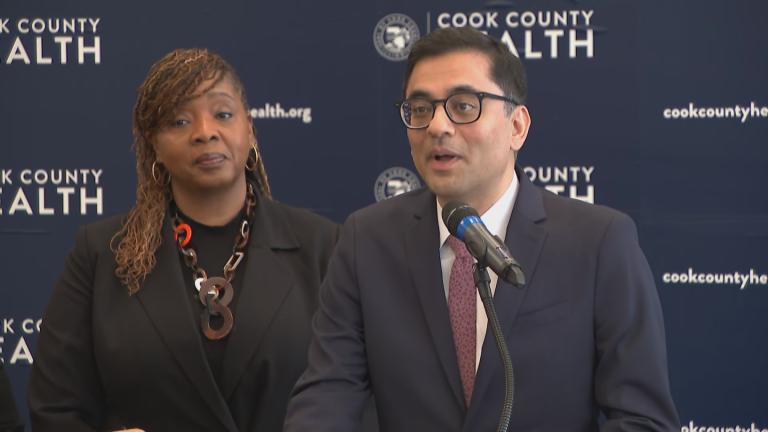
Dr. Erik Mikaitis, the CEO of Cook County Health, joined “Chicago Tonight” to discuss the health system’s $4.7 billion budget, its $40 million request and how Medicaid cuts are affecting the bottom line.
On Medicaid cuts:
“In Illinois, we’re anticipating 400,000 people will lose their coverage … and half of them live right here in Cook County.”
Mikaitis said that after enhanced tax subsidies under the Affordable Care Act ended earlier this year, about 90,000 Illinois residents chose to forgo health insurance. In October, a re-definition of aid eligibility will remove benefits from specific immigrant populations, including refugees, asylum seekers and victims of domestic violence.
But the largest group of people will be impacted by the work requirements put in place to receive Medicaid. Keeping patients up to date on how they might be impacted is a big focus of the health system.
“We did implement a broader effort called the Medicaid Impact Work Group, and that’s across the whole health system. From that group, we actually invited people inside and outside of healthcare. So we’ve had business leaders, academic leaders, philanthropic and community organizations, technology leadership, all come together to have a more meaningful conversation about how we mitigate these impacts. And one of the big outputs from that is a communication effort.”
On the upcoming budget:
The charity care budget is “a $100 million increase from this year, … so we’ve gone from about $125 million (in charity care provided) to close to $500 million in the last five or so years.”
“After the election in 2024, we knew we probably had to prepare for some leaner times. We started work then to reduce expenses, to really improve our operations, and I’m really proud of the team. They’ve actually been able to remove $315 million out of expenses during that time frame.”
On service impacts:
“We have not had to do any service reductions or layoffs, we’ve done a lot of the belt tightening and that fiscal discipline. We do have right now $40 million additional that we’re asking the county to supplement so we don’t have to consider reductions in the coming year.”
On safety-net hospital closures:
“That’s the big unknown. We’ve already seen two hospitals close in the last year, and we know that several more are struggling right now. So the question then becomes: What happens to the broader safety net as all of these federal cuts come into play? I anticipate we’ll probably see more closure in the coming years. What that means for the broader community, is people still need care. So they’re still going to have to go find new hospitals to receive that care. Potentially as access diminishes, it’s going to mean longer waits for everybody.”
On preventative care:
“We know when people don’t have health insurance, they avoid preventative care. They’ll ration medications, not see their doctor. I use the simple analogy of, instead of managing high blood pressure and diabetes in a clinic, we’ll see them down the road in the emergency room with strokes and heart attacks. It’s much more burdensome to the patient, it’s much more costly to provide that care. Not to mention the impact on families and the communities they come from.”