Politics
Taxpayers Paid Man Pulled Over by the Same CPD Officers Who Stopped, Shot Dexter Reed $27K: Records
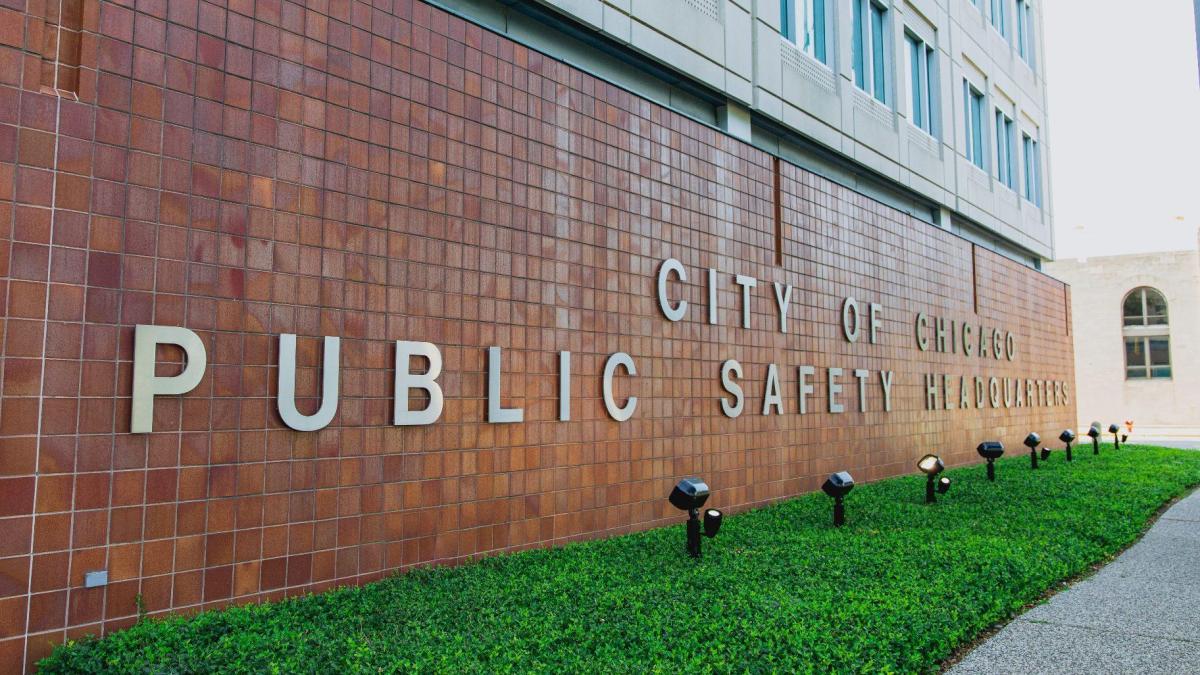 Chicago Police Department headquarters. (Michael Izquierdo / WTTW News)
Chicago taxpayers paid $27,500 to a Chicago native who was stopped by the same tactical team of officers who would days later pull over Dexter Reed and fatally shoot him in a barrage of gunfire after he fired at officers, records show.
Shunza Walker, a tattoo artist who was born and raised on the West Side, was driving his black Maserati less than a mile away from the intersection on the border between Humboldt Park and Garfield Park where Reed would die after Chicago police officers stopped him 15 days later, records show.
Walker’s lawsuit claimed that traffic stop violated his constitutional rights and left him scared to drive anywhere in Chicago, a feeling that intensified after Reed’s killing made headlines across the city, igniting a firestorm over CPD’s use of traffic stops.
Jordan Marsh, Walker’s attorney, who has filed several lawsuits against the city alleging officers violated drivers’ constitutional rights during traffic stops, said resolving the lawsuit will allow Walker to “get some closure and put it behind him.”
“This small amount of justice will not erase the trauma,” Marsh said.
A spokesperson for the city’s Law Department said its leaders believe “the settlement is in the best interest of the taxpayers.”
Corporation Counsel Mary Richardson-Lowry has the authority to resolve cases with payments of $100,000 or less. Larger settlements require City Council approval.
The Civilian Office of Police Accountability concluded that the six officers who stopped Walker on March 6, 2024, violated his constitutional rights as well as nine department rules.
Chicago Police Supt. Larry Snelling concurred with COPA’s conclusions and found those violations merited suspensions ranging from three days to 25 days for each officer that participated in the stop.
A lawyer for the officers told WTTW News a year ago that all had appealed that discipline.
Both Reed and Walker were stopped on suspicion for failing to wear a seat belt, records show.
But when an officer approached Walker’s Maserati, he told Walker he had been driving too fast while eating. A second officer told Walker he had been stopped because his windows were tinted too dark. The windows of Reed’s SUV were also tinted, records show.
“COPA questions whether the officers would have been able to clearly observe the positioning of (Walker’s) seatbelt given the tints on the windows of Maserati,” according to the final summary report of the March 6, 2024, incident.
COPA officials raised identical concerns about the validity of the stop that led to Reed’s death.
Walker gave officers his license, but officers did not use the computer in their vehicle to check whether there were any outstanding warrants for his arrest, records show. Initially, Walker refused an order from a third officer to get out of his car and asked the officers to request their supervisor come to the scene, records show.
Two officers told Walker that if they called a supervisor, he’d go to jail for obstruction, records show. After that, he got out of his car, and a fourth officer lifted up Walker’s sweatshirt to search for a weapon. Walker was not armed, records show.
Four officers searched the Maserati, looking in and around both seats in the front of the car and the back seats, records show.
During the search, Walker demanded the officers’ badge numbers. Officers again threatened him with arrest, and one used profanity in her response, records show.
Investigators concluded that the officers did not have a reasonable basis to stop Walker’s Maserati, and “impermissibly extended the duration of (Walker’s) stop in violation of the Fourth Amendment,” COPA concluded.
The officers should not have searched Walker because they “lacked any reasonable belief that (Walker) was armed and dangerous” and the search of the Maserati “exceeded the legal parameters of a protective sweep of a vehicle,” COPA concluded.
In addition, two officers violated CPD’s rules that prohibit officers from retaliating against members of the public for requesting police services. Walker should not have been threatened with arrest for requesting a supervisor come to the scene of the traffic stop, COPA concluded.
Officers also failed to properly document their traffic stop of Walker, records show.
“These combined circumstances, especially if such behavior is repeated numerous times over the course of other interactions with members of the public, have the potential to frustrate judicially mandated police oversight and reform and to undermine trust between CPD and members of the public,” COPA concluded in its final summary of its probe into the officers’ decision to stop Walker.
One of the five officers who stopped Reed, Alexandria “Ally” Giampapa, resigned from CPD in November and is now a police officer in Tipp City, Ohio.
Officer Gregory Saint Louis, who was shot in the hand by Reed during the March 21, 2024, traffic stop, is inactive, according to a department spokesperson.
The three other officers who stopped Walker and then Reed — Victor Pacheco, Aubrey Webb and Thomas Spanos — are assigned to patrol the Harrison (11th) District, where both traffic stops took place, according to a department spokesperson. Pacheco and Webb earn $111,252 annually, while Spanos earns $105,906 annually, city records show.
Reed’s family has also sued the city, alleging his civil rights were violated by the officers who stopped and fatally shot him.
The City Council’s Finance Committee rejected a recommendation to pay Reed’s family $1.25 million to resolve the wrongful death lawsuit they filed. The next hearing in that case is scheduled for July 31, records show.
In October 2024, WTTW News reported that COPA identified a troubling pattern of undocumented and aggressive traffic stops on the city’s West Side at least a year before Reed’s death. But COPA did not alert the commander of the Harrison Police District until six days after Reed’s death that the agency had received numerous complaints related to CPD members “detaining, searching, and/or subjecting citizens to force. COPA’s investigation of these complaints has been impeded by a consistent lack of documentation, Body Worn Camera (BWC) footage, and accurate recordkeeping.”
That could help Reed’s family prove that the city and CPD should be held liable for his death, since CPD leaders had been told that officers were improperly stopping drivers and pedestrians on the West Side.
Andrea Kersten resigned as head of COPA in February 2025 after leaders of the Community Commission for Public Safety and Accountability informed her the commission planned to recommend her termination for a number of failures they said had compromised Chicago’s police accountability system, eroding public confidence in policing and police oversight.
COPA should have acted sooner to raise the alarm about the pattern of improper traffic stops on the West Side, Anthony Driver Jr. and Remel Terry told Kersten.
“This failure may have put Chicago residents at greater risk of harm and resulted in a missed opportunity to address a frequent source of complaints,” Driver and Terry wrote to Kersten. “This demonstrates a failure of leadership, compromises public safety, and undermines COPA’s mission to address patterns of police misconduct, and make policy recommendations to improve CPD and reduce incidents of police misconduct.”
Contact Heather Cherone: @HeatherCherone | (773) 569-1863 | [email protected]