Politics
Delay End of Tipped Minimum Wage for 2 Years, Chicago City Council Agrees
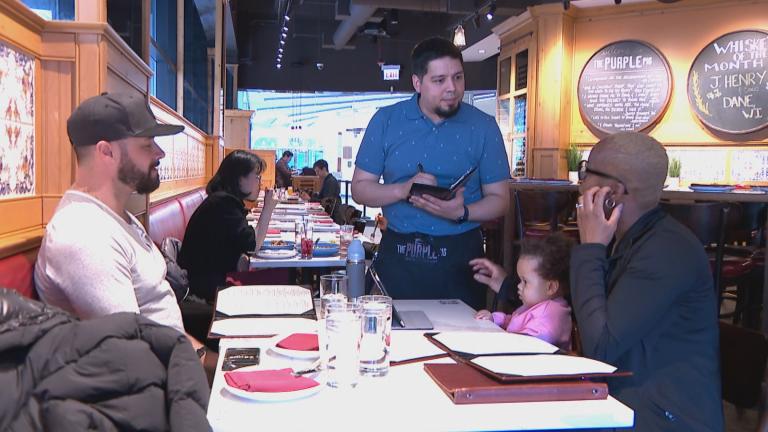
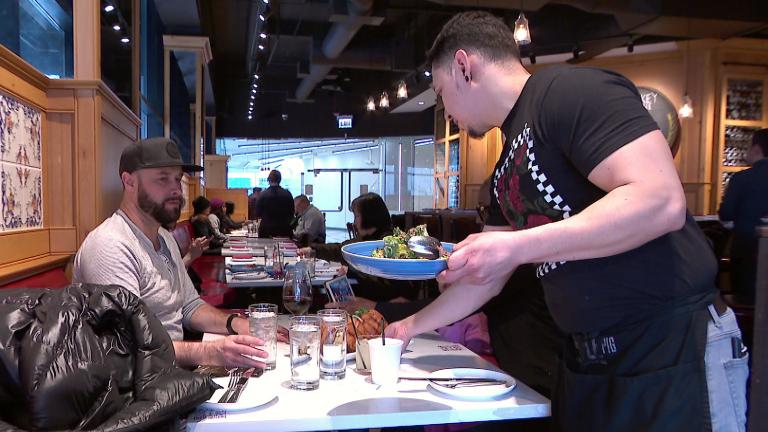
 A server is pictured in a file photo. (fizkes / iStock)
The tipped minimum wage will stay on the books in Chicago for an additional two years — until 2030 — under a measure approved Wednesday by the Chicago City Council.
The measure, crafted by Ald. Walter “Red” Burnett (27th Ward), means that tipped workers in Chicago would not get another city-ordered wage boost as scheduled on July 1, 2026, or July 1, 2027.
While supporters of the measure depicted it as a compromise designed to protect the health of Chicago’s hospitality industry, Ald. Jason Ervin (28th Ward) called the measure “an economic betrayal and moral failure” that would harm the most vulnerable Chicagoans.
“There is a difference between a compromise and a cave-in,” Ervin said. “This is a cave-in on the people on the South and West sides of Chicago. We know your rent is skyrocketing. Inflation is up. You don’t have access to the same healthcare things as other communities do. But we’ll catch up with you in 11 years. We’ll catch up with you down the road.”
Ervin cast the only dissenting vote. That ensures that even if Mayor Brandon Johnson vetoed the measure, the City Council could easily override his effort to prevent the measure — which was crafted without the mayor’s input — from becoming law.
In March, the City Council voted 30-18 to reverse its 2023 vote to phase out the tipped minimum wage. Johnson vetoed that measure, and the City Council failed to override the mayor.
Johnson called that failed override “a victory for working people across Chicago.”
Ald. Jesse Fuentes (26th Ward), who led the effort to phase out the subminimum wage over five years by 2028, said she was “heartbroken” by the push to delay the end of the tipped minimum wage for an additional two years.
“I don’t love the compromise,” Fuentes said. “But it brings two sides to the table to meet in the middle.”
While Fuentes called on the restaurant industry to stop attempting to eliminate the phaseout entirely, Illinois Restaurant Association CEO Sam Toia has pointedly refused to make that promise.
Tipped workers must now be paid $12.62 per hour by their employers, assuming tips account for at least another $3.98 per hour, according to city rules.
The city’s minimum wage for non-tipped workers is $16.60 per hour, and is set to jump on July 1 based on inflation.
“Sixteen dollars an hour doesn’t mean squat if you have no hours,” Ald. Raymond Lopez (15th Ward) said.
Tipped workers in Chicago will not get another city-ordered wage boost as scheduled on July 1, 2026, or July 1, 2027, under the measure that won the approval of the City Council Wednesday.
Instead, the next city-ordered boost for tipped workers would not come until July 1, 2028, when businesses that employ workers who earn tips would have to pay 84% of the regular hourly minimum wage to their employees, up from the current 76%, according to the proposal.
On July 1, 2029, businesses that employ workers who earn tips would have to pay 92% of the regular hourly minimum wage to their employees, and a year later would have to pay the full hourly minimum wage, according to the proposal.
Businesses with more than three but fewer than 21 employees would have until July 1, 2033, to pay their tipped workers the full hourly minimum wage, according to the proposal.
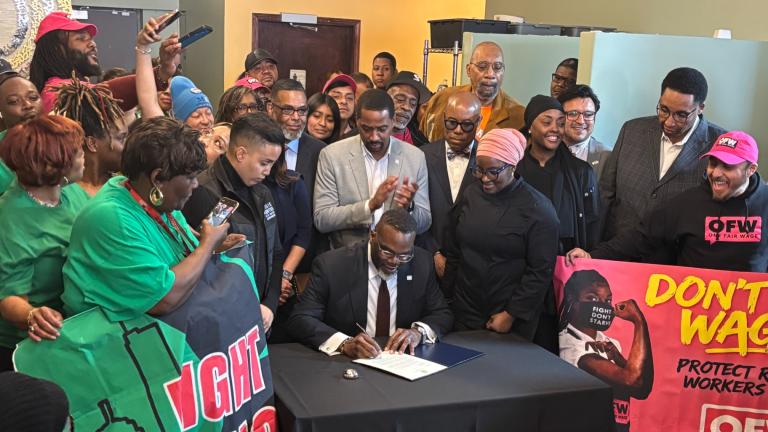
The mayor, who faces reelection in less than a year, cast the fight over the tipped minimum wage as a battle against those who would block Black and Latina women working in the service industry from being paid fairly.
The measure vetoed by Johnson was designed to freeze the tipped minimum wage, which is sometimes referred to as the subminimum wage, at 76% of the city’s hourly minimum wage.
Supporters of that freeze said it was a mistake for Chicago to join Alaska, California, Guam, Minnesota, Montana, Nevada, Oregon and Washington. In June, Washington, D.C., leaders put their efforts to phase out the minimum wage on ice.
Restaurant industry groups and supporters of the measure to keep the tipped minimum wage on the books contend that the pay raises have cut into restaurants’ already thin margins, forcing them to cut jobs and shelve expansion plans.
Johnson has repeatedly said ending the tipped minimum wage would protect workers who rely on tips because they are more vulnerable to sexual harassment, wage theft and abuse than other employees.
The 2023 vote was a major victory for Johnson, who vowed to end the tipped minimum wage during his campaign for mayor, calling it a vestige of slavery since most of those who rely on tips to earn a living wage are more likely to be Black and Latina women.
Contact Heather Cherone: @HeatherCherone | (773) 569-1863 | [email protected]