Investigations
No Trial. No Guilty Verdict. How Civil Commitment in Illinois Can Mean Decades Behind Bars
Under two different Illinois laws, people charged with sex offenses are subject to indefinite detention. More than 500 people are currently being held under the procedure known as civil commitment.
This story explores the law that holds people who’ve only been charged with a crime — never convicted or sentenced. WTTW News also examined the law that continues to hold people after they’ve served their sentences, sometimes for decades.
James Howe was never found guilty. But he still spent nine years inside of Big Muddy River Correctional Center.
Howe joined some 170 men in Illinois in similar situations: not convicted, but held indefinitely at the southern Illinois prison under a procedure called civil commitment.
After Howe was charged with aggravated criminal sexual assault and domestic battery, prosecutors petitioned to have him evaluated as a sexually dangerous person, or SDP. Under Illinois’ Sexually Dangerous Persons Act, people deemed SDPs are subject to one of the handful of pre-conviction civil commitment statutes in the country.
“That’s the weird thing about that law is that they don’t have to convict you of the crime, but yet they put you in a prison,” Howe said. “I mean that right there says it all, does it not?”
Instead of following through with cases to their conclusions, prosecutors can petition a judge to have the defendant evaluated by psychologists or psychiatrists to determine whether they are likely to pursue sexually dangerous behaviors. If these evaluators deem a defendant a sexually dangerous person, the criminal case halts and the accused is instead sent to the downstate prison for treatment for these behaviors.
Mark Carich, who built Big Muddy’s SDP program in 1995 and left in 2012, said the treatment program no longer fulfills its intended purpose: decreasing the number of sexually violent crimes in the state. A treatment model that was once holistic is now based on shame, Carich said. Carich has been an expert witness in hundreds of SDP cases.
“The whole thing went backwards,” Carich said.
Though some prosecutors have told men alleged to be SDPs that treatment should last one to two years, stays at the prison have dragged on to an average of 24 years.
Participants say the treatment offered, mainly group therapy, is inadequate. The program’s four-step program model has been dismantled, and some participants say they cannot ascertain how far along they are into the program.
“Without adequate treatment designed to effectuate ultimate release, a civil commitment program is nothing more than a de facto prison disguised as a mental health facility,” a federal judge wrote in a 2021 decision on Illinois’ program, which found that there weren’t sufficient therapy hours.
WTTW News spoke with the founder of Big Muddy’s program, men who were released or are currently in the program, psychologists who evaluate whether men are sexually dangerous and lawyers who’ve worked on civil commitment-related cases. Regardless of their opinions on the sexually dangerous people law, everyone interviewed took issue with the care provided at Big Muddy River Correctional Center.
The Illinois Department of Corrections declined WTTW News’ request for an interview with the current program leader, citing ongoing litigation over the program.
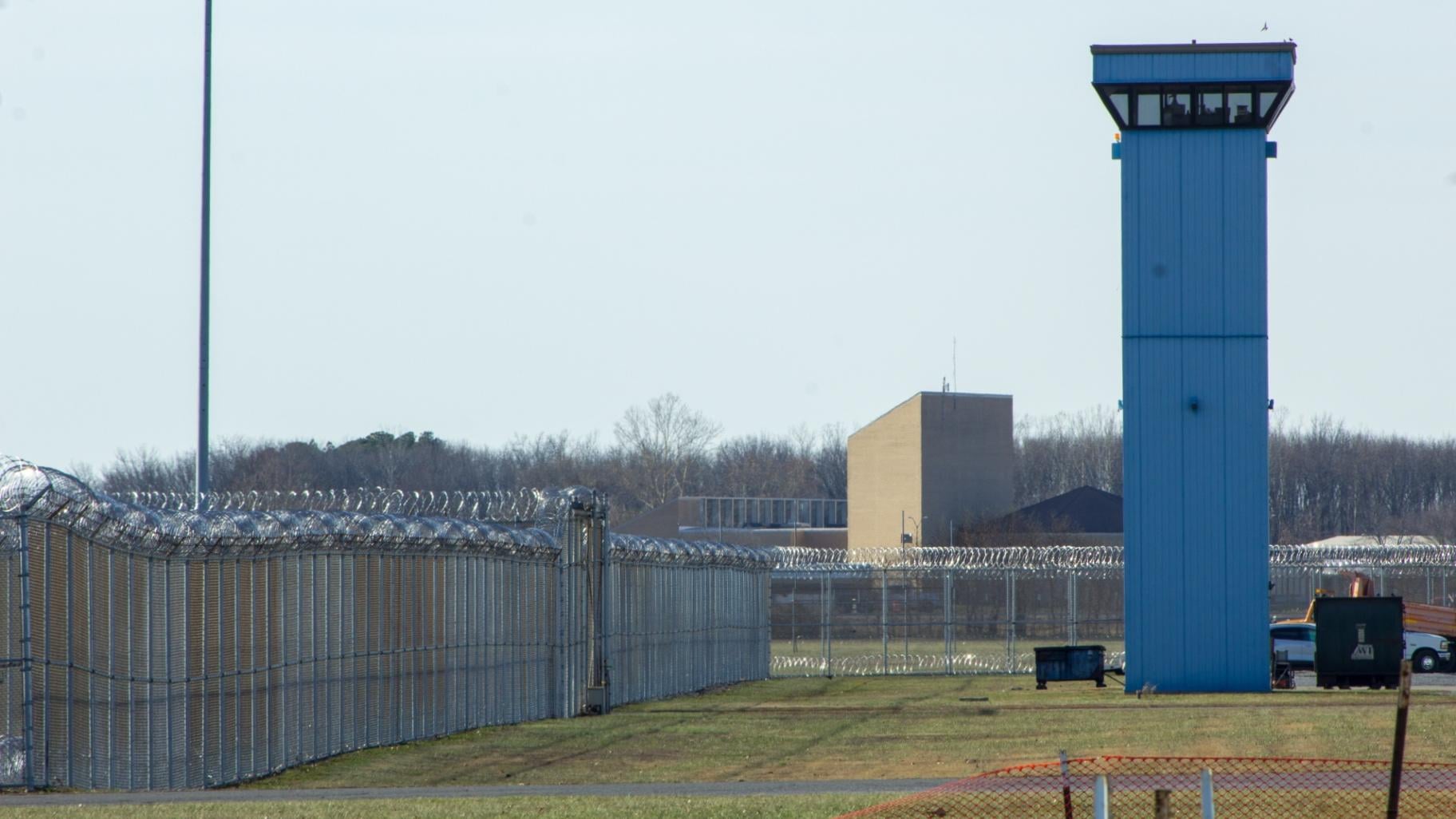 Big Muddy River Correctional Center in Ina, Ill., houses about 120 men who are deemed sexually dangerous people by psychiatrists. The men are not convicted of a crime but are held indefinitely at the prison to receive treatment. (Blair Paddock / WTTW News)
From inside Big Muddy’s program in 2014, Howe, on behalf of all the program participants, filed a lawsuit protesting the lack of care. A judge agreed, finding that a stay means a potential “lifetime detention” and that men should be provided with more therapy.
After 11 years of litigation Howe might be able to see the impact of his complaint — now, from the other side of the bars.
How Someone Is Classified as a Sexually Dangerous Person
Some call the area that houses the sexually dangerous person program at Big Muddy the “Sheryl Essenburg wing” — a title the retired Sangamon County assistant state’s attorney isn’t offended by.
During her 34-year tenure as a prosecutor in the county that includes Springfield, she estimates she was responsible for about 30% of the SDP cases at Big Muddy. She, like other prosecutors in the state, set an individual’s SDP designation process in motion by petitioning a judge for the person charged to get evaluated.
Essenburg said her office often used the Sexually Dangerous Persons Act when prosecutors thought they couldn’t get a conviction on a pending case or the conviction would not “amount to much.” That could occur when there’s a complicated victim situation, Essenburg said, like someone reluctant to testify.
“If you could only put this guy away for three and half years on this case, or you can put him away indefinitely, until you can’t prove he needs to be there anymore, then you would go that way,” Essenburg said.
Howe’s case was a bit different.
He spent a little less than nine years in Big Muddy for charges that could’ve amounted to a 60-year sentence if he was convicted, according to court records.
In 2012, Howe was charged in Scott County with aggravated criminal sexual assault and domestic battery against his then-wife. Howe pleaded not guilty.
Instead of pursuing a conviction, prosecutors petitioned to commit Howe as a sexually dangerous person. Two psychiatrists evaluated him, looking for what the state defines as a person “suffering from a mental disorder … coupled with criminal propensities to the commission of sex offenses, and who have demonstrated propensities toward acts of sexual assault or acts of sexual molestation of children.”
Each evaluator wrote a report that looked at Howe’s criminal history, which included a criminal sexual abuse conviction involving a 16-year-old victim. Howe pleaded guilty in that case but now says “everything was consensual.” Evaluators also looked at prior convictions for residential burglary, unlawful violation of an order of protection, unlawful restraint and misdemeanor battery, among others.
He then was scored on a risk assessment tool. The industry standard is the Static-99R. The 10-question assessment scores someone’s risk of reoffending, looking at unchanging risk factors like age, prior sex offenses and victim types, such as strangers or males.
In Howe’s case, evaluators determined he didn’t meet any criteria for sexual disorders. Instead, they found he has a “probable personality disorder with antisocial features” and “mental disorders of alcohol abuse and cannabis abuse in addition to personality disorder, [not otherwise specified] with antisocial features.” Those factors, evaluators determined, predispose him to engage in “recurrent aggressive and/or violent sexual activity with women.”
Carich said Howe should have never been committed. He said Howe was designated as a sexually dangerous person “under the old thinking” that everyone who committed an offense was at high risk of reoffending.
When asked about Howe’s confinement, IDOC spokesperson Naomi Puzzello said IDOC does not make the legal determination when an individual is deemed a sexually dangerous person.
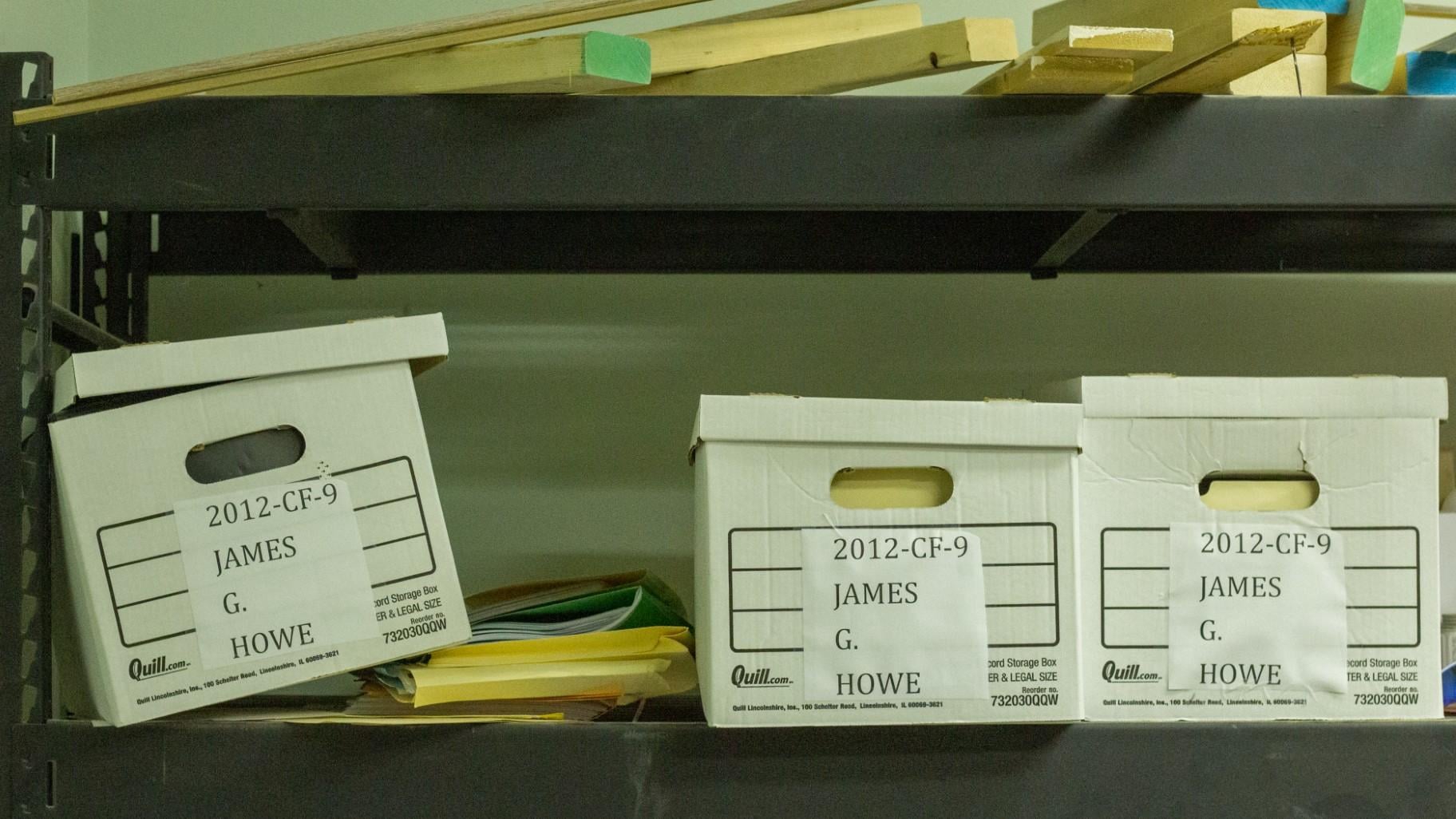
 While James Howe was housed at Big Muddy River Correctional Center, he filed a lawsuit challenging the Sexually Dangerous Persons program. The program was “punitive, grossly inadequate,” his filing states. In 2021, a judge agreed, finding that the Illinois Department of Corrections failed in its obligation to provide those committed with rehabilitative treatment and violated their rights to due process. (Blair Paddock / WTTW News)
The risk assessment tool that evaluated Howe and other SDPs is “far from perfect,” according to Eric Janus, director of the Sex Offense Litigation and Policy Resource Center at the Mitchell Hamlin School of Law in Minnesota. Janus has studied civil commitment since the 1970s and has authored a book critiquing the practice: “Failure to Protect: America’s Sexual Predator Laws and the Rise of the Preventive State.”
The focus on fixed, historical facts about a person ignores how a person might change, Janus said. He also pointed out the tests indicate not whether a person will reoffend, but rather, what the frequency of reoffending is among people who share the characteristics in the test.
“So that means that inevitably we’re locking up people who would not have reoffended,” Janus said.
IDOC defended the use of the tool to WTTW News: “According to the Society for the Advancement of Actuarial Risk Need Assessment (SAARNA), the Static-99R is the most widely used sexual recidivism risk assessment instrument in the world, and is extensively used in the United States, Canada, the United Kingdom, Australia, and many European nations.”
‘What the Hell Did I Just Do’
Jacob Kallal, like others at Big Muddy, was told by his attorney that the program would provide inpatient treatment for six months to two years. At the time, his ex-fiancee was pregnant with their son. Kallal thought he could still be part of his son’s life after two years.
But once Kallal arrived at the facility, he learned that other program participants had been there for 25 years.
“What the hell did I just do,” he remembers thinking. Kallal spent a little more than 24 years in the program. During that time, his son’s mother lost custody of the boy, who was adopted by another family. In early April, Kallal was released and hopes to soon start working at a meat packing plant. He has been in touch with an adoption agency in an attempt to find his son.
The average stay for an SDP at Big Muddy is 24 years, with two men currently being held for 46 years, according to the most recent publicly available data from IDOC. Every patient at Big Muddy is a man, most are White, and their average age is 59 years old, according to an analysis from WTTW News.
At the end of 2018, there were 167 people in the program. By the end of 2025, 72 men in that group of 167 had been released and 11 people were admitted, with three of those being re-admissions from conditional release, according to IDOC. There are currently 121 people in the program.
While participants are not convicted of the crimes that landed them in the facility, they’re under the watch of the Illinois Department of Corrections. They’re housed separately from the incarcerated population, but can mingle in the yard or cafeteria. They must follow prison rules and can be issued disciplinary tickets. They’re required to wear a uniform of blue pants, blue shirts and their state-issued identification.
Treatment isn’t mandatory, but it’s the only way out.
At Big Muddy, treatment largely consists of group therapy with one of the facility’s six therapists, according to state records. Kallal said he spent three hours a week in group therapy with 10 other people. They work through treatment goals related to their risk factors, like “deviant sexual interests” or “sexual preoccupations.” Recently, Kallal said his homework was to write about his “distorted thoughts” that previously led him to drop out of group therapy.
Kallal said he found therapy helpful, but he took issue with how much the assignments focus on the past. He said he wished it was more forward-looking, as he didn’t want to bring up old memories.
When Kallal wasn’t in therapy, he had a job doing laundry from 8 a.m. to 2:30 p.m. and was then locked in a cell until dinner, like the men incarcerated at a different wing at Big Muddy.
IDOC spokesperson Puzzello said a minimum of five hours of therapeutic services per week is offered to individuals and that participation at that level is not mandatory. People may choose to accept fewer hours based on personal preference, she added.
How Big Muddy’s Program Evolved
When Mark Carich began working as a psychologist for Illinois’ sexually dangerous person program in the 1980s, he said it felt like they were exorcising demons from people. He described the program, then at Menard Correctional Center, as highly confrontational, shame-based and punitive — making him “physically sick.”
When Carich had the opportunity to start the program anew at Big Muddy in 1995, he wanted to take a different approach. He instructed therapists to take a holistic approach to treatment, one that emphasized the patients’ lives rather than centering victims.
“You can’t change history, so you work on what you can change,” Carich said.
The goal was to eradicate sexual violence, and Carich approached that by promoting a “pro-social life plan” and decreasing “deviant arousal” through group therapy. And he said there were some successes, like a “chronic pedophile” who made it through treatment and was eventually released.
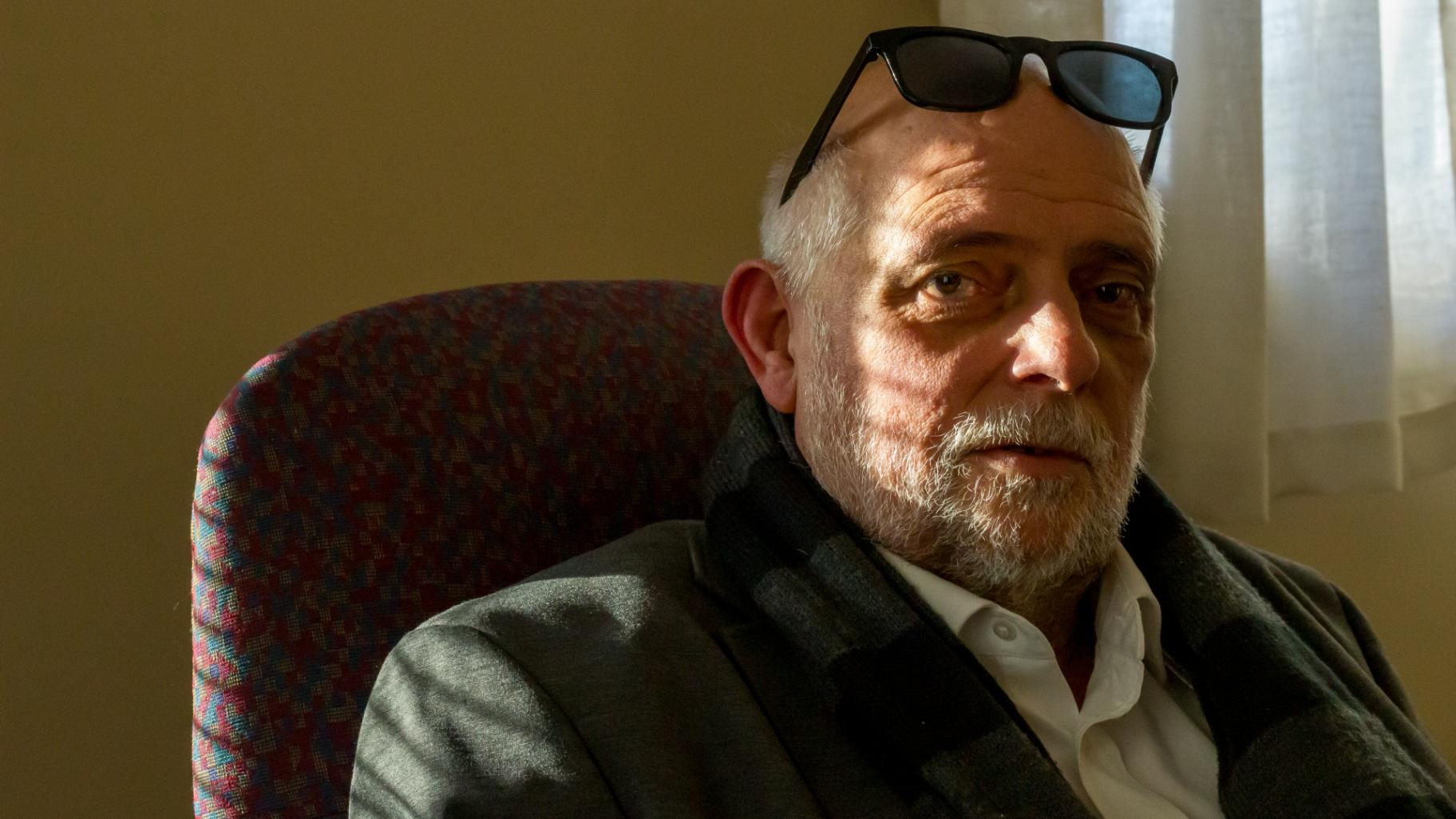 Mark Carich built Big Muddy River Correctional Center’s Sexually Dangerous Persons program in 1995 and left in 2012. He said the current treatment program no longer fulfills its intended purpose: decreasing the number of sexually violent crimes in the state. (Blair Paddock / WTTW News)
But the program was a life sentence for some. Since 2021, nine years after Carich left, 10 people have died while in the program, WTTW News found through analyzing IDOC records. Carich said the program was lengthy and blamed long stays on the lack of resources allocated to the program — “crumbs off the table.”
He recalled a penile plethysmograph, a controversial device that measures sexual arousal, “burning up” after continued use, never replaced. IDOC said they no longer use the device at Big Muddy.
Issues with the program only increased after his departure in 2012, Carich said. It went into an “age of regression” where attendees were shamed in therapy. Many were not given sufficient treatment, as Carich said therapy time shrunk to just one hour a week. While some men were progressing in treatment, Carich said a lot weren’t given proper treatment and instead “warehoused.”
“If you’re going to have (a sexually dangerous persons law), then you need to fund the operation to work the law,” Carich said. “Otherwise, you might as well give them natural life.”
In a response to Carich’s allegations, IDOC spokesperson Puzzello pointed out that Carich retired in 2012. The department said that from 1995 to 2012, there were two individuals released. However, that data only reflects the year of release, and that the timing of someone being recommended for release might differ, Puzzello added.
From 2018 to the present, there have been 34 individuals deemed “no longer sexually dangerous” and remain “offense free in the community,” Puzzello said. There are an additional six individuals who have been supported for conditional release by an independent evaluator and are awaiting a court order for release.
Carich said that while he doesn’t remember exactly how many people he supported for release under his tenure, he said there were “a lot more” than two.
“The Sexually Dangerous Person (SDP) program complies with Illinois Sex Offender Management Board guidelines with a focus on targeting dynamic risk factors through a strengths-based approach,” Puzzello said in a statement.
Lawsuit Alleges ‘Punitive, Grossly Inadequate’ Conditions
The conditions that Carich described matched what Howe said he experienced while in the program: “punitive, grossly inadequate” and “erratic” therapies with an hour and a half of group discussion per week and only two full-time therapists.
In 2014, Howe filed a lawsuit on behalf of all civilly committed men at Big Muddy. He alleged that the Illinois Department of Corrections had failed to adequately treat and/or care for mentally ill or disordered people.
“Plaintiffs would assert that no SDP is to be treated like a prisoner, as the purpose of the SDP Act is care and treatment not punishment, which under the current regimen seems to be the main focus, as SDP’s are treated no differently than convicted felons housed at Big Muddy C.C,” the filing states.
Psychologist Dean Cauley served as an expert witness on the case and found that:
- Big Muddy’s program fell far below the generally accepted standards in the field with respect to the amount of therapy offered and the group sizes;
- The one hour per week of group therapy SDPs receive is far below the generally accepted standard of treatment;
- The staff to resident ratio — 1 to 42.5 — was far below generally accepted practice standards;
- The lack of clear guidelines for treatment completion or projected timeframes for progression impeded people’s motivation;
- The release evaluations were largely based on past acts to assess someone’s current condition, meaning they don’t provide an accurate conception of current or future risk.
A judge found Howe and Cauley’s cases compelling. In 2021, Southern District Judge Staci Yandle found that IDOC both failed in its obligation to provide those committed with rehabilitative treatment and violated their rights to due process. Treatment was “mere window dressing” and offered no realistic opportunity to improve their mental conditions, Yandle wrote.
“It has transformed civil confinement into a punitive and potentially lifetime detention,” her order states.
 James Howe spent nine years inside of Big Muddy River Correctional Center due to a charge he was never found guilty of. Instead of convicting Howe for aggravated criminal sexual assault and domestic battery charges, prosecutors petitioned to commit Howe as a sexually dangerous person. (Blair Paddock / WTTW News)
Yandle ordered a minimum of 7.5 hours of core group therapy per week. IDOC appealed, arguing her order was overbroad. In 2023, the Seventh Circuit found that the order was overbroad, but also found that the state deprived those detained of a realistic possibility of release.
In March, Yandle decided on more narrow terms: plaintiffs should receive a minimum of five hours of group therapy per week and release evaluations should analyze the current and future risk someone poses based on the impact of treatment, rather than solely historical information.
“If Illinois continues to operate the Big Muddy program in violation of the Fourteenth Amendment, it may expose itself to far more drastic and costly measures than those it has so far avoided in this case,” the Seventh Circuit decision states.
Howe isn’t the first person to take Big Muddy’s program to court.
In 1986, a detainee at Big Muddy, Terry Allen, challenged the program and took his case to the U.S. Supreme Court. Allen argued in part that the proceedings under the Sexually Dangerous Persons Act are criminal — not civil, as stated by Illinois law.
He lost the case 5-4. The majority decided the proceedings of the act aren’t criminal and that the state has “disavowed any interest in punishment, provided for the treatment of those it commits, and established a system under which committed persons may be released after the briefest time in confinement.”
Dissenting, Justice John Paul Stevens wrote that the “proceeding is virtually identical to Illinois’ proceeding for prosecution of sex-related crimes.”
Attorney Eric Janus said legal challenges are extremely difficult. The sexually dangerous person laws are largely based on classical civil commitment, meaning the state’s intervention with people who are severely ill, who cannot manage on their own and who might do harm to themselves or others. But instead of a severe psychiatric illness being a requirement, sexually dangerous person laws usually rely on a “very vague idea of a mental abnormality,” Janus said.
The laws can be as broad or narrow as governmental officials decide to make them, while giving little guidance to judges as to what’s appropriate, Janus said. There’s no legal or constitutional basis for predictively locking up people who have a mental abnormality, he added.
“As a practical matter,” Janus said, “for the most part, they (the laws) result in lifetime incarceration for people based on predictions of harm, and that is not a principle that we ought to support in the United States.”
Reevaluation and Release
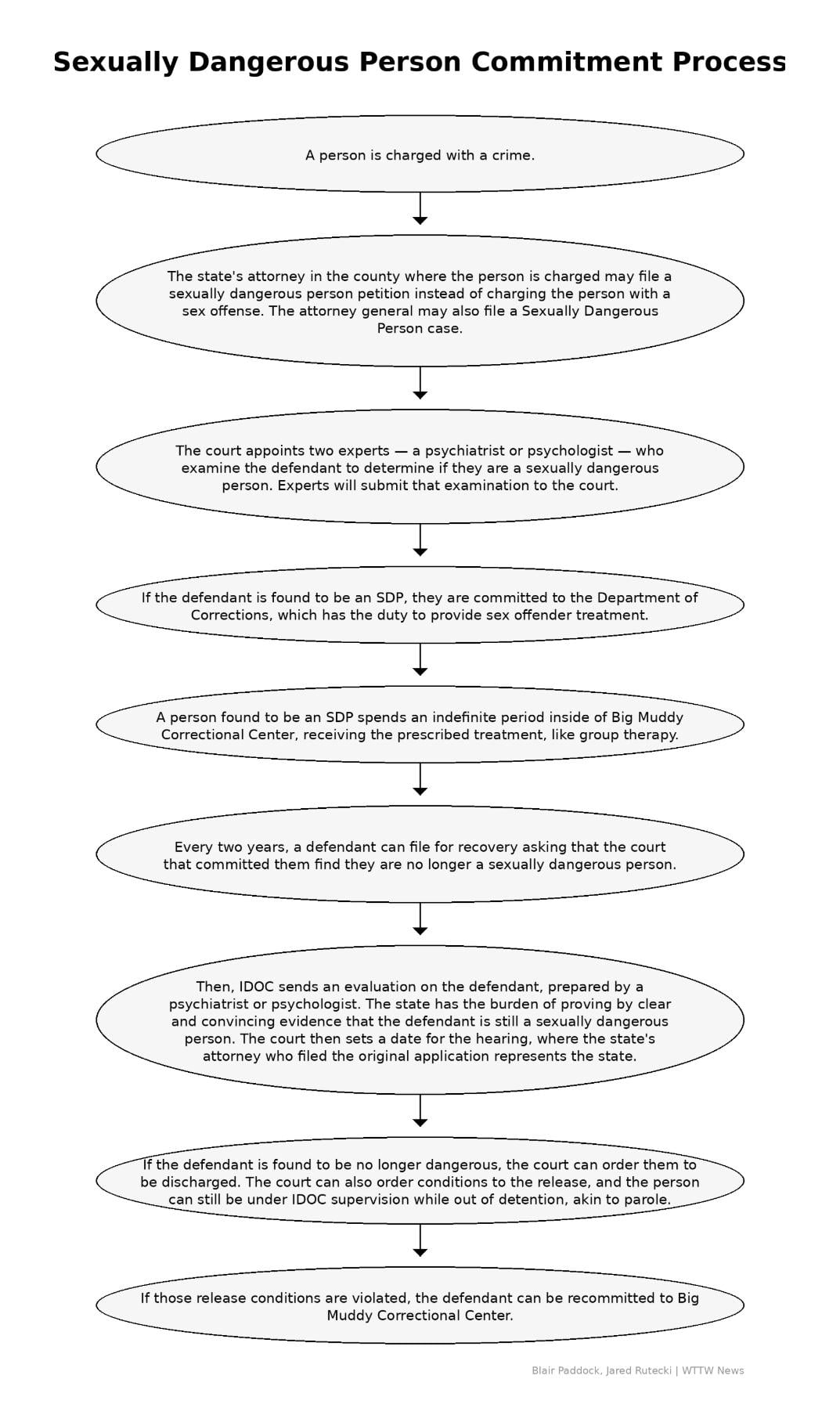
Every two years, a patient can apply to be reevaluated to be released from the SDP program. The state makes its case to a judge if prosecutors think the applicant is still a sexually dangerous person.
Howe was released from Big Muddy in October on conditional release, akin to parole. He’s working as a paralegal at the law firm that took on his civil commitment case.
It’s not the first time Howe has been released. He twice violated the conditions of his release, which sent him back to Big Muddy — but not because of sex offenses. In 2017, it was cannabis use, having multiple cellphones and visiting his father and grandfather’s houses, which were not approved by his parole officer. In 2024, he was found to be in violation again, being in possession of cannabis, methamphetamine and alcohol.
Howe now wears an ankle monitor, which he predicts could be on him for the rest of his life. Until recently, he was paying $385 a week for a hotel room because no one would rent to him as he’s on the sex offender registry. He now stays with his aunt and uncle. He said he recently got “chewed out” by an officer for attending mass in a church that had a school attached to it.
But Howe’s in a position that many in Big Muddy’s program have never seen — and maybe will never see: He’s been evaluated as not a sexually dangerous person.
“Getting out is a blessing because it could be forever,” Howe said.
 (Blair Paddock and Jared Rutecki / WTTW News)
Jared Rutecki contributed to this report.
Contact Blair Paddock: @blairpaddock.bsky.social | [email protected]