Crime & Law
CPD Brass Inconsistently Stripped Officers of Police Powers, Failed to Document Actions: Watchdog
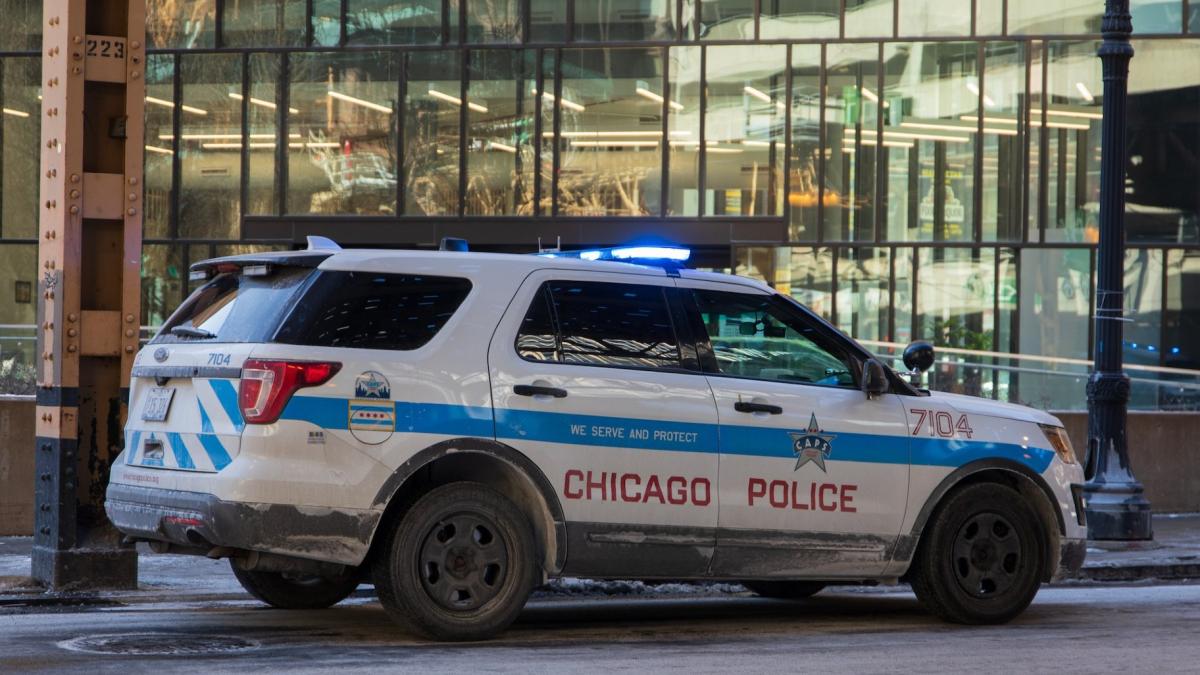 (Michael Izquierdo / WTTW News)
Chicago Police Department officials acted inconsistently to strip officers accused of serious misconduct of their guns and badges between 2009 and 2023, according to an audit released Thursday by the city’s watchdog.
CPD brass always relieved officers arrested on suspicion of criminal misconduct of their police powers, but did not always act when officers were being investigated for other kinds of serious misconduct, Inspector General Deborah Witzburg said.
CPD should adopt a formal policy detailing when officers can be stripped of their police powers that also requires officials to document those decisions and communicate regularly with the officers involved, Witzburg recommended.
“The robustness and integrity of CPD’s disciplinary system is absolutely vital,” Witzburg said in a statement. “If we are to take seriously the task of fostering trust in CPD, the city must build and run a police disciplinary system in which both members of the public and members of the department have reason to be confident. Strengthening transparency, consistency and communication in the relief of powers process benefits the public, supports officer well-being, and enhances the legitimacy of CPD’s accountability structures.”
Representatives of CPD agreed with all of Witzburg’s findings and pledged to implement the audit’s recommendations.
The inspector general’s audit examined the 1,018 CPD officers who were stripped of their police powers between 2009 and March 7, 2023. Mayor Brandon Johnson took office in May 2023, and Chicago Police Supt. Larry Snelling took over the department in September 2023.
“The relief of police powers, when implemented fairly and transparently, can serve as an effective and appropriate safeguard for public safety and to uphold public trust in CPD,” according to the audit. “If the department relieves members of police powers during misconduct investigations in a way which either is or is perceived to be inconsistent or unjustified, however, it jeopardizes the legitimacy of the process and the police disciplinary system at large.”
Sixty-three officers were relieved of their police powers multiple times, including one officer who was stripped of his badge four times, according to the audit.
Officers who returned to active duty typically spent 10 months without their police powers, according to the audit.
Those who were eventually fired spent an average of two years without police powers, according to the audit.
CPD should craft a policy to ensure that the amount of time officers spend without their police powers is not “unnecessarily prolonged,” according to the audit.
The decision to strip an officer of their police powers rests solely with Snelling. The heads of the Bureau of Internal Affairs and the Civilian Office of Police Accountability can recommend that he act, but Snelling is not bound by their decisions.
The agency better known as COPA also agreed to implement Witzburg’s recommendations.
CPD told the inspector general that the superintendent “will relieve police powers in serious misconduct cases that, if sustained, would likely result in separation of the member or a significant penalty. The department may also relieve members to prevent the risk of further misconduct or damage to public trust in the department,” according to the audit.
Officers who have been relieved of their police powers are prohibited from responding to calls for service, patrolling the city’s streets and conducting traffic or investigatory stops, according to CPD policy.
Instead, officers without guns or badges are often assigned to work in administrative roles, including handling non-emergency calls and completing reports over the phone, according to the audit.
Between Jan. 1, 2017, and March 7, 2023, male officers who were Black or Latino were disproportionately relieved of their police powers, as compared with CPD’s racial and gender breakdown, according to the audit.
The inspector general’s office interviewed four CPD members who were relieved of their police powers who said they experienced “emotional distress, perceived judgement from their peers, and a loss of identity.”
Officers stripped of their police powers are also not eligible to work overtime, a restriction that can have a profound economic impact on the officers and their families, according to the audit.
All four CPD officers said they believed that police brass inconsistently moved to strip officers, according to the audit, and “that these perceived inconsistencies had undermined their confidence in the disciplinary system.”
The audit highlights the case of an officer who was stripped of his gun and badge while he was investigated for displaying his middle finger at members of the public during the 2020 protests and unrest that were triggered by the police murder of George Floyd.
After video of the officer’s action was captured by the news media, then-Mayor Lori Lightfoot demanded he be stripped of his badge and gun. Former Supt. David Brown agreed, and the officer was relieved of his police powers for one month. The officer received a two-day suspension for that conduct, according to the audit.
However, the inspector general identified another incident of an officer displaying their middle finger at a member of the public that did not result in that officer being stripped of their gun and badge, according to the audit.
Because CPD does not document the cases in which supervisors may have considered stripping an officer of their police powers but did not ultimately impose it, the inspector general “is unable to analyze the consistency” of the department’s actions.
WTTW News coverage of policing and police reform is supported by The Joyce Foundation.
Contact Heather Cherone: @HeatherCherone | (773) 569-1863 | [email protected]