Politics
Taxpayers Paid $28.6M Over 7 Years for Chicago’s Police Monitors to Enforce Consent Decree: Data
Chicago taxpayers paid $28.6 million between 2019 and 2025 to an independent team of experts on policing and reform appointed by the federal judge charged with implementing the court order that requires the Chicago Police Department to stop routinely violating Black and Latino residents’ constitutional rights, according to records obtained by WTTW News.
Appointed by U.S. District Court Judge Rebecca Pallmeyer to be her eyes and ears, the independent monitoring team, led by attorney Maggie Hickey, is charged with determining whether CPD and other city departments have complied with the requirements of the court order known as the consent decree.
The cost of the 11-member monitoring team has grown every year since 2022, when it topped $4 million, records show.
Chicago taxpayers spent $4.7 million on the monitors in 2025, records show.
A spokesperson for the monitors declined to comment to WTTW News, saying they’re prohibited from doing so under the consent decree.
It will be up to Pallmeyer in the coming months to decide whether consent decree enforcement will continue past 2027. Originally, city officials had until the end of 2024 to comply with the consent decree’s 552 paragraphs. In 2022, that deadline was extended for an additional three years.
The court order is now 714 paragraphs after expanding three times to address new allegations of misconduct, and it is set to expand again to include traffic stops.
Pallmeyer said the city’s efforts to comply with the consent decree had been “too slow” just before the seventh anniversary of the signing of the consent decree.
The monitors have never recommended the city face sanctions for the slow pace of reforms, despite pleas from the coalition of reform groups that joined the Illinois Attorney General’s Office to force the city to agree to federal court oversight.
It is up to the monitors to evaluate CPD’s compliance with the consent decree at three levels: preliminary, secondary and full.
Preliminary compliance means officials have finalized written policies addressing the department’s failures.
Secondary compliance means a majority of officers have been trained on those new policies.
Full compliance means the department has demonstrated it can follow those rules during a period of time under the judge’s oversight.
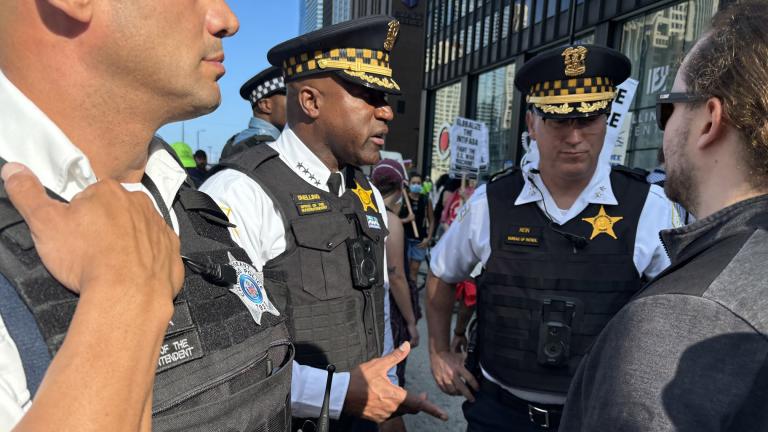
While the monitors repeatedly highlighted the slow pace of reforms before Chicago Police Supt. Larry Snelling took over the department in September 2023, the monitoring team has lauded his leadership and praised his commitment to the reform effort.
CPD had fully complied with 22% of its requirements by the end of June, according to the latest report from the monitors, making it likely that CPD will need more time to fully comply with its requirements and convince the federal judge the problems won’t reoccur.
The next report from the monitors is due in early April.
Chicago taxpayers must foot the bill for the monitors’ work for as long as the consent decree is in effect, according to the binding court order.
The city’s annual budgets and audits do not specify how much Chicago has spent to fund the work of the monitoring team. Instead, bills sent by the monitoring team to the city’s Law Department are published on the monitoring team’s website; the department is obligated to pay those bills.
WTTW News’ analysis is the first to examine the cost of the monitors during the seven years that the consent decree has been in effect.
The city’s 2026 spending plan earmarks $15.4 million specifically to implement the consent decree, records show. In 2025, the city set aside $16.4 million for the consent decree, records show.
CPD’s budget identifies 605 positions charged with ensuring constitutional policing and reform, at a cost to taxpayers of $123.3 million, including the 439 positions specifically dedicated to implementing the consent decree, officials said. That accounts for 6% of CPD’s $2.1 billion proposed budget, records show.
Taxpayers also paid two private law firms $9.8 million through November 2024 to represent the city in the ongoing legal proceedings to ensure the city complies with the consent decree. A request for an updated accounting of how much taxpayers have paid to date to defend the city as part of the consent decree litigation is pending.
WTTW News coverage of policing and police reform is supported by The Joyce Foundation.
Contact Heather Cherone: @HeatherCherone | (773) 569-1863 | [email protected]