Politics
Illinois Lawmakers Weigh in on Pritzker’s $56 Billion Budget Proposal
Gov. JB Pritzker delivered his annual budget address Wednesday, proposing a $56 billion spending plan as the state faces a $2.2 billion budget gap and near-weekly threats of losing federal funding.
On the agenda: filling the gap deepened by federal funding loss, taxing social media companies and supporting state education, among other things.
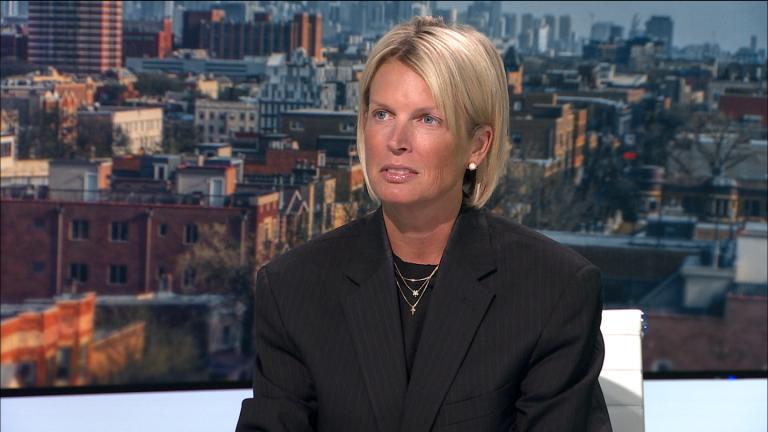
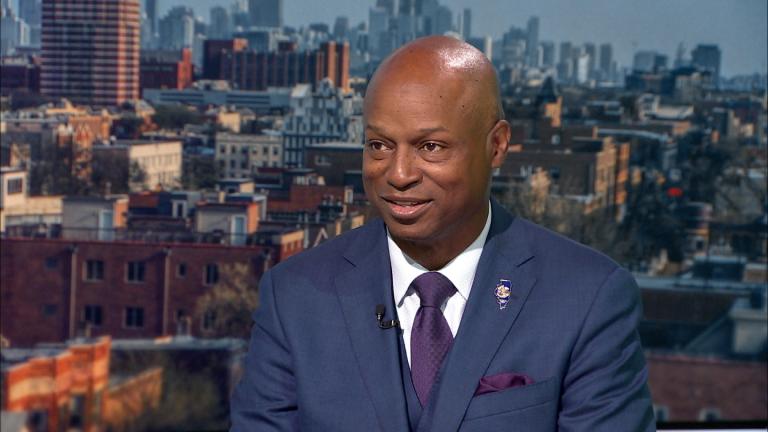
State Sen. Seth Lewis (R-Carol Stream) and state Rep. Eva-Dina Delgado (D-Chicago) joined “Chicago Tonight” to give their take on Pritzker’s plan.
On overspending:
The $56 billion reflects a 1.6% increase in spending from fiscal year 2026, which senior budget officials in the governor’s office said is due almost entirely to increased expenses tied to medical costs, pensions and evidence-based funding for school districts.
Illinois Republicans, however, argue the governor is overspending.
“So in his (Pritzker’s) priorities, he wants a tax increase of, totally, $728 million and he’s leveraging, ‘I will not be able to fund education if I don’t get the tax increases,’” said Lewis, who represents a district that includes Carol Stream, Bloomingdale and Wheaton. “I don’t think we’ve actually gone in and looked at the budget and taken out some of the fluff that is in there, probably totaling $500 to $600 million that he just did two months ago when he said, ‘I need every agency to tighten their belt.’ And we put $550 million in reserve at his executive order, and now we’re lifting that executive order and we have to have another $728 million in tax increases. He’s speaking out of both sides of his mouth.”
On the Trump administration:
Pritzker and President Donald Trump’s relationship is fraught, which has translated to the White House pausing federal funding meant for Illinois. In his budget address, Pritzker said the Trump administration has cost Illinoisans $8.4 billion as a result of the withholding.
Delgado referred to the financial impact as an “instability.”
“We’re talking about health care, we’re talking about SNAP benefits for families that need that extra support to feed their children every day,” Delgado said. “These aren’t small things. These are very significant and these are day-to-day affordability issues that we keep talking about.”
Lewis disagreed, saying there is no evidence of the Illinois budget suffering that great of a loss. “It’s theoretical, this may or may not happen, but we have not had to come up with $8.4 billion,” Lewis said.
On the social media fee:
Pritzker’s budget proposes several new revenue streams, including an estimated $200 million from a social media platform fee that would be earmarked for education. That fee would need to be passed through a bill in the General Assembly. For the largest social media firms with 1 million or more Illinois users, the proposal calls for charging $165,000 per month and an additional $.50 per month for each user over the 1 million mark.
“I think it’s bad for business,” Lewis said. “Illinois is now a leader in another category of figuring out how to tax businesses. The rhetoric is that we’re a great place to move to, and the magazines are reporting that. However, when I look at reality, they’re not coming. So when the businesses do their analysis, they say, ‘It may be a good place, but its tax structure, its regulatory structure, what they actually do and treat businesses, they will find a way to tax us out of the state.’”
Delgado, on the other hand, said she sees value in looking at revenue sources not previously used. “When you’re talking about companies that are making billions of dollars off of our data, it doesn’t hurt to take a look at that transition from into the digital world, knowing that that’s where a lot of the future of our economy is going, and so I think it makes sense to take a look at all of these different opportunities,” Delgado said.
On funding for education:
Pritzker’s budget includes an additional $305 million toward the evidence-based education funding model. While that is a slightly lower increase than in previous years, budget officials said that’s due to a pause in a property tax grant program currently under review and that the governor remains committed to fully funding Illinois school districts. But Republicans called for increasing funding at the previous level of $350 million, saying the change is misguided and will hurt students.
“I believe there’s opportunities within the budget with grants and other things that we give to individual districts,” Lewis said. “I believe we can get that $50 million back, and that’s for property tax abatement. So that’s what we have cut out, that we’re not even funding property taxes.”
“I think if you’re going to talk about adding more dollars to particular programs, you’ve got to be able to point to where that revenue is coming from,” Delgado said. “When Republicans have issues about raising revenues, and they’re not the ones that are voting on these budgets, then it’s difficult to be able to say, let’s increase funding for this, but we’re not going to identify what that funding is.”
Nick Blumberg contributed to this report.
Related Stories