Science & Nature
Toxic Dump Set for Transformation Into Chicago’s Next Lakefront Destination, Introducing Park #608
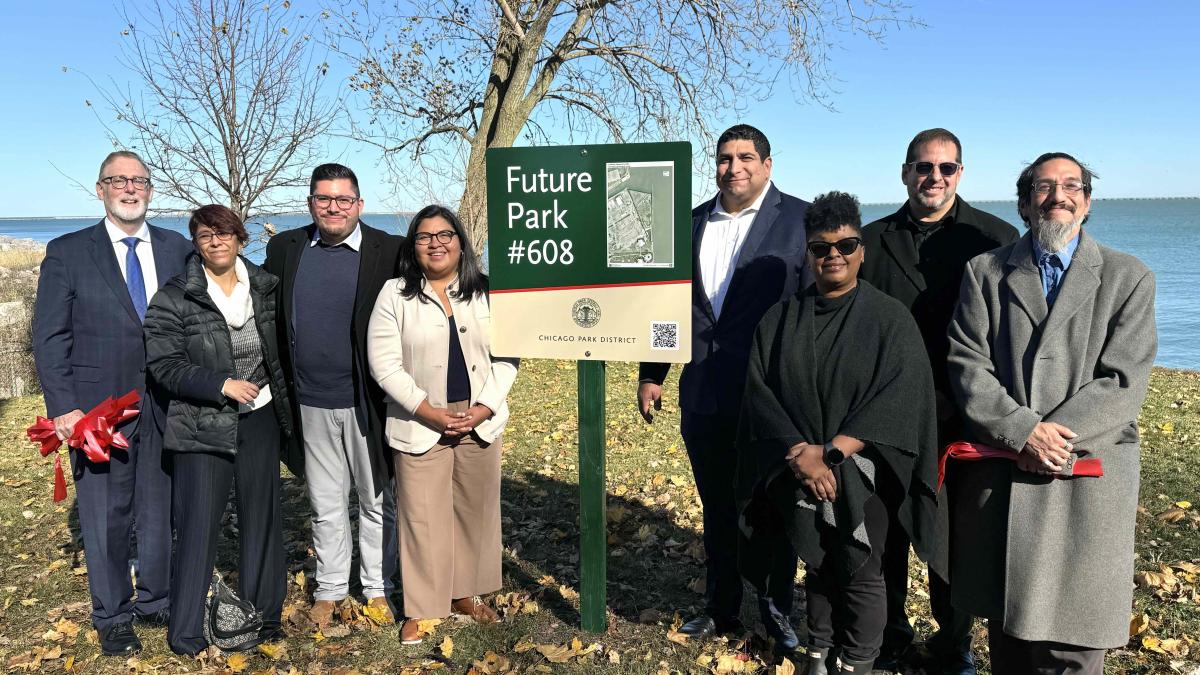 Officials and environmentalists gathered to unveil the future Park #608 on Nov. 12, 2025. Left to right: Howard Learner, Environmental Law & Policy Center; Amalia NietoGomez, Alliance of the Southeast; Carlos Ramirez-Rosa, Chicago Park District; Angela Tovar, Chicago’s Department of the Environment; Ald. Peter Chico (10th Ward); Stacie Johnson, first lady of Chicago; Brian Gladstein, Friends of the Parks; and Samuel Corona, Alliance of the Southeast. (Patty Wetli / WTTW News)
A stretch of Chicago’s southernmost lakefront long used as a toxic landfill is now one step closer to becoming parkland open to all.
On Wednesday, with the sun shining on a brisk fall day, the Chicago Park District unveiled signage for the future home of Park #608. The name is a placeholder for 43 acres adjacent to Calumet Park that have, since 1984, been home to a disposal facility used by the U.S. Army Corps of Engineers to hold polluted sediment dredged from the Calumet River and Cal-Sag Channel.
“What was once a dumping ground will be a destination,” said Carlos Ramirez-Rosa, CEO and general superintendent of the Chicago Park District.
Ramirez-Rosa also announced a $500,000 allocation to kick off the collaborative planning process for the park’s future design and eventual opening, milestones that officials acknowledged are still several years down the road.
Wednesday’s celebration was in many ways a victory lap for the environmental organizations and community members who challenged the Army Corps’ bid to expand the landfill by 20 vertical feet and extend its life for another 20 years. The Corps’ proposal would have reneged on a decades-old promise to close the facility once it was full and hand the land over to the Park District.
“We changed how the story ended,” said Brian Gladstein, executive director of Friends of the Parks. “A toxic landfill will be turned into a flourishing park.”
The Environmental Law and Policy Center led a lawsuit against the Army Corps on behalf of the Alliance of the Southeast and Friends of the Parks. In January of this year, the state of Illinois informed the Army Corps it would oppose the expansion, and in March the Corps announced it had dropped the plan.
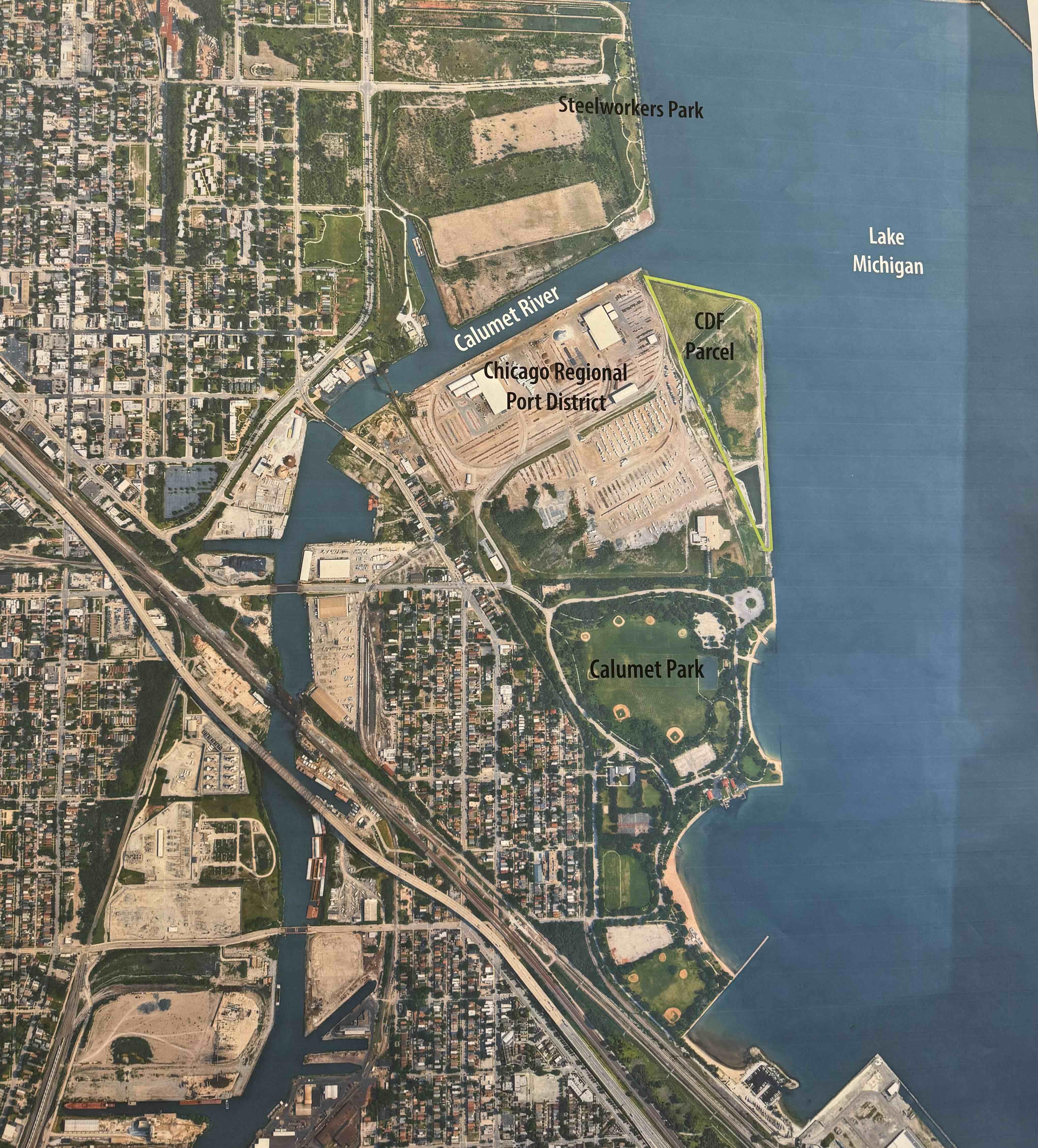 The future Park #608, shown on this map as CDF parcel. It sits along Lake Michigan, between Calumet Park to the south and Steelworkers Park to the north. (Courtesy of the Chicago Park District)
The Calumet River and Cal-Sag Channel are dredged to maintain federally mandated depths required for “safe, reliable and efficient navigation” of ships, per the Army Corps.
If it weren’t contaminated, the sediment could be dumped in open water. But sludge from the river and channel is loaded with pollutants including arsenic, lead, manganese and mercury. Sources of the pollutants include historical discharges in the pre-Clean Water Act days, as well as stormwater runoff and combined sewer overflows.
Community members argued that the Southeast Side is already overburdened with industry and pollution. The fight against the Army Corps represents the continuation of an environmental justice battle that residents like Marian Byrnes began waging in the 1970s.
“There have been a number of people that have worked to see that something like this (Park #608) is here,” said lifelong resident Joann Podkul, referencing eco-warriors like Byrnes.
According to Park District officials, the landfill still has room for the Army Corps to conduct one last dredging, the timing of which is yet to be determined. The Corps will then be responsible for topping off and capping the landfill before the Park District takes possession.
Heather Gleason, the district’s director of planning, said it will take time for Park #608 to take shape. There are a number of issues to iron out, she noted, chief among them negotiating access to the land from Calumet Park. Currently the two parks are separated by land owned by the Chicago Regional Port District.
But the first, most important step has been achieved.
“We got a piece of the lakefront back,” Gleason said.
Between the future Park #608 and Steelworkers Park, which sits to the north on the opposite side of the Calumet River, the Park District is investing heavily in transforming former industrial sites into green space, Ramirez-Rosa said.
“Nature begins reclaiming space when we give it a chance,” he said.
After years of efforts that included knocking on doors to rally opposition to the Army Corps’ proposed expansion, Samuel Corona, an organizer with Alliance of the Southeast, was excited to have the finish line in sight.
“We are closing Chicago’s only landfill at the lake,” Corona said. “My kids and the next generations will inherit something better.”
Contact Patty Wetli: [email protected]