Politics
Chicago Alderpeople Balk at Plan to Use Property Taxes Set Aside to Fight Blight to Fill Budget Gap, Boost CPS
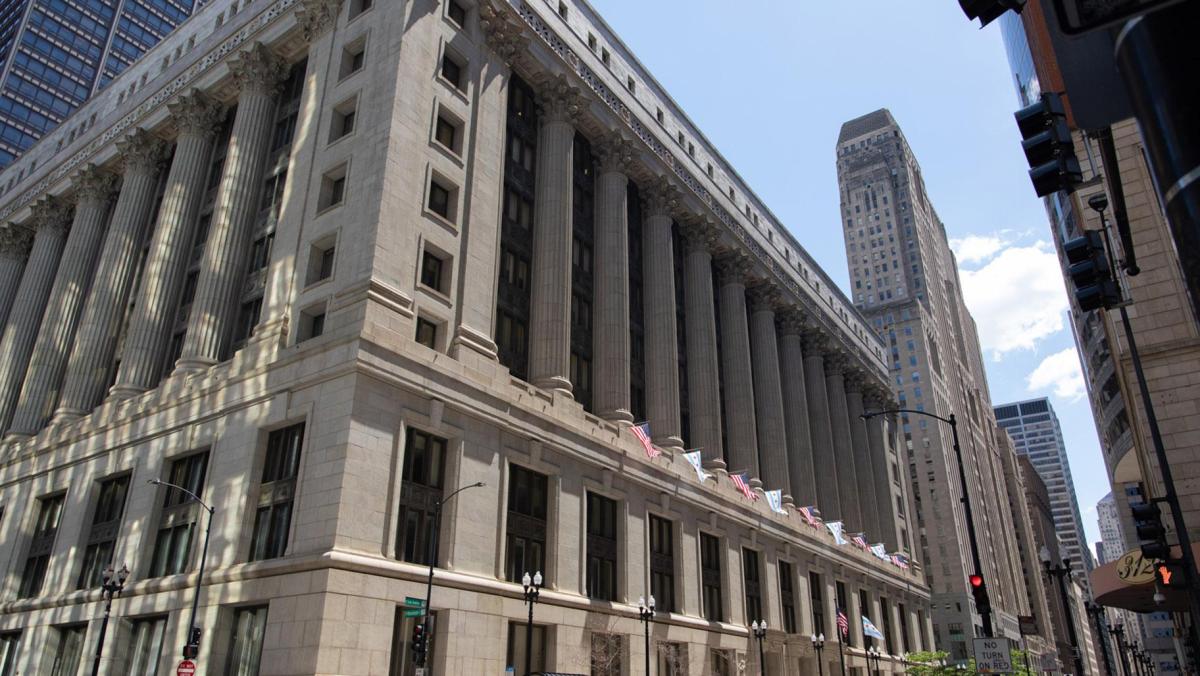 (WTTW News)
Mayor Brandon Johnson’s plan to help close a projected $1.19 billion budget gap in 2026 by declaring $1 billion in property taxes earmarked to fight blight to be “surplus,” got a cool reception Tuesday from alderpeople, who warned that the move could backfire.
As aldermen kicked off nearly a month of hearings by quizzing the mayor’s finance team for nearly five hours, several alderpeople told Budget Director Annette Guzman and Chief Financial Officer Jill Jaworski they were shocked by the amount of money the mayor had proposed taking from the city’s tax increment financing districts, known as TIFs.
Ald. Michelle Harris (8th Ward) said she was alarmed by the amount of money that the mayor had planned to take from her South Side ward TIF districts.
“I’m alarmed,” said Harris, who leads the City Council’s powerful Rules Committee with Johnson’s support. “This is drastic.”
Funding for projects that are underway or close to getting off the ground will be untouched, Guzman said, adding that the city’s approximately 124 TIF funds have approximately $3.5 billion in funds.
Harris, and other City Council members, said that did not allay her concerns, noting that many redevelopment projects that rely on TIF funds take years to come to fruition.
“It scares me to death that these projects could be taken off the table,” Harris said. “These are lifelines for these communities. This is a real sore spot for me.”
Every year, Chicago’s mayor declares unspent, unclaimed or leftover funds in the city’s TIF districts to be surplus and uses those funds to balance the city’s cash-strapped budget and boost the budget for the Chicago Public Schools.
In 2025, Johnson declared $570 million in TIF districts to be in surplus, setting a new record that was 31% bigger than 2024’s surplus, which set the previous record.
Johnson’s proposal to declare $1 billion in the city’s TIF districts to be surplus represents a 75% increase over last year’s record-breaking surplus, records show.
With the City Council’s approval, those surplus funds will be returned to the city and other taxing agencies, with more than $550 million going to CPS, Guzman said.
The CPS budget approved by the Chicago Board of Education for the 2025-26 academic year counted on getting $379 million in TIF funds in order to close a $734 million budget gap.
That means the surplus declared by the mayor will give CPS an additional $173 million, enough to cover the $175 million payment that Johnson has asked the school district to make into the pension fund controlled by the city that pays for the retirement of some of their employees.
Budget Committee Chair Ald. Jason Ervin (28th Ward) said he would not support a spending plan that did not include an agreement that will require CPS to reimburse the city for making that pension payment. CPS refused to make that payment in 2024, and the city ended the year $161 million in the red.
“I hope they are listening,” Ervin said.
Ald. Nicole Lee (11th Ward) said the mayor’s decision to declare such a large surplus left her “pretty shocked.”
“It was off-putting not to have those conversations at the ward level,” Lee said.
Ervin said he was concerned that 70% of the surplus would come from TIF districts on the South and West sides.
The mayor’s decision to take $1 billion from the city’s TIF districts is sure to fuel the argument over whether the districts, which capture all growth in the property tax base in a designated area for 23 years.
For many years, TIF districts have claimed a growing share of city property tax revenues, fueling the debate over whether the districts actually spur redevelopment and eradicate blight or serve to exacerbate growing inequality in Chicago.
Read More: WTTW News Explains: What Is a TIF District?
Ald. Anthony Beale (9th Ward), a frequent critic of the mayor’s called the move a “big, beautiful bailout for CPS.”
“This is all smoke and mirrors,” Beale said.
Since their creation in the mid-1980s, TIFs have been beloved by alderpeople for providing a dedicated fund for a host of programs, ranging from road improvements to school additions and expanded park facilities. Those projects are not OK’d without the approval of local alderpeople, giving them a significant amount of power at City Hall.
Transforming those dollars into a citywide pool of money reduces each alderperson’s power — and forces alderpeople to compete with their colleagues and lobby the mayor to ensure that their favored projects and initiatives are funded.
Cook County Clerk Monica Gordon has yet to release the required annual report on the county’s TIF districts, which would detail the amount of funds flowing into — and out of — the districts. That report is typically released in July.
A spokesperson for Gordon said that report would be released after Cook County officials send out the second installment of 2024 property tax bills. Those bills should have been due Aug. 1, but have been delayed by problems with the technology officials use to calculate those bills.
Even after $1 billion in TIF funds are declared to be surplus, those funds will still have $523 million, Guzman said, with an additional $1.3 billion expected to flow into those funds in 2025.
Employee Tax on Large Companies
City Council members also closely questioned Guzman and Jaworski about Johnson’s plan to impose a $21 per month per employee tax on large companies to generate $100 million to fund violence prevention and youth employment programs.
“I’m of the thought, budget director, that when you max out your credit card and your bill is high, you shouldn’t be adding new stuff to the house,” said Ald. Pat Dowell (3rd Ward.)
Even as the mayor’s finance team defended the head tax, Gov. JB Pritzker told the Economic Club of Chicago on Tuesday he is “absolutely, four-square opposed” to the tax, earning an enthusiastic round of applause from business leaders.
“It penalizes the very thing that we want, which is more employment in the city of Chicago,” Pritzker said. “It makes it very hard to attract companies from outside the city to come in and harder for companies already here to stay.”
City officials need to find more “efficiencies,” or cuts, Pritzker said.
“That’s going to have to happen because there are going to be changes,” Pritzker said. “People are not going to like certain kinds of revenue enhancements that he’s got in his budget. So, you’ve got to find efficiencies, and there are efficiencies to be found — some with technology, some because we have departments doing things that maybe we don’t need done.”
Pritzker has no authority over the city’s budget.
Johnson’s spending plan proposes just $80 million in cuts, with the bulk of those savings coming from a year-long hiring freeze to be imposed on every city department except for those focused on public safety or revenue collection, officials said.
Jaworski and Guzman also defended their plan to borrow to cover the cost of “extraordinary and one-time” expenses, including the massive cost of resolving police misconduct lawsuits and paying Chicago firefighters and paramedics the $185 million retroactive pay they are owed after working without a contract for four years.
The city needs to borrow $156 million to pay the firefighters what they are owed, after using the money set aside in previous years’ budgets to cover other, more pressing bills, Guzman said.
Other alderpeople quizzed Guzman about Johnson’s plan to generate $31 million by taxing social media companies with a tax of 50 cents per month for every active user after the first 100,000 users, under the city’s amusement tax authority, officials said.
That money would be used to fund the city’s public mental health clinics and crisis response program, according to Johnson’s proposed budget.
Several alderpeople said they were skeptical that the first-of-its-kind tax, assessed under the city’s amusement tax authority, would withstand a legal challenge, but Guzman said the lawyers for the city were confident it would be upheld.
Chicago’s finances remain structurally unbalanced, pinched by soaring pension costs, spiraling personnel costs and a massive amount of debt. Officials are staring into a financial abyss after hitting the so-called “fiscal cliff,” with Chicago’s federal COVID-19 relief funds exhausted and tax revenues lagging after a period of high inflation.
“This is a roadmap to structural balance for the city,” Guzman told alderpeople. “The city didn’t get here overnight — in fact, it’s been decades in the making — and the city won’t get out overnight.”
Chicago’s financial condition is also threatened by a looming economic slowdown, rising inflation and efforts by the Trump administration to scale back funding for Chicago as the president continues to target his political opponents, officials said.
Johnson’s spending plan calls for the city to make an additional payment of $120.8 million to the city’s four underfunded pension funds. That additional payment is more than 55% smaller than the additional payment made in 2025, records show.
In August, the city had planned to make an additional payment to the city’s four pension funds of $219.4 million, records show.
Ald. Matt Martin (47th Ward) said he was very concerned by that decision and called it an “invitation for a credit rating downgrade.”
S&P, one of a handful of major ratings agencies, downgraded Chicago’s credit one notch after the City Council approved last year’s budget, saying it left intact “a sizable structural budgetary imbalance” that will only worsen the city’s financial condition.
Contact Heather Cherone: @HeatherCherone | (773) 569-1863 | [email protected]