Politics
After 6 1/2 Years, CPD Now in Compliance With 22% of Consent Decree: Monitors
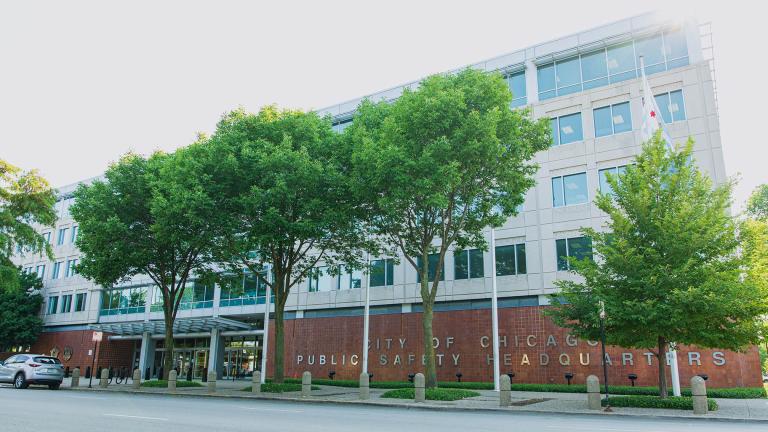
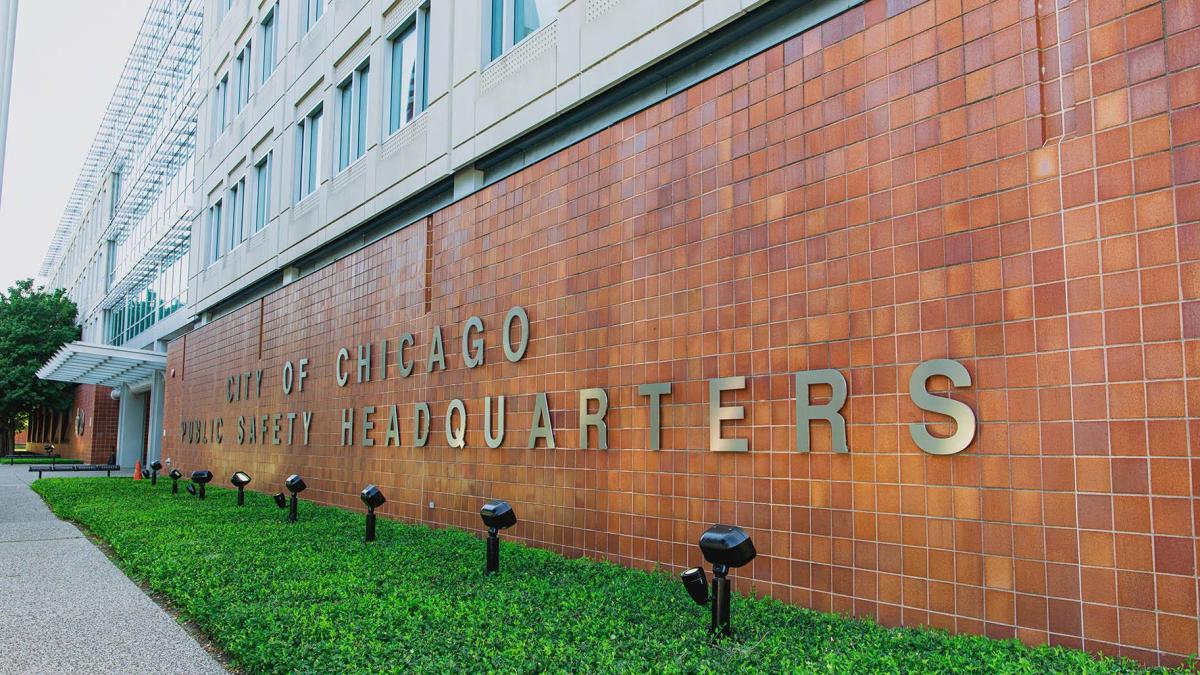 Chicago Police Department Headquarters, 3510 S. Michigan Ave. (Michael Izquierdo / WTTW News)
The Chicago Police Department had fully complied with 22% of the court order that requires CPD to stop routinely violating Black and Latino residents’ constitutional rights by June, according to the court-appointed monitoring team charged with keeping track of reform efforts.
The jump of six percentage points in the level of full compliance with the consent decree reached between Jan. 1 and June 30 is the second largest increase in the six and a half years that the federal court order has been in effect. The last report from the monitors found CPD had fully complied with 16% of the consent decree.
U.S. District Court Judge Rebecca Pallmeyer praised the efforts of Chicago Police Supt. Larry Snelling to step up efforts to comply with the consent decree during a hearing held Tuesday, saying a “good team” was leading the department.
“I feel like we are going in the right direction,” Pallmeyer said. “It can be slow at times, it can be frustrating at times.”
The department is in preliminary compliance with approximately 31% of the consent decree’s requirements and secondary compliance with another 40% of the requirements, according to the 12th semiannual report from the team led by attorney Maggie Hickey.
“Our growth in operational compliance symbolizes the trust we are continuing to build in our communities through our reform efforts,” Snelling said in a statement. “This trust can only be built through partnership between our department and the Chicagoans we serve throughout the city.”
The upbeat report from the monitors came approximately two weeks after the coalition of reform groups told Pallmeyer that a significant increase in the number of times officers have used force against Black and Latino Chicagoans violates the consent decree.
Meetings on that issue have begun, Hickey wrote in the report.
Snelling agreed 16 months ago to allow the court order, which requires CPD to change the way it trains, supervises and disciplines officers to expand to include traffic stops.
The monitors are “hopeful that there will be some identified path toward resolution before the end of the year” on whether and how to incorporate traffic stops into the consent decree.
The consent decree is divided into 11 sections, each with dozens of requirements for CPD to meet.
Many of the tasks CPD has yet to complete require the department to be restructured, to allow officers to work with residents to address threats to public safety as part of a reimagined system of community policing.
That plan has yet to be completed.
In addition, a mandatory study of where officers are assigned throughout the city and whether changes would help thwart crime began in November 2024 and remains ongoing.
And CPD has yet to implement a system to alert police brass about which officers have been accused of misconduct more than once and might need counseling, retraining or discipline.
That system requires the department to launch a new records management system, parts of which will take another year to complete, according to the report.
And they have failed to move forward with a plan to alert police brass about which officers have been accused of misconduct more than once and might need counseling, retraining or discipline.
WTTW News coverage of policing and police reform is supported by The Joyce Foundation.
Contact Heather Cherone: @HeatherCherone | (773) 569-1863 | [email protected]