Science & Nature
Spotted Lanternfly Sightings Are on the Rise in Chicago. Here’s the Latest on the Invasive Pest
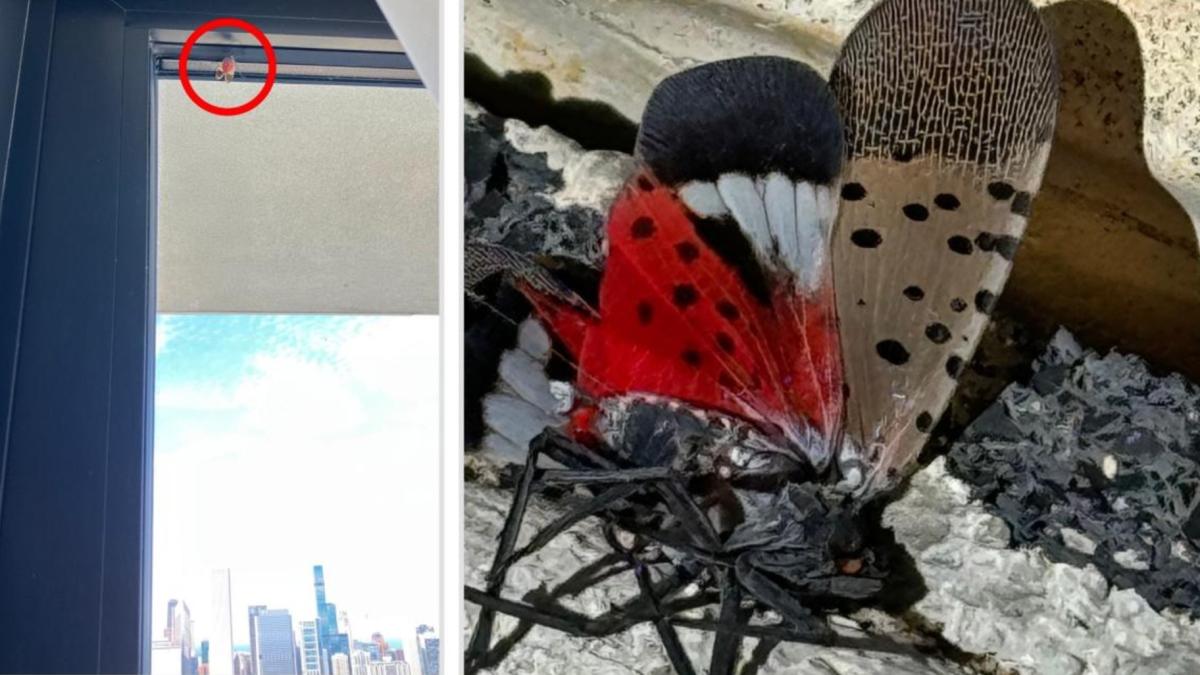 A spotted lanternfly reported on the 56th floor of a Chicago skyscraper (l); one of the invasive bugs with its telltale spots. (Credits: Illinois Department of Agriculture; Patty Wetli / WTTW News)
Want more local nature coverage? Sign up for WTTW News’ weekly Urban Nature newsletter.
The invasive spotted lanternfly appears to be making inroads in Chicago, two years after the pest was first confirmed in Illinois.
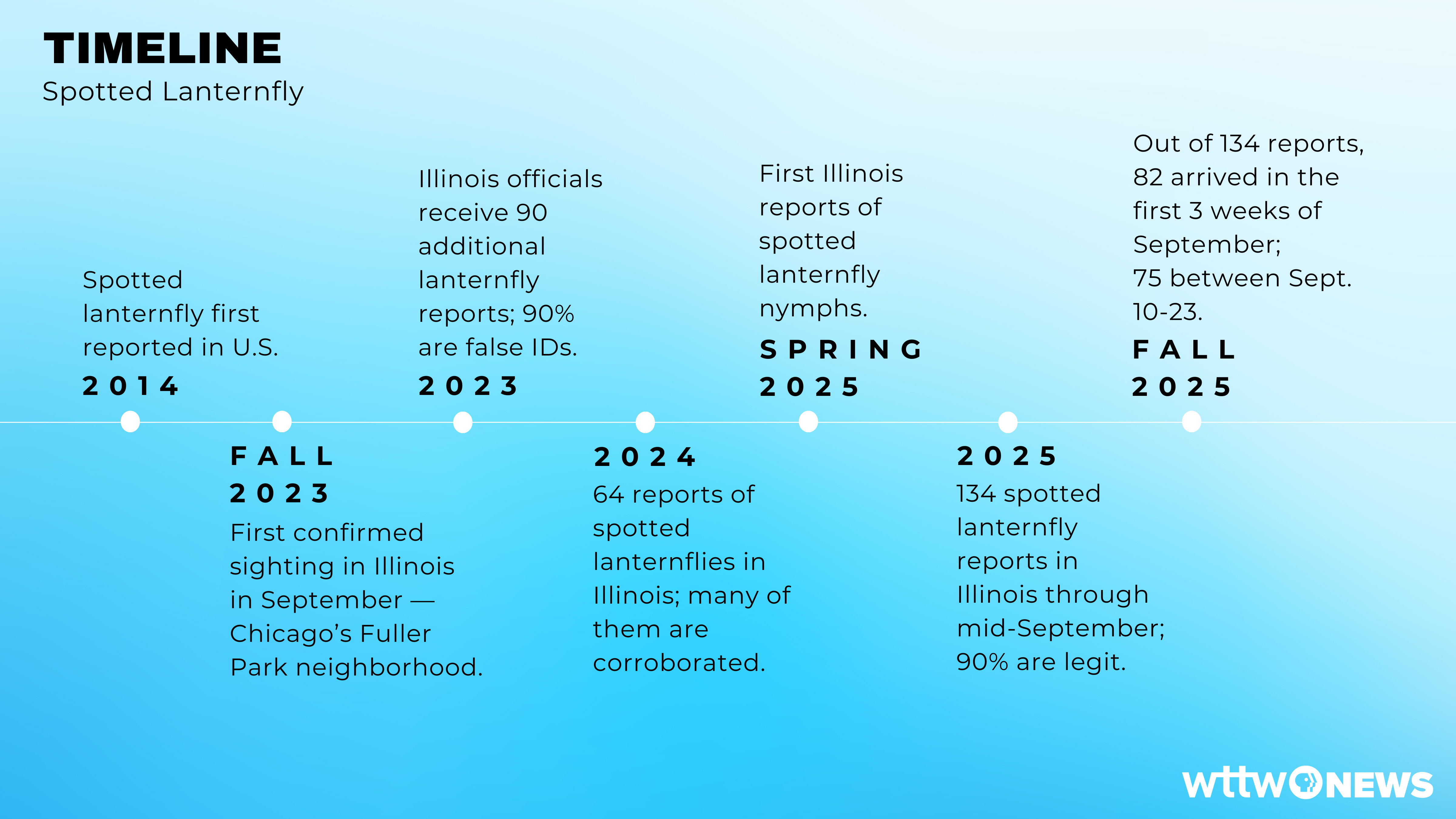
So far, there have been more reports of the bug in September 2025 alone than there were in all of 2024, according to Scott Schirmer, section manager of the Illinois Department of Agriculture’s Nursery and Northern Field Office.
“It’s really ramped up in the last two weeks,” Schirmer told WTTW News. “Right now, all the adults are out and about. And when they’re adults, their main purpose in life is to eat and store energy to reproduce and lay eggs.”
Following the initial 2023 sighting in Fuller Park — an area sandwiched between Bronzeville to the east and Back of the Yards to the west — the neighborhood has remained the epicenter of the infestation, with Hyde Park another hot spot. Lanternflies are also moving into south and west suburbs, including Cicero, Berwyn, Oak Park, River Forest, Oak Lawn and Evergreen Park, Schirmer said.
The University of Illinois is collecting reports of sightings and collaborating with the Department of Agriculture on analyzing data and trends.
 (Patty Wetli / WTTW News)
The public’s accuracy in identifying the bug has gone from 90% false IDs to 90% positive, a sign that education awareness efforts are working.
“People know what they’re looking for,” Schirmer said. “If they see it, they’re letting us know.”
This includes a Chicagoan who submitted a report of a sighting in a location that surprised even Schirmer: a high-rise balcony west of the Loop, 56 stories high.
“What is it doing up there? Did it ride an updraft? Was it in the wind and fell down?” he wondered.
Observers of lanternfly behavior have noted the bug’s tendency to climb trees, consistently orienting themselves upward.
“Did this one jump off a vehicle, land on the building and just start climbing up?” Schirmer asked. “Why would it end up going and wasting that much energy going all the way up to the 56th floor, other than the fact that it’s a brainless bug just programmed to go up? I don’t know.”
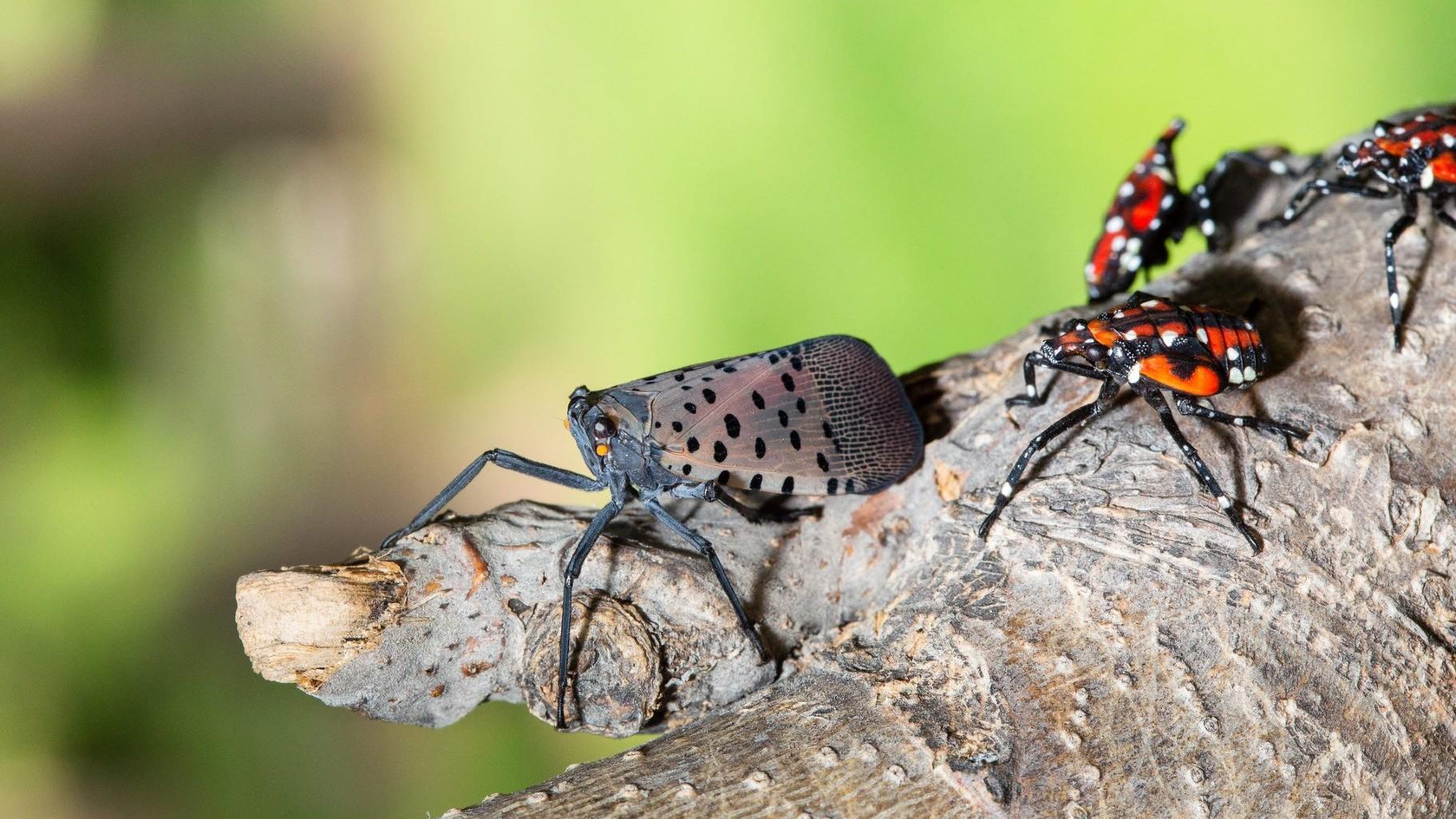 Spotted lanternfly and nymphs. According to Scott Schirmer, people often mistake milkweed bugs for lanternfly nymphs. The first stage of nymphs are black, to further confuse things. (U.S. Department of Agriculture)
To date, most reports have been one-offs — a single spotted lanternfly seen here, another one there — suggesting the pest has yet to build up to significant numbers. Schirmer said he’ll know the situation has escalated when he starts to see photos of a dozen or more lanternflies clustered on a single tree.
It’s more a question of if, not when, that moment will come. The notion of containing an infestation to Chicago or Cook County or northeast Illinois seems unlikely.
“This bug was first found in Pennsylvania in 2014, and they’ve been doing a lot of work out east to try and knock it back and bat it down,” Schirmer said. “And clearly in the last 11 years, (through) no fault of anything that anybody’s done, the bug’s moved on. I don’t think there’s a good management strategy out there to keep this bug in place. Whether it’s quarantine, whether it’s spraying, whether it’s cutting trees down, whatever’s going on it’s not working to keep this bug from spreading.”
The good news, at least from an Illinois perspective, is that spotted lanternfly’s biggest impact seems to be on vineyards, in terms of plant health.
“It’s not killing your trees like emerald ash borer did,” Schirmer said. “It’s not defoliating your oak trees like spongy moth. It’s not leaving a tidal wave of waste behind of dead trees. You don’t have to worry about trees getting infested and infected. Don’t get sold a snake oil treatment for your trees, because it’s not going to kill them.”
But there is a significant “ick” factor to the bug, he acknowledged, one that could ruin people’s experience of the outdoors.
“You go outside and there’s 10,000 of these in your backyard flying around, it’s going to be gross,” said Schirmer. “It’s a different kind of pain in the rear end.”
As they feed, the bugs excrete honeydew — a sticky sugar-water — that accumulates on leaves, outdoor furniture, vehicles and other surfaces, while also attracting stinging insects including wasps, hornets and bees.
“Painting the worst-case scenario: This time of year, you go out to an orchard to pick apples and it’s infested with spotted lanternfly,” Schirmer said. “We’re not seeing those apple trees dying, but … it’s just this bad agri-tourism setting.”
So there’s an incentive to minimize an infestation to the extent possible. Officials are urging people to continue sending photos of spotted lanternfly, along with the location, to [email protected]. This includes reports of adults, nymphs and eggs. And then squash the bugs dead.
Frankly, the role of Illinoisans, Schirmer said, is to buy time. Time for researchers to perhaps discover a “silver bullet” that could wipe out the lanternfly or, more realistically, time for states like California, Colorado, Washington and Georgia to develop strategies to defend their valuable fruit crops.
Folks can pitch in not only by reporting sightings, but also by tidying up properties to remove or thin out native grapevines, tree of heaven, box elder, and volunteer silver and Norway maples — all of which tend to attract the bug.
“This here. We’re going to deal with it,” Schirmer said. “But don’t panic.”
Contact Patty Wetli: [email protected]