Science & Nature
Ragweed vs. Goldenrod: One of Them Makes You Sneeze, the Other is the Bee’s Knees
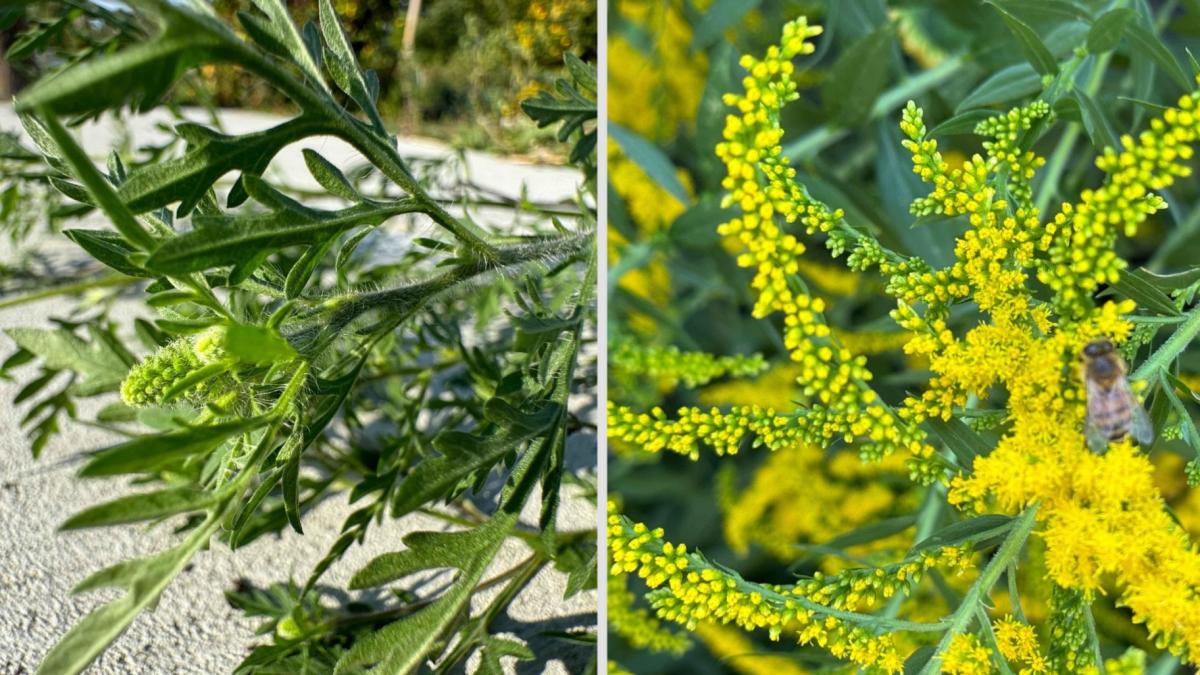 Ragweed (l) is a powerful allergen; goldenrod (r) is highly beneficial for insects. (Patty Wetli / WTTW News)
Want more local nature coverage? Sign up for WTTW News’ weekly Urban Nature newsletter.
Got itchy, watering eyes? Runny nose? Scratchy throat?
Yep, it’s fall allergy season.
The cause of all this misery is a prolific pollen-producing member of the Asteraceae (aka daisy) plant family. But not the one you might think.
“People start sneezing in the fall, and the thing you see is goldenrod, right? They’re everywhere, you see them everywhere. And so people just assume that the reason they’re sneezing is this flower,” said Jeremie Fant, director of conservation at Chicago Botanic Garden.
While goldenrod — bright, brilliantly yellow goldenrod — takes the rap, the real culprit flies under the radar.
It’s ragweed.
According the National Institutes of Health, ragweed pollen contributes “significantly to hay fever, and is associated with allergic rhinitis, conjunctivitis and asthma.”
So why do so many people confuse ragweed (Ambrosia species) and goldenrod (Solidago species)?
One reason for the mix-up is that the two plants bloom at the same time in late summer/early fall. Another is that goldenrod, just like ragweed, has a tendency to pop up in places it wasn’t planted, including roadsides and fence lines.
But that’s where the similarities end.
Though common ragweed is native to North America, it’s considered a noxious weed and landowners in Illinois are mandated to either control its spread or eradicate it from their property. (That’s no small ask: Ragweed was one of the first weeds to develop herbicide resistance, according to Cornell University.)
Goldenrod, on the other hand, is highly valuable as a host plant to more than 100 species of butterflies and moths. And it’s a key source of nectar for bees and other pollinators at a time of year when other flowers are spent.
“Insects are coming to the end of the season, … and this is probably the only game in town,” Fant said of goldenrod, along with fall asters.
These ecosystem benefits are lost if people continue to fear goldenrod as an allergen, and either abstain from planting it or actively remove it.
(Video produced by Patty Wetli / WTTW News)
How to tell the desirable goldenrod from the noxious ragweed?
The physical differences between the two plants are actually pretty easy to spot:
— Goldenrod is typically single-stemmed, with some occasional branching near the top. Ragweed is highly branched.
— In general, goldenrod leaves alternate on the stem and are oval-shaped, tapering at the ends. Ragweed foliage is described as almost fern-like.
— The real giveaway is right there in goldenrod’s name: the golden plumes of tiny flowers at the crown of the plant. Ragweed has floral spikes, too, but they’re either green or greenish-white.
Video: Insects make a beeline to goldenrod, which is a valuable source of nectar. (Patty Wetli / WTTW News)
Goldenrod is colorful by design. Those showy yellow flowers attract various insects, which pick up the plant’s heavy, sticky grains of pollen while gorging on nectar.
Ragweed’s flowers, by contrast, contain zero nectar and are scarcely noticeable.
“Because it’s not attracting insects,” Fant explained.
Why not? It doesn’t need to, he said. Ragweed’s pollen is light and fluffy, and it spreads on the wind, not via insects.
“The thing that’s causing you to sneeze is the thing you can’t see because it is not designed to be seen,” said Fant. “It’s designed to be wind-blown.”
A single ragweed plant can produce more than a billion pollen grains, which can float for hundreds of miles. That’s what makes it such an effective colonizer of open spaces and such a powerful allergen.
Unfortunately, ragweed pollen takes wing in precisely the kind of weather Chicagoans look forward to in September: warm and dry, with a slight breeze.
Prepare to sneeze.
Contact Patty Wetli: [email protected]