Crime & Law
Under Emergency Rule, Illinois Prisons Plan to Withhold Physical Mail in Favor of Electronic Scanning
 (WTTW News)
Under an emergency rule, the Illinois Department of Corrections is moving to allow prisons across the state to electronically scan and distribute mail.
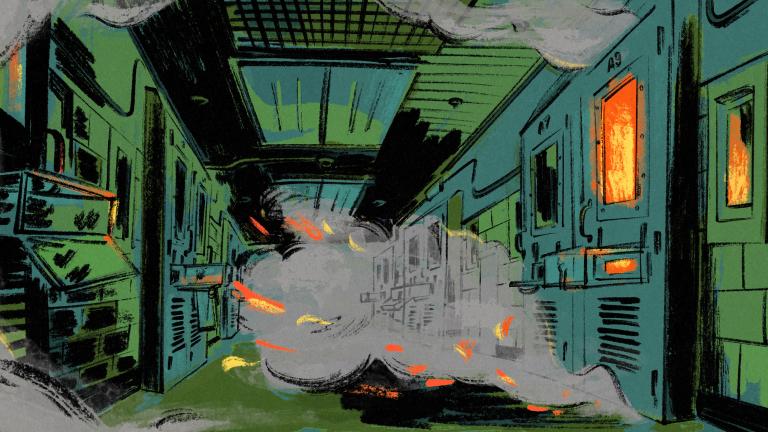
The change comes after debate over the safety of physical mail. IDOC states that these emergency rules are intended to prevent the smuggling of contraband and hazardous substances into correctional facilities, which enter through chemical-laced paper.
Illinois Department of Corrections spokesperson Naomi Puzzello said no facilities have switched over to electronic mail processing due to this rule and the department will “work with all relevant stakeholders on communicating and implementing new processes and procedures.”
Just weeks ago, Gov. JB Pritzker signed a bill into law that requires IDOC to collect and publish data concerning contraband found in their facilities.
The point of the law was to collect information in order to create policy to stop contraband from entering prison, said Jennifer Vollen-Katz of the prison watchdog group the John Howard Association. But before this information on contraband has been released, IDOC has taken measures to scan mail.
“I don’t know whether I’m more confused or disappointed that IDOC didn’t wait for [the data bill] to take effect,” Vollen-Katz said. “Why [does IDOC] think you know that this is going to solve the problem?”
Under the emergency rule, IDOC amended procedures for processing incoming mail and the reception of publications. It authorizes the department to process incoming mail by electronically scanning the contents, making digital copies and then providing it to recipients in print or electronically.
The rule also prohibits relatives or friends from soliciting or purchasing publications on behalf of an individual in custody. Visitors can no longer bring approved publications to a prison — previously, they could bring up to five publications per visit that were not packaged or contained.
The emergency rule was listed on Illinois’s Joint Committee on Administrative Rules’ current emergency rules, effective Aug. 14 for a maximum of 150 days.
It’s unclear how many drugs enter IDOC facilities through the mail, according to data obtained by WTTW News in February. From January to mid-December of 2024, 779 synthetic cannabinoids were discovered, according to data. The “point of discovery” for that drug type was 188 by mail, while 410 were discovered “in cell” and 156 were discovered “on person.”
If tainted mail is found in a cell, it is considered an in-cell discovery, IDOC spokesperson Naomi Puzzello said at the time. There are many scenarios in which a substance might not be detected initially, like the mail not appearing abnormal during initial inspection, or a substance could have been introduced through another method and later stored in someone’s cell, she added.
The introduction of the legislation came at a time of debate over whether to halt the flow of physical mail into Illinois prisons. Some lawmakers introduced bills to enshrine the right to physical mail; others introduced legislation to outright ban paper mail.
AFSCME Council 31, the union that represents most correctional workers in the state, said it’s glad this rule is moving forward for the “security of state facilities and the well-being of AFSCME members.” The union cited incidents of staff being exposed to drugs through mail, leading to emergency rooms visits. According to that February data obtained by WTTW News, there were 419 suspected synthetic cannabinoid overdoses last year, of which 229 were “staff exposures.”
In October, IDOC signed a contract with communications company ICSolutions, which gave the agency the ability to scan and digitally deliver mail.
States that have switched to scanned mail haven’t necessarily solved their drug issues. In Pennsylvania, for example, the rate of random positive drug tests among incarcerated people more than doubled the rate it was before the mail scanning system went into effect.
The move is worrisome for incarcerated people and their outside support, as original mail is meaningful to people, Vollen-Katz said.
“It is a connection to family. It is a connection to outside support. It is something tangible about a major life event that you were not there to participate in,” Vollen-Katz said. “Taking that away is going to be incredibly painful for people.”
Eric Diaz, who is incarcerated at Hill Correctional Center in western Illinois, previously told WTTW News the same: Stopping physical mail from entering prisons would not stop drugs from coming in and would have “devastating consequences.”
“I believe that this is just another way for the department to place a band-aid on a wound that has been getting deeper over the decades and not getting to the root of the problem of why individuals are continuing to indulge in negativity and not getting rehabilitated in the first place,” he wrote.
Contact Blair Paddock: @blairpaddock.bsky.social | [email protected]