Health
Chicago Doctors Voice Concerns Over Turmoil at CDC, Changes to Vaccine Guidance
The Centers for Disease Control and Prevention — the premier public health agency in the United States — is experiencing chaos unlike anything ever seen before.
Following mass layoffs, there is now also turmoil at the top after CDC director Susan Monarez was forced out last Wednesday, triggering resignations from other senior staff and street protests by agency employees.
Meanwhile, there’s also growing concern in the medical community over changing vaccine guidelines and the cancellation of cutting-edge vaccine research.
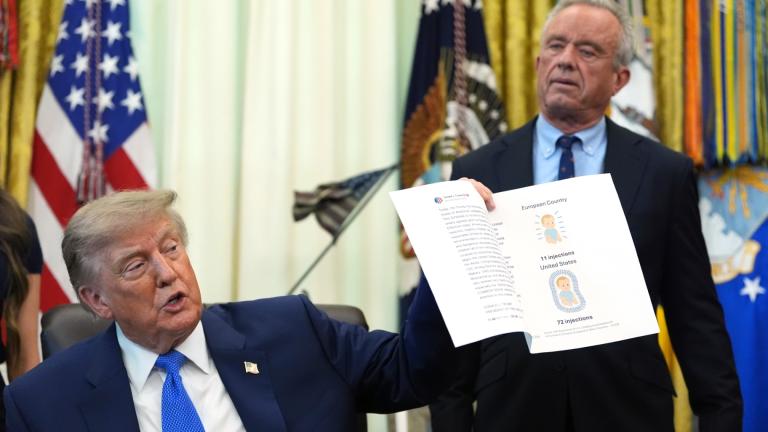
But Health and Human Services Secretary and vocal vaccine skeptic Robert F. Kennedy Jr. has pushed back against criticism of his actions, telling reporters on Thursday that the CDC has been “very troubled for a very long time.”
“Anyone that lived through the COVID pandemic saw all of these bizarre recommendations that were not science-based,” said Kennedy. “There’s a lot of trouble at CDC, and it’s going to require getting rid of some people over the long term in order to change the institutional culture.”
Dr. Robert Murphy, executive director of the Institute for Global Health and interim chief of infectious diseases at Northwestern Medicine, said the problem lies not with the CDC but with Kennedy and his leadership.
“Nobody thought the reality would be as bad as it is,” said Murphy. “He’s not a public health expert. He’s a quack.”
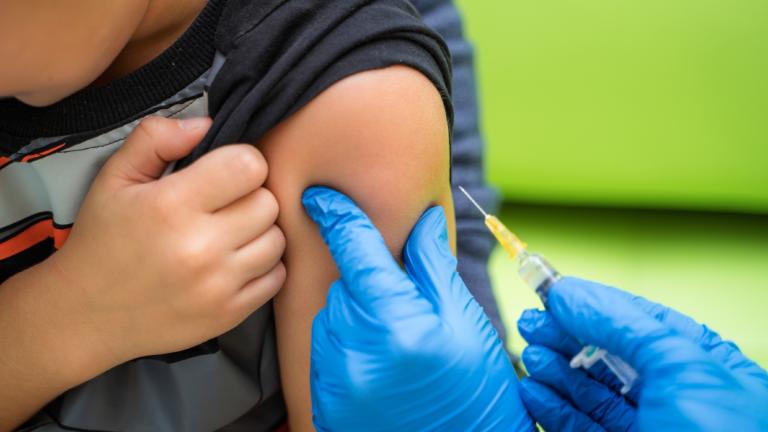
For Murphy, what is most troubling has been the changes to vaccine guidance for young children who are especially vulnerable to infections because they haven’t built up the immunity that older children and adults have.
“We’re going to start counting bodies soon,” said Murphy. He noted that “if you look at the children that died from COVID, half of them did not have any other medical problems. It’s just that they’re being exposed for the first time.”
Beyond COVID-19, Murphy fears there could also be a resurgence of other diseases such as measles, mumps and diphtheria as vaccine skepticism rises and more children go unvaccinated.
Dr. Anita Chandra, president-elect of the Illinois chapter of the American Academy of Pediatrics and a clinical instructor and pediatric specialist at Northwestern Medicine, said most of the changes to vaccine schedules have so far centered on COVID-19 vaccinations.
The guidance changes are “problematic in that we’re left without resources to help protect some of our most vulnerable patients,” said Chandra. “We could see more and more children fall ill and then they may not even have access to the health care they need to help recover from these things. Currently the difference is over COVID, but we don’t know what the future of the ACIP (Advisory Committee on Immunizations Practices) recommendations is going to be.”
The guidance changes also set up “a health equity issue as well,” said Chandra, as the federally funded Vaccines for Children program may not be able to provide vaccines that are not recommended by ACIP — meaning many children may not get needed vaccinations.
Dr. Maximo Brito, professor of medicine and infectious diseases specialist at the University of Illinois Chicago, said the changes at the CDC are “very unfortunate” and have created “a void of leadership” at the agency.
Brito said he had hoped based on Kennedy’s testimony to Congress during his confirmation hearings that vaccine schedules were not going to be modified, but instead said the HHS secretary is “creating directives that seem to be in contradiction to evidence-based medicine.”
“Not following the advice of the experts is what concerns me the most,” said Brito, who worries that there will be an inevitable resurgence of diseases that had previously been contained by vaccines.
Brito is also concerned that many of his patients will not be able to afford vaccines if insurance companies are no longer required to pay for them because of changing vaccine guidance.
“These are expensive vaccines,” said Brito.
For people confused by the changing guidelines, Chandra recommended speaking to trusted sources.
“It’s really important to talk to your physician about this and not to just obtain your information from the echo chamber of social media,” said Chandra.
Murphy said the guidance from the CDC can no longer be trusted and people should instead follow the recommendations of professional medical organizations like the American Medical Association and the American Academy of Pediatrics.
“It (the CDC) is no longer the gold standard — matter of fact, it’s totally unbelievable,” said Murphy. “You’ve let a cultist, anti-science fringe group basically take over the public health apparatus in the entire United States. This whole anti-science thing — it’s bigger than any one particular issue. Nobody believes the experts anymore.”