Science & Nature
Stewardship Efforts Pay Off at 63rd Street Beach, Where Rare Species Are Making Themselves at Home
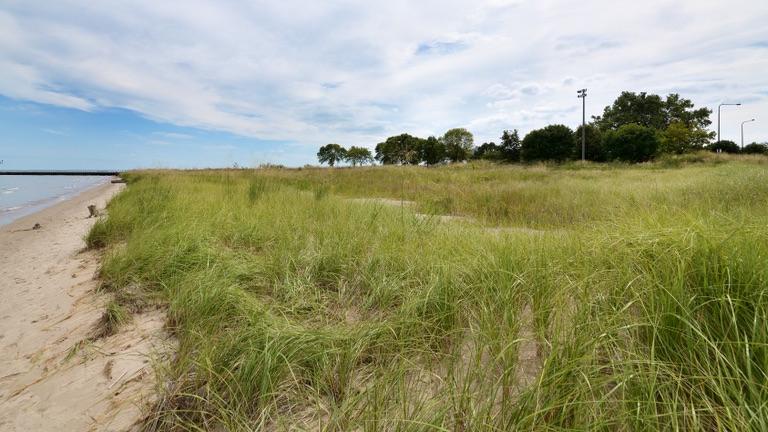 A view of the 63rd Street dunes. (Courtesy Chicago Park District)
For the first leg of their inaugural migratory journey, Chicago’s surviving piping plover chicks, El and Bean, didn’t travel far south.
The two settled in at 63rd Street Beach, adjacent to Jackson Park, where the dunes must have looked familiar.
“It’s a really exciting opportunity for people who live nearby to know that there’s a healthy habitat the birds are interested in,” said Evelyn Alvarez, conservation action coordinator at Shedd Aquarium.
Since 2012, Shedd has, in partnership with the Chicago Park District, taken the lead on stewardship efforts at 63rd Street, which encompasses both a traditional swimming beach and extensive natural areas bookending the more manicured sand. The dune areas were established in the early 2000s and expanded in 2010.
Like Montrose Beach to the north — a nesting site for endangered piping plovers since 2019 — 63rd Street sees heavy recreational use while also managing to support diverse wildlife, including a colony of cliff swallows that makes its home under the beach house.
“At certain times of the years, there’s babies that have their heads popping out of those nests,” Alvarez said. “It’s a really cool connection. We love having people understand why it’s so important that we’re picking up litter from these sites, because of these species that call it home.”
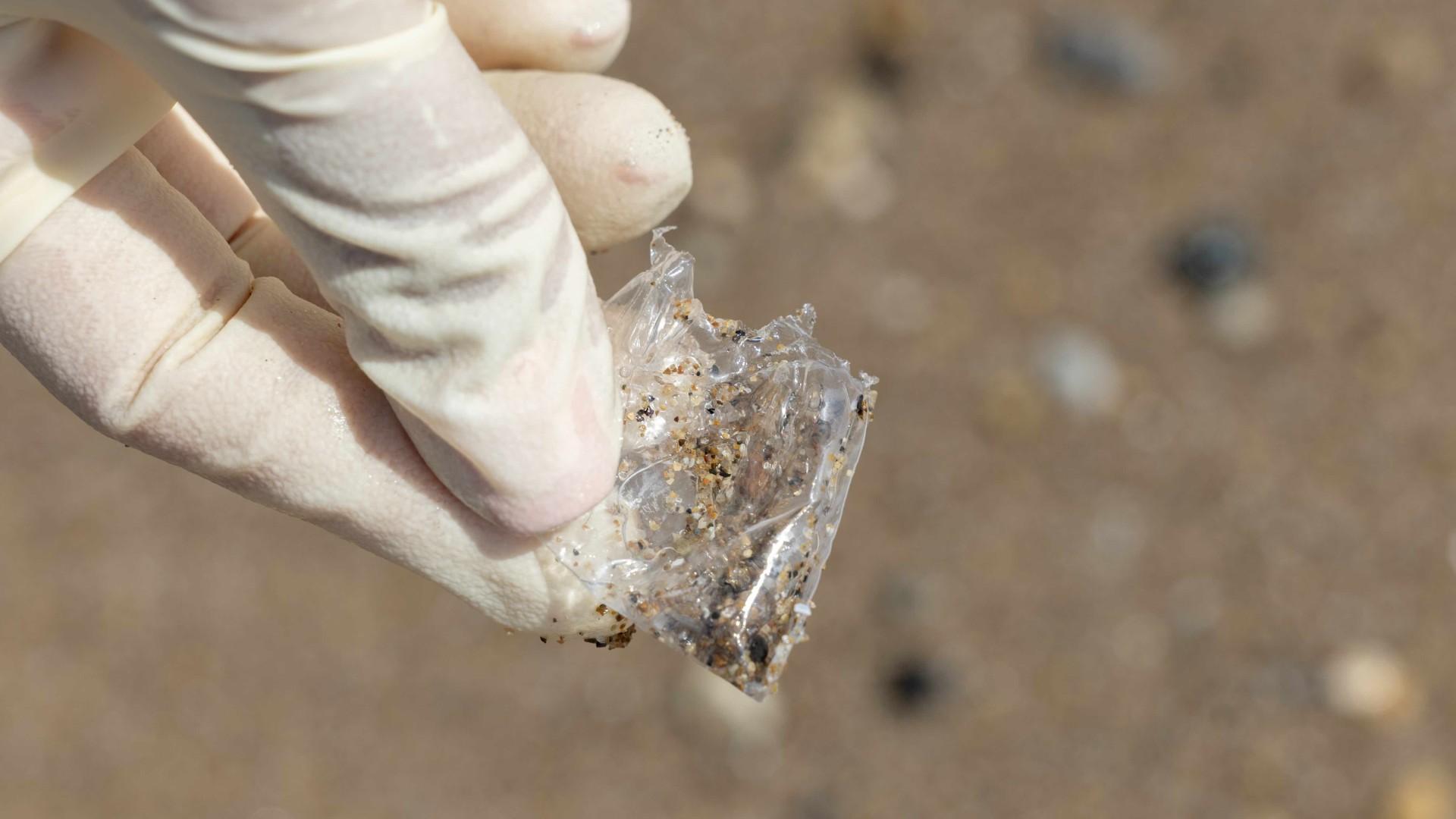 Small bits of plastic littering Chicago beaches pose a danger to wildlife, who might mistake the trash for food. (Courtesy of Shedd Aquarium)
Shedd hosts volunteer cleanups at the beach on the third Saturday of the month, from April through October, and also organizes work days for corporate and community groups.
Alvarez said she has come across her share of strange items left on the beach during these events, including more than one urn, but it’s what people can’t see that causes the most harm.
Wildlife can easily confuse small bits of plastic for food, she said, which is why it’s so important for people to either pack up their trash and haul it home or make sure it’s well-contained within garbage carts on site.
So far this year, more than 200 volunteers have removed 1,200 pounds of trash from the beach, according to Shedd.
In addition to keeping the beach clean, Shedd undertakes coastal habitat maintenance activities, such as pulling up unwanted cottonwood saplings. At September’s action day, Alvarez expects to put volunteers to work planting marram grass, which plays a key role in stabilizing Great Lakes dunes.
In the past, volunteers have also conducted rare plant monitoring. One such endangered plant happens to be sea rocket — the namesake of El and Bean’s mama, Sea Rocket — and it’s thriving at 63rd Street, Alvarez said.
Which brings us back to the piping plovers.
After hanging out at 63rd Street for more than a week, Bean moved on this past Monday but El lingered through the end of this week, according to Tamima Itani, lead piping plover monitor. (As of Friday, El may or may not have finally flown the coop.)
Could the beach serve as more than just a stopover for plovers?
“I believe 63rd Street Beach could support a breeding pair,” Itani said. “(It’s) a wonderful beach and we have enjoyed being there to watch El and Bean enjoy it!”
She added that there are challenges at the site, including the cottonwood saplings referenced above, as well as off-leash dogs.
Alvarez said Shedd and its community of volunteers would gladly rise to the challenge if plover monitoring were added to their stewardship responsibilities.
“That would be really cool,” Alvarez said. “We definitely like knowing that the work we’re doing is creating a healthier habitat for all species in general.”
Shedd’s upcoming action days at 63rd Street Beach are Aug. 16, Sept. 20 and Oct. 18; 10 a.m. to noon.
Contact Patty Wetli: [email protected]