Crime & Law
‘This System Needs to Change’: Advocates Say Courts Must Better Address Domestic Violence Cases
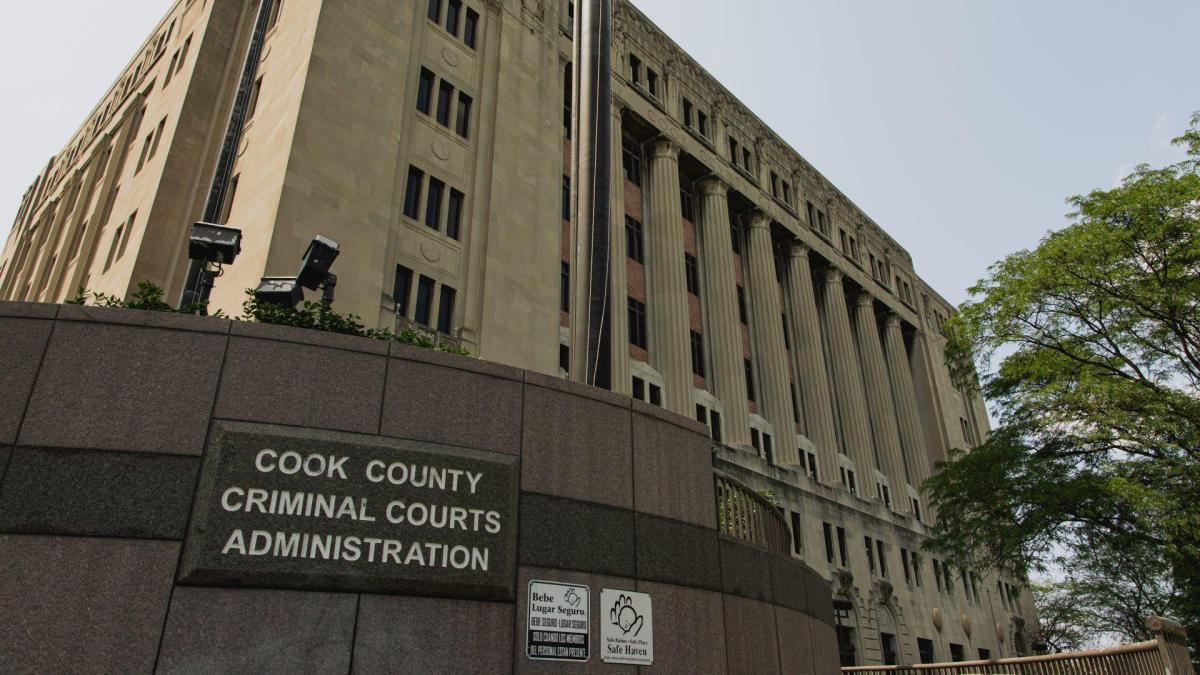 Leighton Criminal Court Building (Michael Izquierdo / WTTW News)
In running to become Cook County’s top prosecutor, Eileen O’Neill Burke focused much of her campaign on tackling gun crimes. But over the first six months of her term as state’s attorney, Burke and her office confronted another major issue: domestic violence.
Since she took office last December, 39 women have been killed in domestic-related homicides in Chicago, according to the Chicago Police Department — a total O’Neill Burke on Tuesday called a “shocking, shocking number.”
“I thought my priority and my sole focus was going to be on gun crime,” she said at a hearing before the Cook County Board’s criminal justice committee. “I learned very, very quickly that we had a second house on fire.”
The committee held a special hearing on domestic violence Tuesday focused on rooting out existing issues through the court system and finding solutions to better aiding victims and their families.
Several survivors of domestic violence shared their stories, and called on elected officials for more assistance and protections moving forward.
“This system needs to change,” said Sarah Brown, who recounted the experience of her children and herself with domestic violence. “We need a system that prioritizes the safety and well-being of children, not one that perpetuates the cycle of violence.”
While the overall homicide rate across Cook County has decreased “significantly” in 2025, O’Neill Burke said, the number of domestic-related homicides has spiked. After making up 9% of total homicides last year, those cases now make up 17% of homicides thus far in 2025.
“That is a shocking number,” she repeated. “It is a problem we need to address, and we need to address it quickly.”
Advocates said issues persist around the implementation of orders of protection, which are difficult to track, and an overall lack of transparency around domestic relations services. A survey of domestic violence court participants also found the average case lasts four years.
O’Neill Burke also said the existing case management system needs an overhaul — some prosecutors currently keep track of their caseload using spreadsheets, she said — and further technological improvements are necessary to help streamline the court process.
O’Neill Burke has said she’s made domestic violence a priority of her office.
She launched a special victims bureau to handle domestic violence prosecutions and other sensitive cases, and has instructed her assistant state’s attorneys to seek pre-trial detention in any domestic violence, stalking or sex offense case involving a weapon.
Through that division, 75 prosecutors have been specifically trained to handle those types of cases from a “survivor-centered approach,” said bureau chief Anne McCord Rodgers. That means treating survivors with patience and kindness while making sure they understand the legal process ahead.
O’Neill Burke’s office is also implementing an orientation process for its prosecutors working these cases so they know the laws, best practices and most effective ways to communicate with survivors.
“This is not for the faint of heart,” O’Neill Burke said. “These are the cases that wake me up in the middle of the night. These are the cases that stick with you for decades that you come back to again and again and again about what happened. So we need to make sure our attorneys are ready for that.”