Politics
Vote Blocked on Plan to Legalize Coach Houses, Granny Flats Across Chicago
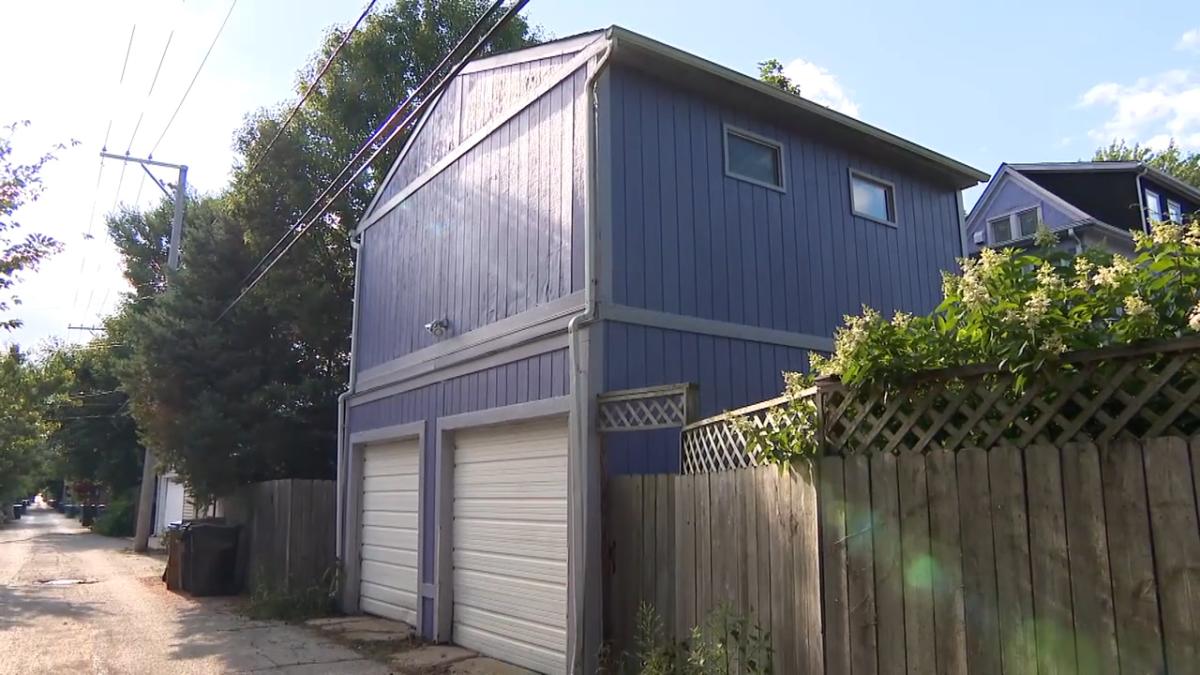 A Chicago coach house. (WTTW News)
Opponents of a proposal to allow Chicagoans to build basement, attic and coach house dwellings across the city without obtaining special permission from city officials blocked a vote on the measure Wednesday, after last-minute negotiations fell apart.
The City Council’s Zoning Committee voted 13-7 to send the proposal to the full City Council for a final vote, where Alds. Marty Quinn (13th Ward) and Greg Mitchell (7th Ward) used a parliamentary procedure to block a vote until the City Council’s next meeting.
The City Council is not scheduled to meet again until September, after its summer recess.
The measure, which has been in the works for two years, has the support of Mayor Brandon Johnson as a way to chip away at Chicago’s massive shortage of affordable housing.
If approved, the measure would weaken the decades-old tradition known as aldermanic prerogative that gives a City Council member the final authority over housing developments in their own wards.
The proposed ordinance would reverse the city’s 68-year ban on tiny homes, officially known as additional dwelling units, in an effort to add “gentle density to begin to address Chicago’s housing crisis,” said Ald. Bennett Lawson (44th Ward), who authored the measure.
Although Lawson touted the measure that won the approval of the Zoning Committee as a “compromise,” it was fiercely condemned by supporters of aldermanic prerogative, who tout it as the best way to ensure that Chicago residents live in neighborhoods governed by one of their own: someone who lives near them, understands their issues and is not only accessible — but also accountable to them on Election Day.
A federal probe found that aldermanic prerogative fuels segregation in Chicago and violates the civil rights of Black and Latino residents by limiting the creation of affordable housing.
Quinn blasted the proposal during Tuesday’s Zoning Committee meeting as an “attack” on Chicago’s working class that would cause residents to leave his Southwest Side ward, which is made up of single-family bungalows and other homes.
“This is being jammed down the throats of the Bungalow Belt,” Quinn said, adding that it would ruin the “integrity” of the city.
In 2021, the City Council approved the creation of coach houses and granny flats in five areas of the city, with the approval of those areas’ alderpeople.
City officials declared that the pilot program had been a roaring success, but efforts to allow tiny homes to be built citywide faced intense opposition from alderpeople who represent wards that have a majority of single-family homes.
To address those concerns, the proposed ordinance would allow no more than three new units to be built each year on each block in areas zoned for detached, single-family homes.
In addition, owners of single-family homes who want to add a second unit to their property would have to also live on the property, according to the revised proposal.
The alderperson of each ward could lift those limits and allow more tiny homes to be built in their wards.
Contact Heather Cherone: @HeatherCherone | (773) 569-1863 | [email protected]