Science & Nature
The Weirdest Wildflower in the Woods Is a Sure, but Seldom Seen, Sign of Spring. Meet the Skunk Cabbage
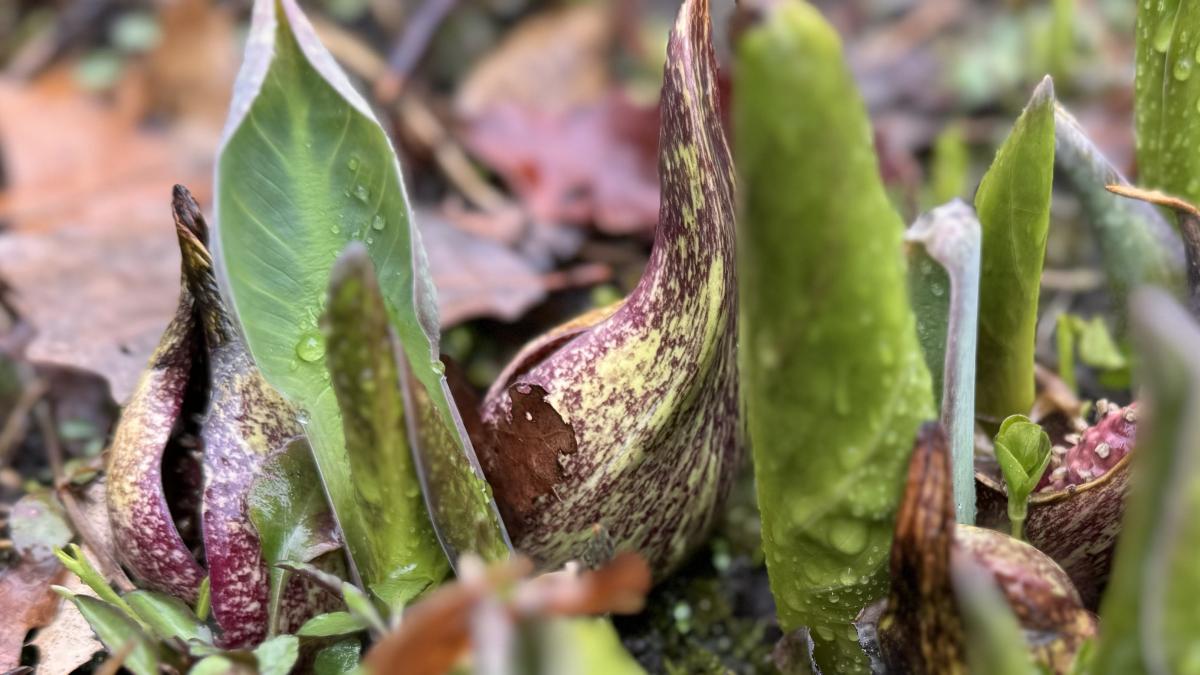 Skunk cabbage at McDonald Woods. The flower is enveloped by the plant's protective "hood." (Patty Wetli / WTTW News)
Heather Decker started hunting for skunk cabbage in February.
The native wildflower is the first to pop up in spring, and Decker, recently named managing ecologist at the Chicago Botanic Garden, was on emergence watch.
Every week, she scanned the forest floor at McDonald Woods for a glimpse of the plant, well camouflaged in the leaf litter.
Like other spring ephemerals — woodland perennials that briefly burst to life and then quickly go dormant — skunk cabbage (Symplocarpus foetidus) keeps a low profile, rising just inches from the ground.
“Your eye almost has to be attuned to their shape,” Decker said.
About that shape… In its earliest stages, skunk cabbage looks like a bulb. Or a maroon-colored hat you might see on a gnome or a Smurf. And it only gets weirder from there, as Decker explained to WTTW News during a visit to the woods in late March, when the plant finally appeared.
Video: Heather Decker, managing ecologist at the Chicago Botanic Garden, explains the anatomy of a skunk cabbage. (Patty Wetli / WTTW News)
Skunk cabbage also has an unusual superpower: It can generate its own heat. If it has to melt a little snow as it punches its way topside, it can, and will. Inside the flower’s hood (technically “spathe”), temperatures reach a toasty 45 degrees, Decker said.
And that’s what made the flower’s relatively late arrival this year curious. Chicago didn’t record much snow this past winter.
Decker theorized that compared to previous years, “We had a very cold frozen winter. Maybe because of the frozen ground? But yeah, it was definitely slower (to emerge) than most years.”
The patch of skunk cabbage in McDonald Woods isn’t large enough to emit the plant’s namesake aroma, at least not that humans can detect. But insects have a finer-tuned sense of smell and are attracted to the whiff of what resembles rotting flesh. (It makes sense that skunk cabbage belongs to the same family as the corpse flower.)
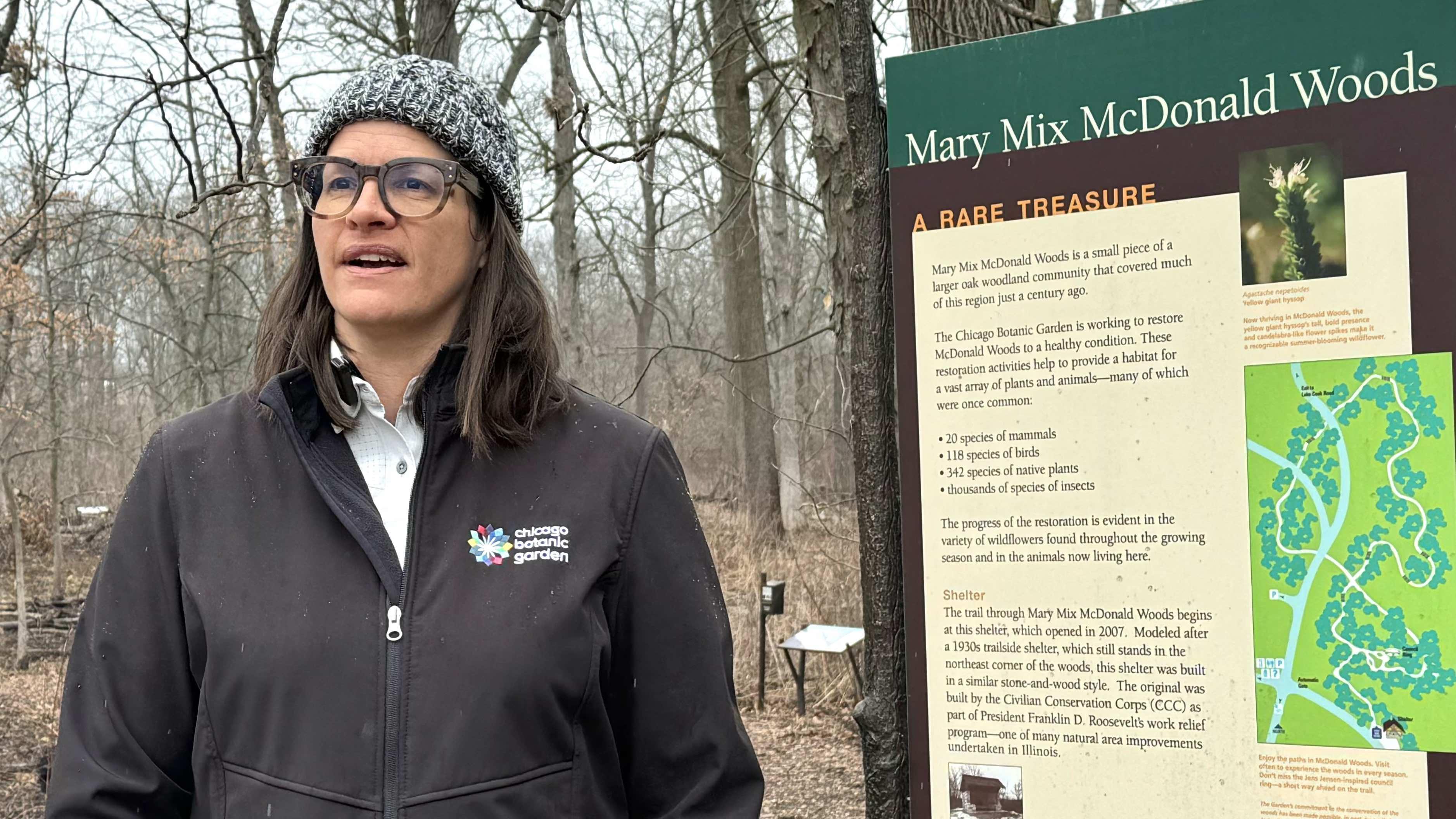 Heather Decker, managing ecologist at the Chicago Botanic Garden, prepares to set out on a hunt for skunk cabbage at McDonald Woods. (Patty Wetli / WTTW News)
Being first among the spring ephemerals takes its toll on skunk cabbage, though.
“This plant is spending a lot of energy just in flower. You’re talking two weeks on and off generating heat,” Decker said.
It compensates by shooting up large leaves one- to two-feet wide once flowering has finished, the foliage forming a cabbage-shaped rosette that gives the plant the other half of its name.
“It needs those large leaves to photosynthesize and to bring all that energy stored down into those roots once again,” said Decker.
By early summer, even the rosettes will have disappeared — hence the ephemeral label — and the vast majority of visitors to the region’s woodlands will have missed the entire show.
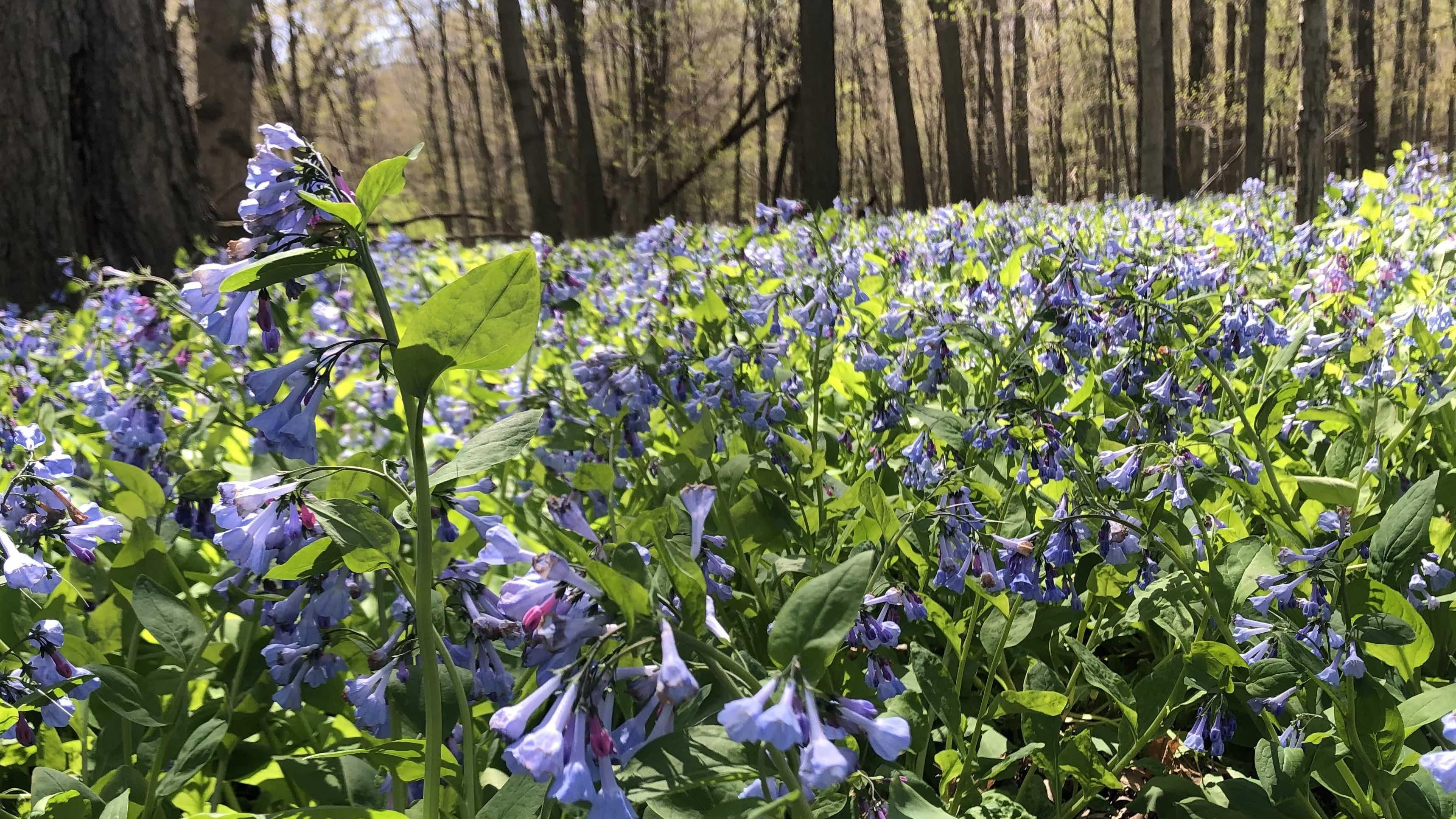 Carpets of bluebells in some of the Chicago region's woodlands are among the showiest spring ephemerals. (Patty Wetli / WTTW News)
Aside from perhaps the brilliantly colored bluebells, spring ephemerals in general don’t attract the same kind of attention as summer’s taller, showier bloomers, Decker said.
Though plant nerds appreciate them and seek them out, she said, spring ephemerals are genetically engineered to take advantage of a narrow window of conditions — diffuse sun, little competition, scant tree canopy — at a time of year when fewer people are visiting woodlands. The skies were spitting rain during the entirety of WTTW News’ tour.
But the payoff is worth it, Decker said, for people who make the effort to get to know these quirky, short-lived woodland wonders.
“It’s like a treasure hunt,” she said. “You’re off on a scavenger hunt looking for each one.”
Contact Patty Wetli: @pattywetli | (773) 509-5623 | [email protected]