Politics
Chicago Police Continued to Target Black, Latino Drivers with Traffic Stops in 2024, Advocacy Group Reports
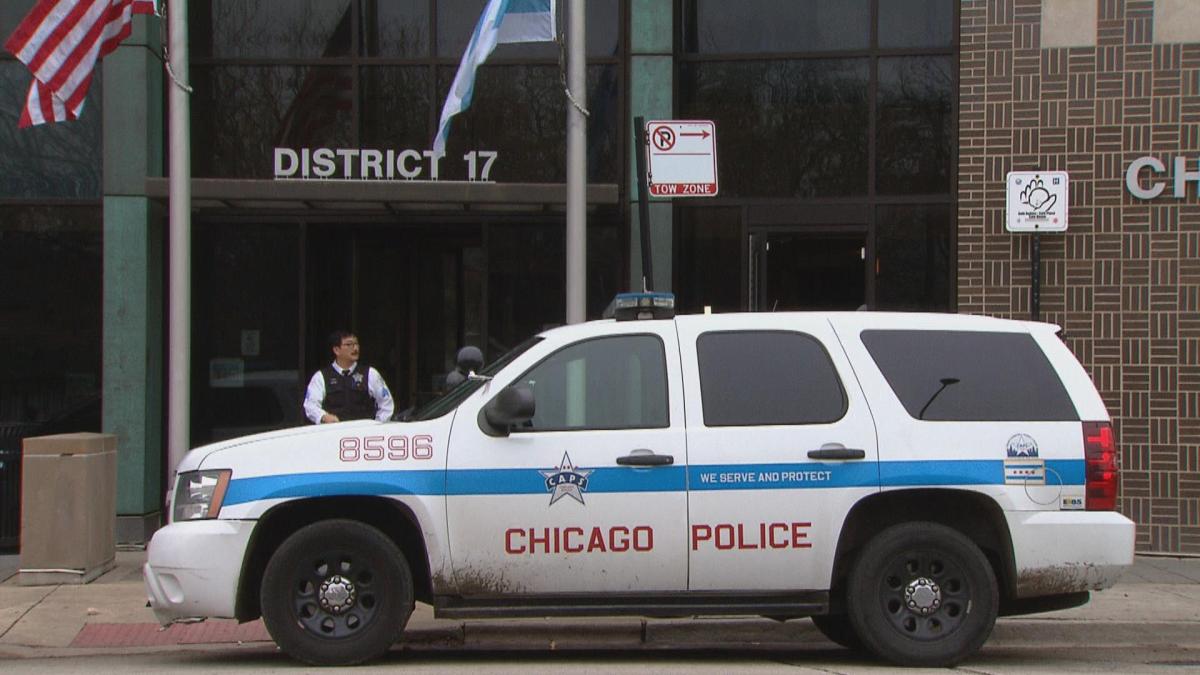 (WTTW News)
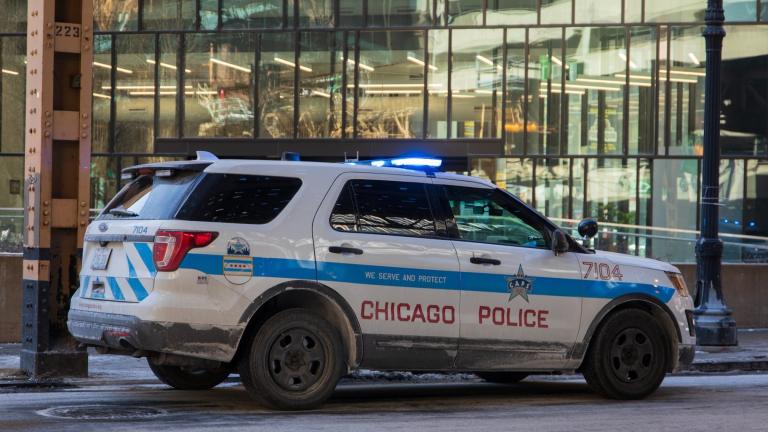
Chicago police continued to target Black and Latino drivers with a massive campaign of traffic stops that failed to make the city safer in 2024 amid “significant concerns about transparency and accountability in CPD’s reporting,” according to a new analysis from a coalition of groups.
Approximately 65% of the more than 293,000 traffic stops made by CPD officers and reported to state officials were prompted by improper or expired registration plates or stickers and headlight, taillight and license plate light offenses, according to a new report from Impact for Equity, a nonprofit advocacy and research organization that has helped lead the push to reform the Chicago Police Department.
Although CPD reported making 45% fewer traffic stops in 2024 than in 2023, the number of stops prompted by improper registration or nonworking vehicle lights dropped just 2% as compared with 2023 data, according to the report. By comparison, 1.5% of all traffic stops in 2024 were prompted by excessive speed, according to the report.
CPD officers should not be allowed to make stops because of licensing or registration offenses or equipment violations, according to the coalition.
“Rather than curbing dangerous driving behavior or uncovering serious crimes, these stops continue to erode trust between the police and communities they serve and waste our city’s public safety resources,” according to the statement from the coalition. “The commitment to this ineffective and harmful pretextual stop strategy highlights the urgent need for lasting policy reforms.”
Just 4.5% of CPD traffic stops led to an arrest, and a gun was recovered in just 0.75% of stops, according to the report. Approximately 8.6% of stops led to a citation, according to the report.
Impact for Equity has called for the CPD to ban stops designed to find evidence of other crimes. A similar policy is in place in Los Angeles, where the crime rate is significantly lower than in Chicago.
The report analyzes CPD’s use of traffic stops during Supt. Larry Snelling’s first year as the city’s top cop. He vowed to use traffic stops to catch dangerous drivers and stop criminal activity.
Representatives of CPD did not immediately respond to a request for comment.
More than 44% of all drivers stopped by police officers in 2024 were Black, and nearly 35% of drivers pulled over by Chicago police officers were Latino. By comparison, just 14.8% of drivers stopped by Chicago police were White, according to the report.
The population of Chicago is 31.4% White, 29.9% Latino, 28.7% Black and 6.9% Asian, according to the 2020 U.S. census.
Black drivers were more likely to be searched during a traffic stop and Black drivers represented more than 56% of people arrested by CPD after a traffic stop, according to the report.
Officers made nearly 24,000 traffic stops in the Englewood (7th) Police District, more than in any other police district, according to the report. More than 96% of the people who live in that police district are Black, and face some of the highest crime rates, according to the report.
‘Significant Concerns About Transparency and Accountability’
The Impact for Equity report confirmed that CPD made an additional 210,622 traffic stops that were not documented, making it impossible to know whether drivers’ constitutional rights were protected during those stops, as first reported by WTTW News.
When initiating a traffic stop, officers must contact the city’s dispatch center, run by the Office of Emergency Management and Communications. State law and CPD policy require the documentation of traffic stops with a separate form.
That leaves two records of every traffic stop, one maintained by CPD and the other by OEMC. Dating back to 2019, the gap ranges between 150,000 and 300,000 stops every year, according to the report.
“A small part of the discrepancy might be explained” by OEMC’s practice of recording all stops involving a vehicle as “traffic stops,” whether they are made in connection with a suspected crime or a traffic violation. CPD does not consider an investigatory stop a traffic stop.
In 2024, CPD reported 42,320 investigatory stops involving a vehicle, according to the Impact for Equity report.
“That leaves 169,206 traffic stops unaccounted for in CPD data,” according to the Impact for Equity report. “A yearly discrepancy of 150,000–300,000 between traffic stops recorded by OEMC and traffic stops reported by CPD is concerning. It raises serious doubts about CPD’s ability to competently and accurately report on its own activity and about CPD leadership’s ability to manage officer and police district data collection and reporting. Without a full view into CPD’s traffic stops practices, the public is left wondering what occurs during unrecorded stops and whether CPD’s claims about internal traffic stop reforms are credible.”
Reform Efforts Ongoing
Traffic stops have long been a flashpoint in the half-dozen serious efforts to reform the Chicago Police Department, since they put officers in close contact with Chicagoans, often under tense circumstances.
Snelling agreed 10 months ago to allow a federal court order requiring the Chicago Police Department to change the way it trains, supervises and disciplines officers, known as the consent decree, to expand to include traffic stops. However, no final agreement has been reached, despite dozens of meetings, sources told WTTW News.
The independent monitoring team charged with enforcing the court-ordered reforms found evidence to suggest a direct correlation between a significant increase in the rate of reported traffic stops by police officers as the number of pedestrian stops dropped, according to a June 2023 report.
Chicago’s police oversight board, the Community Commission for Public Safety and Accountability, has held a series of public meetings to gather feedback on what new rules for CPD’s ability to make traffic stops should look like, but has yet to release its findings.
Contact Heather Cherone: @HeatherCherone | (773) 569-1863 | [email protected]