Science & Nature
Have You Seen Swarms of ‘Ladybugs’ Lately? They’re Another Sign of Fall
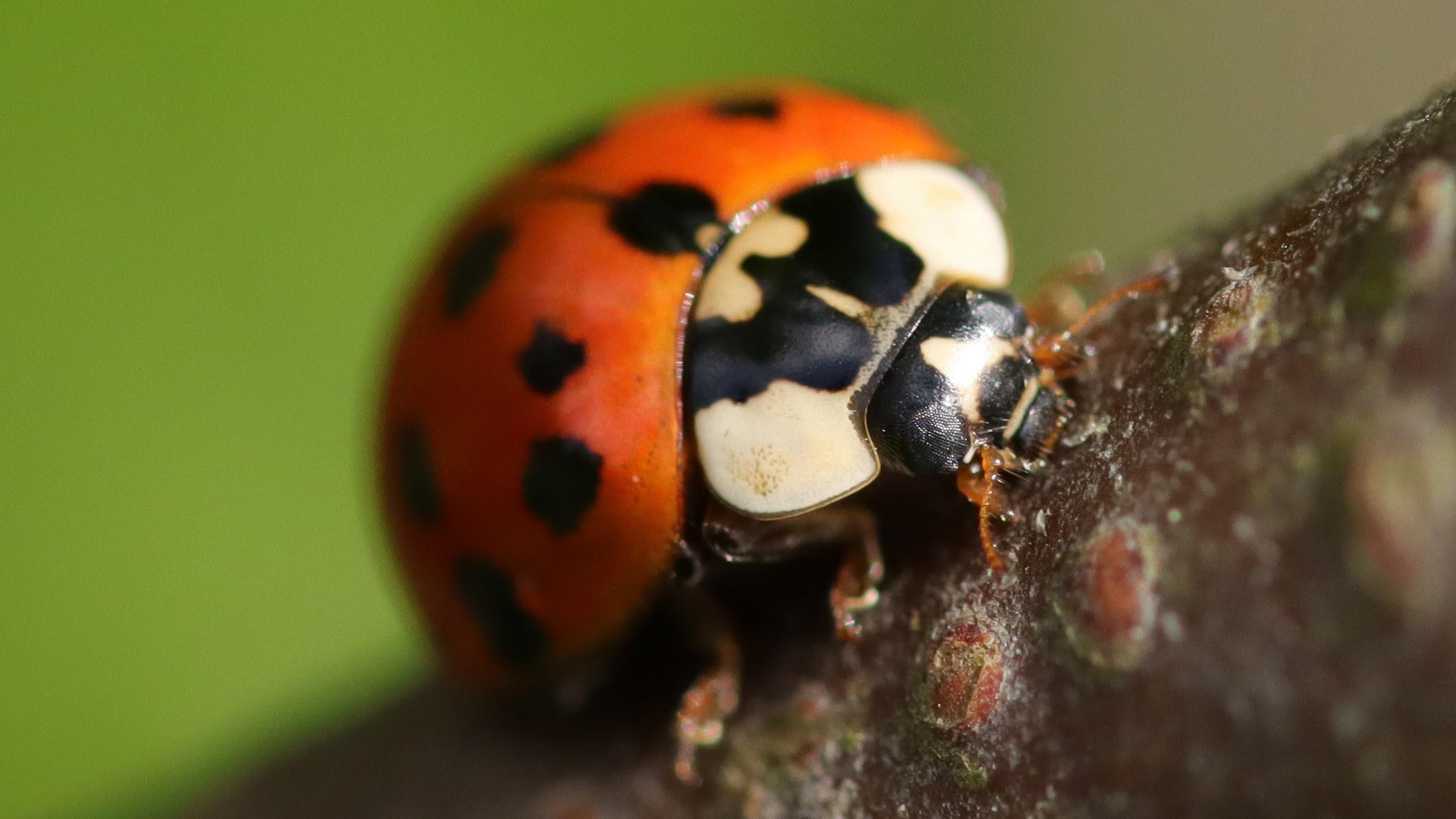 An Asian lady beetle, with a telltale M-shaped marking on its head. The non-native beetles are also found in a range of shades from yellow to orange to red, with more spots than native ladybugs. (DE1967 / iStock)
Just when you thought it was safe to go outside, here come the ladybug swarms.
Hordes of the tiny spotted insects have been reported in the Chicago area from Pilsen to Palos Hills — “As bad as all the cicadas we had earlier this year,” one person posted to social media — and even farther afield in Wisconsin and Iowa. All of the sightings inevitable lead to the same question.
Why are there suddenly ladybugs everywhere?
Here’s the short answer: Why? Because it’s fall, and the bugs are leaving their summer homes — gardens, farm fields and forests — in search of a cozier place to spend the winter.
The long answer is more complicated.
For starters, the insects folks are encountering in clusters on porches, window screens and the sides of buildings are almost surely not the innocuous native ladybugs people remember from their childhood.
Instead, they’re more likely to be a non-native species known as the Asian lady beetle (Harmonia axyridis). Take a closer look, and the differences become obvious: Asian lady beetles have more spots and a telltale M-shaped marking on their head.
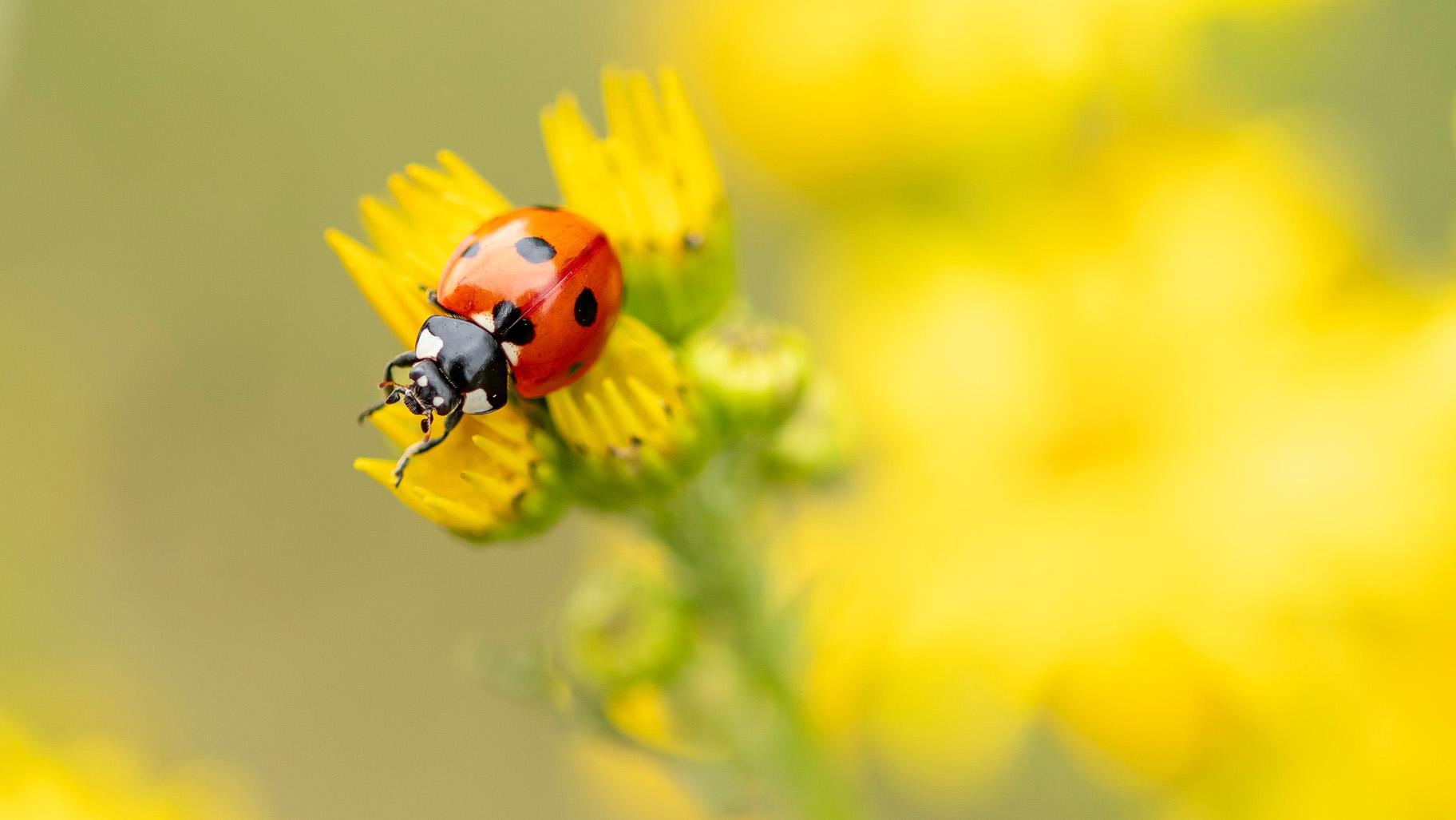 A friendly ladybug, with fewer spots, a red body and no M-marking on its head. (Colorful Soul / iStock)
Where native ladybugs will largely spend the winter snuggled up under leaf litter or in other outdoor hidey holes, Asian lady beetles have a tendency to wander indoors. And where there’s one, more will follow, thanks to some combination of visual and chemical cues.
Researchers in Ohio showed that lady beetles’ hunt for an over-wintering site is triggered by a particular sequence of temperature changes: a period of cooler weather, followed by sunny days that warm up to at least the lower 60s.
Like native ladybugs, the non-native lady beetles are generally considered beneficial predators, consuming pests like aphids that threaten fruit and vegetable gardens as well as agricultural crops.
But unlike native ladybugs, Asian lady beetles have earned the “nuisance” label for a number of reasons.
One is that tendency to congregate in people’s homes.
To quote a pair of professors at Ohio State University: “The confused and disoriented accidental invaders fly around inside structures finding their way into food and drinks, alighting on hands, arms, and other parts of the body, sometimes entering ears and mouth.”
They’re also more aggressive than native ladybugs and will bite, particularly when trapped between skin and clothing such as a shirt collar, according to the OSU academics.
Another knock against the non-natives is the stench they produce as a defense mechanism, similar to stink bugs.
“The beetles secrete a foul smelling yellowish fluid from their leg joints when disturbed,” according to entomologists at the University of Kentucky, who added that the secretion not only has an “acrid odor” but also leaves behind a stain on surfaces.
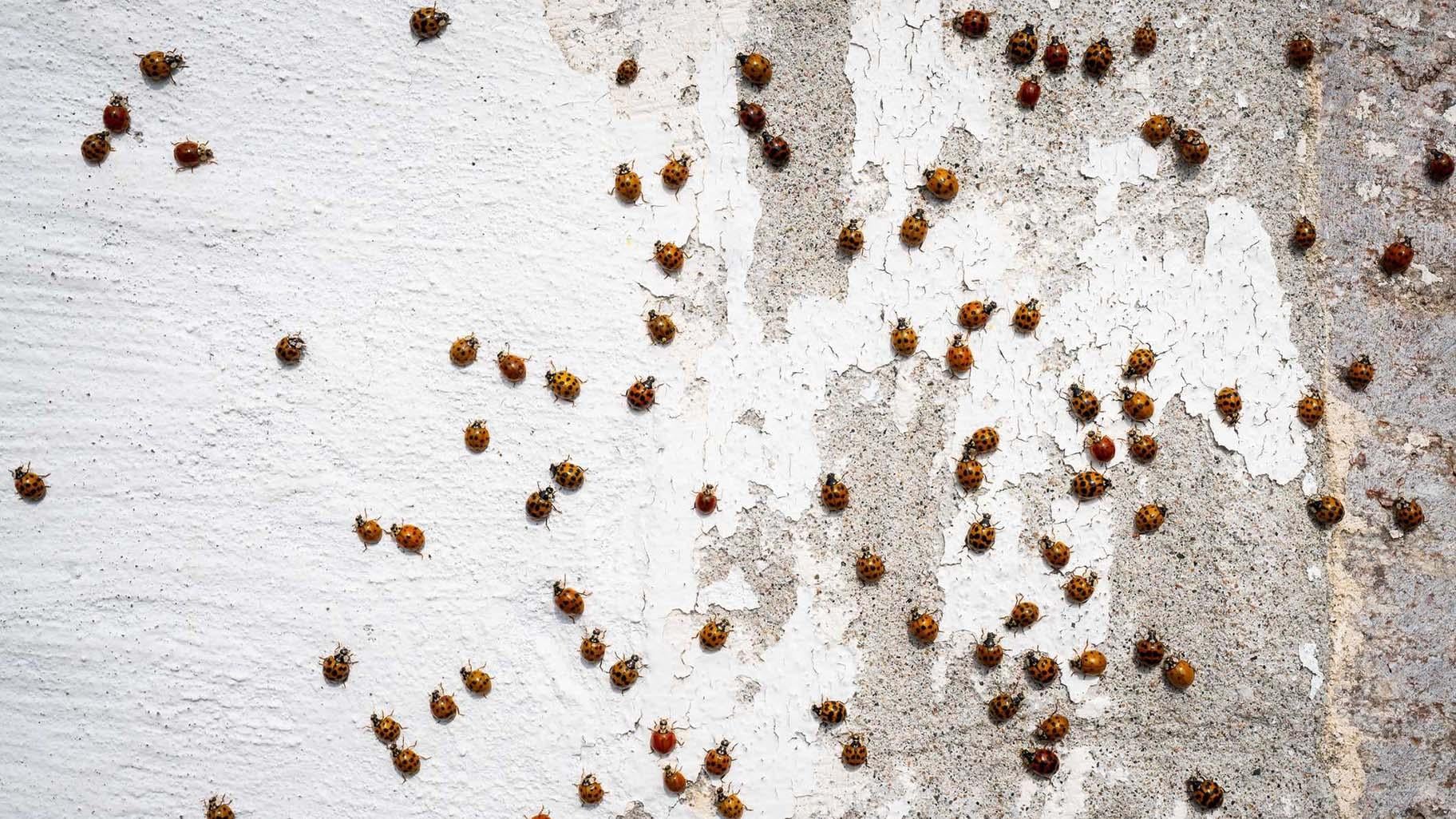 Asian lady beetles are considered beneficial predators in gardens and farm fields, but when they swarm indoors, they become a nuisance. (LaSalle-Photo / iStock)
To prevent an infestation, people should be sure to seal up any cracks or openings — or maybe consider redecorating.
Studies have shown the beetles are attracted to high-contrast surfaces: dark shutters on a light background or vice versa; windows edged with a colored trim; or gutters and downspouts on contrasting siding, to name a few examples.
They also prefer southwest exposures warmed by the afternoon sun and are less fond of shaded buildings.
Just remember, fall is everyone’s favorite season, right?
Contact Patty Wetli: @pattywetli | (773) 509-5623 | [email protected]