Crime & Law
Gage Park Man Who Spent 21 Years in Prison Now the 45th Person to be Exonerated After Being Framed by Disgraced Ex-Detective
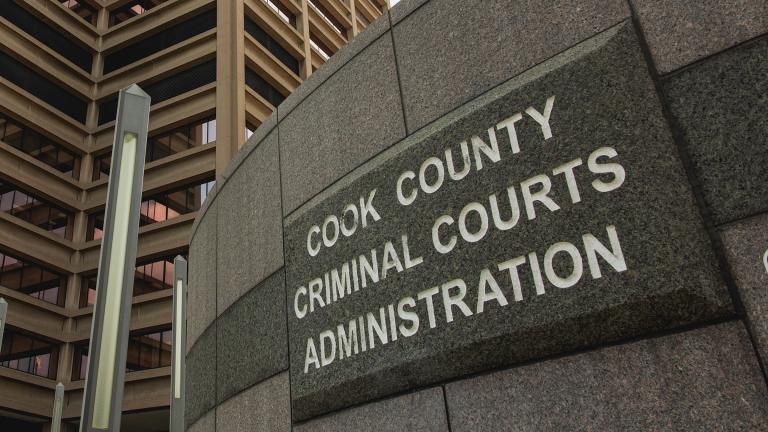
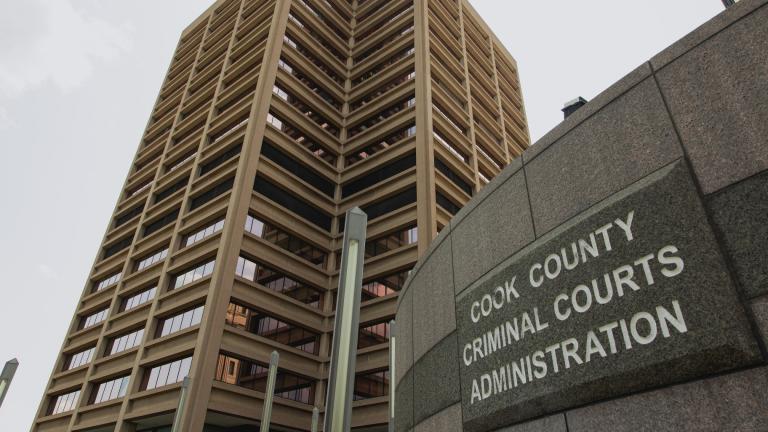
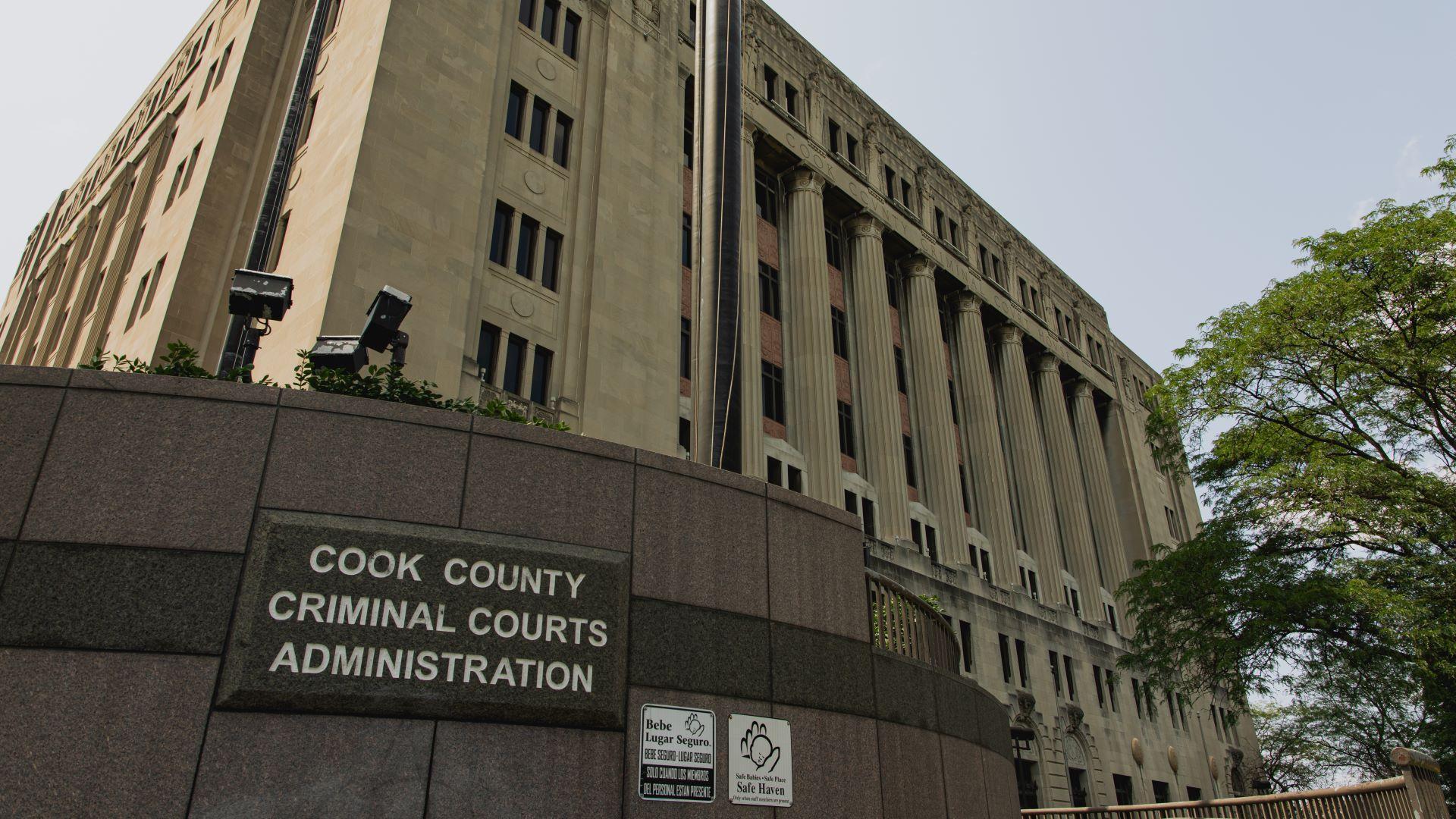 Leighton Criminal Court Building (Michael Izquierdo / WTTW News)
A Cook County judge exonerated on Thursday a Gage Park man who spent 21 years in prison after being convicted of a 1988 murder, making him the 45th person to be wrongfully convicted based on evidence developed by a now-disgraced former Chicago Police detective.
Edwin Ortiz, who is now 51 and lives in Gage Park, was 14 years old when Jose Morales was shot to death in Humboldt Park alongside his friend Marvin Taylor, who was wounded. Ortiz was convicted in connection with the shooting in 1993 after being investigated by Reynaldo Guevara, a former Chicago police detective accused of routinely framing suspects.
The Cook County State’s Attorney’s Office did not oppose Ortiz’ request to have his more than 30-year-old conviction vacated.
A spokesperson for State’s Attorney Kim Foxx told WTTW News that the decision was made “after extensive review.”
“We remain committed to the work of justice for all residents of Cook County,” Foxx’s office said in a statement.
Ortiz was released from prison in 2010 after he completed his sentence for murder and attempted murder. The judge’s decision to overturn his conviction was Ortiz’ “first real taste of freedom” in more than three decades, said Anand Swaminathan, the lawyer representing Ortiz.
“I’ve been out 14 years struggling to get my life back together, fighting jobs after jobs, interview after interviews, and just trying to go with my everyday life and today, this is going to be a big step forward in changing my life,” Ortiz told reporters outside the courtroom Thursday.
Ortiz is the first of seven men, convicted based on evidence collected by Guevara, who asked Cook County judges to overturn their convictions in February, to be exonerated, Swaminathan said. Ortiz plans to sue the city, Swaminathan said.
Since 2008, city officials have paid at least $35.7 million to hire private attorneys to defend Guevara, despite his well-documented misconduct that sent 45 now-exonerated Chicagoans to prison for decades, including one woman who was sentenced to death before her conviction was overturned.
In addition to the cost of outside attorneys, Chicago taxpayers spent an additional $60.5 million to settle six lawsuits filed by Chicagoans who said they were the victims of Guevara’s misconduct. Another 35 lawsuits are pending, with the latest lawsuit against the city and the former detective filed July 15.
In all, it has already cost Chicago taxpayers more than $98 million to defend the disgraced former detective, investigate his conduct and resolve lawsuits that allege Guevara violated dozens of Chicagoans’ civil rights, according to WTTW News’ analysis.
Guevara, 80, now lives in Texas. WTTW News was unable to reach him, and an emailed request for comment sent to the Chicago-based lawyers listed as his representatives in federal court records received no response.
During a 2018 trial, Guevara invoked his Fifth Amendment right against self-incrimination more than 200 times, refusing to answer questions about whether he falsified police reports, framed suspects or coerced witnesses into identifying criminals.
Most of the people Guevara is accused of framing in the 1980s and 1990s are Latino and lived in Humboldt Park, which was home to many working-class Chicagoans long before the Northwest Side neighborhood began to gentrify, a process accelerated by the construction of the 606 Trail along a defunct rail line.
Despite his extensive record of misconduct, Guevara has banked more than $1.4 million in pension payments since he retired in 2005, according to records obtained by WTTW News through a Freedom of Information Act request.
Guevara was never disciplined for any of his conduct as a detective, nor did he face criminal charges. That means he will collect his pension for the rest of his life. Illinois law allows the boards overseeing pension funds to strip employees of their pensions only if they are convicted of a felony “relating to or arising out of or in connection with” their job committed while employed by a state or local government agency.
No physical evidence tied Ortiz to the July 31, 1988, murder of Morales and the attempted murder of Taylor.
Initially, Taylor told police he was shot by a man he believed to be approximately 20 years old who was at least 5 feet, 8 inches tall. That description matched the one given by Santiago Pagan, a friend of the two victims who witnessed the shooting but was not hit by gunfire.
Ortiz was arrested on an unrelated charge seven months after the murder, and police records list his height at 5 feet, 2 inches tall.
A year after the murder, in July 1989, detectives visited Taylor and showed him a photo array of possible suspects in the murder. Taylor identified an 18-year-old man who was 5 feet, 9 inches tall.
Guevara joined the case in September 1989 and later testified that he visited Taylor and showed him a photo array of possible suspects in the murder, including Ortiz. Taylor and Pagan identified Ortiz in the photo array and later in a physical lineup.
Based on those identifications, Ortiz was convicted in 1993 and sentenced to 40 years in prison, to run concurrently with a 15-year sentence for attempted murder.
In 2022, Pagan testified under oath that he never saw the shooter’s face but identified Ortiz after an officer told him to do so and offered to pay him in return for his testimony. Taylor is now dead, according to Ortiz’s lawyers.
People wrongfully convicted based on evidence collected by Chicago police typically resolve their lawsuits for between $1 million to $2 million per year spent in prison, according to lawyers for the city.
Contact Heather Cherone: @HeatherCherone | (773) 569-1863 | [email protected]