Investigations
Men in Stateville Prison Fear Ongoing Poor Conditions, Threat of Heat a Month After Man Dies in Custody
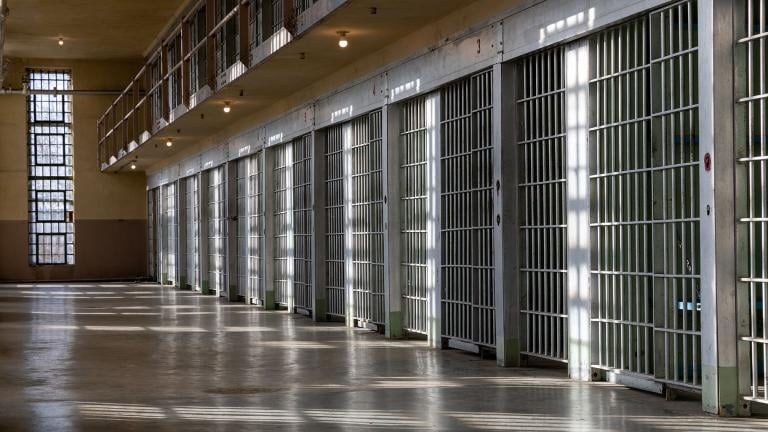
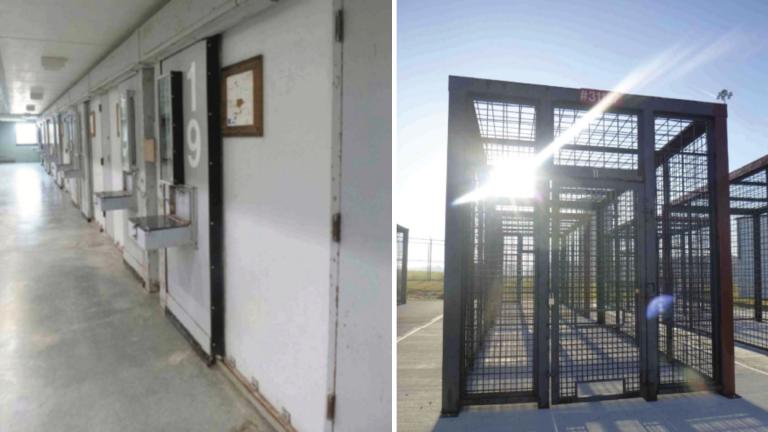
The nailed-shut windows and broken industrial fans mean there’s little ventilation inside Stateville Correctional Center.
Old floor fans face toward the building’s higher levels in a failed attempt to circulate air on the top galleries as heat stays trapped inside.
Incarcerated at Stateville in southwest suburban Crest Hill, Abdul Malik Muhammad provided that report of the situation inside the prison in a July 23 statement to WTTW News.
“Just like the buildings look sick, most prisoner here is suffering from a sick building [syndrome],” Muhammad wrote.
Men inside the facility were hoping for change after Michael Broadway, 51, died in custody on June 19, but “that’s the problem, nothing has [changed],” wrote Muhammad.
Broadway’s autopsy has not yet been released.
In the days after his death, two documents provided to WTTW News raised red flags to Terah Tollner, who along with the firm Kaplan & Grady is representing Broadway’s family over the death: a memorandum on the prevention of heat-related illnesses and a “team effort award commendation” given to some Illinois Department of Corrections employees.
In response to questions over conditions, the memorandum and the commendations, an IDOC spokesperson said the agency is still actively investigating this matter.
IDOC’s medical director sent out a memorandum the day after Broadway’s death on the prevention of heat-related illnesses, according to the document.
The days before Broadway’s death were some of the hottest in June, with the heat index in nearby Joliet reaching 100 degrees on June 17, according to weather data.
“All non-essential labor shall be stopped” and “essential labor should be approved only by the Warden” in a heat index 95 degrees and above, the memorandum states.
“Medical personnel should be especially vigilant of the needs of persons with chronic conditions,” it continues.
The day of his death, Broadway, who had severe asthma, began struggling to breathe, according to Tollner.
The officers “went about their business for far too long,” Tollner said, and once a member of the medical staff arrived at the housing unit, she refused to go upstairs because it was too hot that high up.
Broadway was given the opioid overdose reversal medication Narcan and then compressions, according to a letter from Anthony Ehlers, also incarcerated at Stateville, whose cell was near Broadway’s.
Staff brought up a stretcher that didn’t have straps to prevent Broadway from falling, and because of that, his close friends had to help carry him down the stairs in a bed sheet, Tollner said.
 Michael Broadway participates in Northwestern’s Prison Educator Program at Stateville Correctional Center. (Credit: Northwestern University)
According to documents provided to WTTW News, five IDOC staff received “team effort award commendations” over an “urgent incident” on June 19.
The commendations do not mention Broadway by name; they say there was an “individual of custody experiencing severe respiratory distress” on the ninth gallery, where Broadway lived.
“The response was nothing short of remarkable,” the commendation states.
It said the officers and sergeant “expertly facilitated the safe transport of the individual down multiple flights of treacherous stairs to reach the waiting stretcher.”
“They don’t give him necessary medical care, they give him Narcan and eventually CPR,” Tollner said. “... And as a result of all of that, he died and the officers were given awards for the role they played in it, that’s how I view it.”
Ehlers wrote that heat only intensified on higher floors of the prison, and at that time, not a single window was open for ventilation purposes; the fan in front of their cell was padlocked.
In a July 17 statement to WTTW News, Ehlers wrote the upper windows remain closed and the lock is still on the exhaust fan, nearly a month after Broadway's death.
“Men’s lives are literally on the line,” Ehlers wrote.
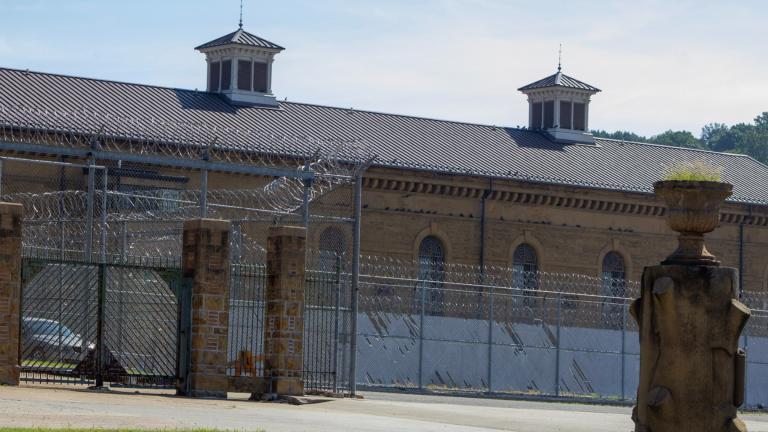
The facility, per a state-commissioned report, is “not suitable for any 21st century correctional center.” A proposal from Gov. J.B. Pritzker’s administration would demolish Stateville as early as September, with plans to rebuild the prison on the same Crest Hill property.
Incarcerated people are at high risk for heat-related morbidity and mortality due to confinement, social isolation and high rates of chronic mental and physical illnesses, according to a March report from Nature Sustainability. Researchers examined trends in exposure to potentially hazardous heat for thousands of U.S. carceral facilities from the 80’s to 2020.
As climate change accelerates, the U.S. will experience more frequent, intense and longer heat waves that may disproportionately affect incarcerated people, the report found. This is especially prevalent in facilities in areas of the southern U.S.
From 1982-2020, carceral facility locations were, on average, exposed to 5.5 more days per year where the wet bulb globe temp — which measures heat stress in direct sunlight — exceeded 82.4 degrees compared to locations without carceral facilities. That temperature is the threshold defined by the U.S. National Institute for Occupational Safety and Health for acclimated populations to limit humid heat exposure under moderate workloads.
“Those hazards in the short to long term are risky enough,” said Robbie Parks, one of the report’s authors and assistant professor of environmental health sciences at Columbia University. “But if you’re lacking any agency … and you’re sort of confined, largely the risk necessarily becomes even greater.”
Medical issues faced by people living with chronic conditions like cardiovascular disease and respiratory problems become exacerbated by high levels of heat and not having recourse to care, Parks added.
As the conditions in Stateville persist, Muhammad wrote in his statement, it puts other incarcerated people medically and psychologically at risk.
“So many people here is afraid of becoming the next Broadway,” he wrote.