Politics
Illinois Holocaust Museum Using VR Headsets to Bring Survivor Stories to RNC, DNC
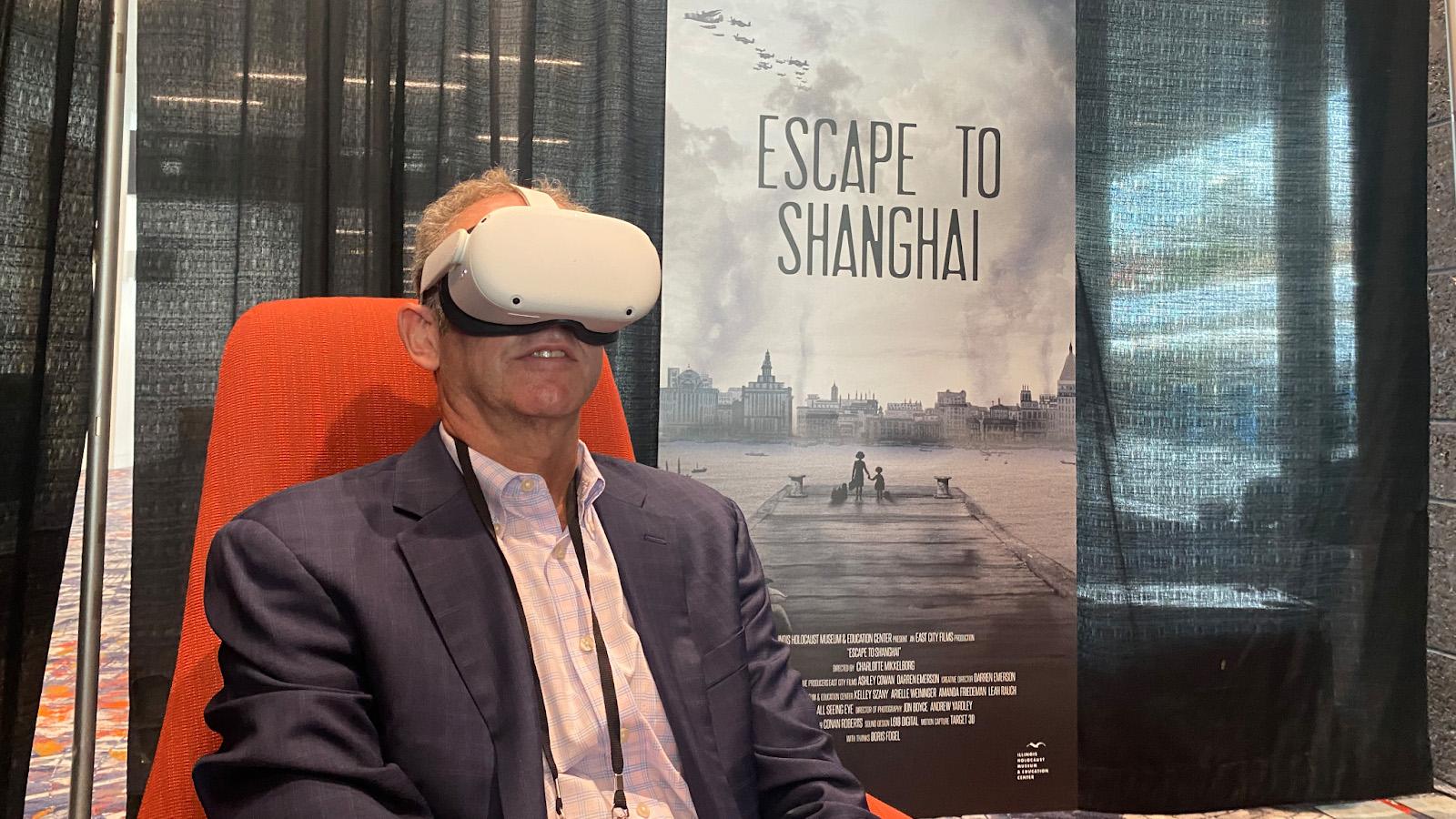 Illinois Holocaust Museum board member Andy Lowenthal demonstrates the virtual reality headset available to convention attendees. (Nick Blumberg / WTTW News)
The Illinois Holocaust Museum and Education Center in Skokie is taking its mission on the road this summer, bringing the stories of survivors to life at the Republican and Democratic National Conventions through virtual reality headsets.
“It’s just a very engaging way to connect,” said Deb Rodak, who’s part of the museum’s team at the RNC. “Our museum is really focused … on first person survivor stories, and that population is aging. So we’ve had to use technology to help us save their stories before they’re gone.”
The museum’s booth at the RNC has several chairs for attendees to sit, don a VR headset and headphones, and watch 15 to 20 minute movies featuring survivors returning to their city of origin or the place to which they fled.
Rodak says while Holocaust history is required in Illinois schools, some attendees who visited from other states didn’t know much about the genocide and said it was a story people needed to hear.
“Many states require it, and if your state doesn’t, we will ship you a trunk of VR,” Rodak said. “You can rent it for the week and you can show it in your school. Whatever it takes to help get the message of understanding out.”
Rodak says technology like VR allows the museum to preserve the stories of aging survivors, and is a “much deeper way” to connect with viewers.
They’ve also created a 3D holographic theater featuring the stories of survivors, who were recorded answering 1,000 different questions. Visitors to the theater can ask questions of the holograms, and AI technology finds the appropriate answer. The museum also has a new exhibition, “Voices of Genocide,” featuring survivors of genocides beyond just the Holocaust and focusing on the warning signs that emerge in the leadup to such atrocities.
“It’s important to try and get the world’s society to a better place where we can have more empathy and understanding and caring for each other,” Rodak said. “This is something that was reflected in the President’s speech, that we can’t continue this polarized situation and assume that society is going to get better. We have to remember things that we have gotten past, and how (we got) past them.”
Contact Nick Blumberg: [email protected] | (773) 509-5434 | @ndblumberg