Politics
Send Ex-Ald. Ed Burke to Prison for 10 Years for ‘Multiyear Crime Spree,’ Prosecutors Urge Judge
Video: The WTTW News Spotlight Politics team discusses the Ed Burke case and more of the day’s top stories. (Produced by Andrea Guthmann)
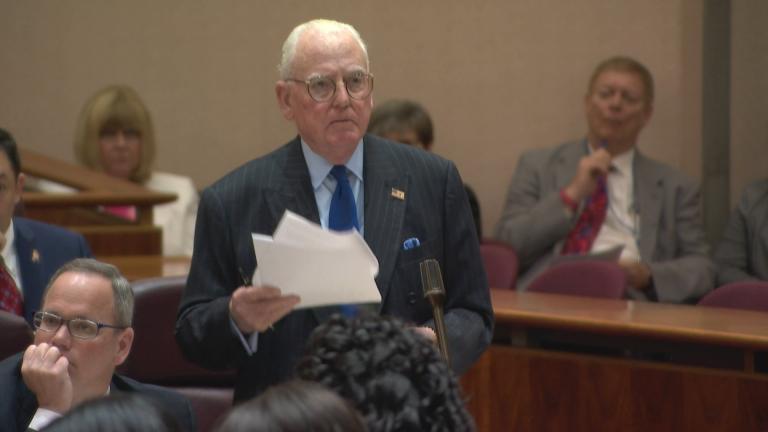
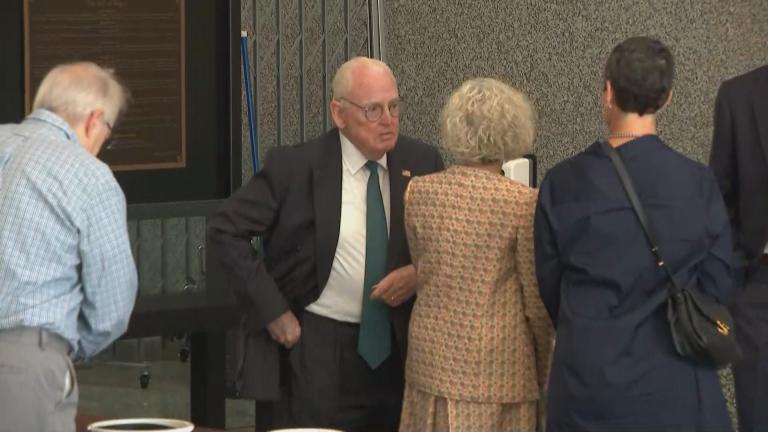
Former Ald. Ed Burke, once the most powerful elected official in Chicago, who ruled City Hall with an iron fist for decades, should spend 10 years in prison after being convicted of 13 counts of racketeering, bribery and attempted extortion, prosecutors told a federal judge.
After a six-week trial that delivered a searing indictment of Chicago’s political system, a jury unanimously found that Burke repeatedly — and brazenly — used his powerful position at City Hall to force those doing business with the city to hire his private law firm, formerly known as Klafter & Burke.
Even though Burke is 80, a lengthy prison sentence is necessary to once again attempt to root out the corruption that has led to the conviction of 38 members of the Chicago City Council since 1969, according to the U.S. Attorney’s Office for the Northern District of Illinois.
Despite having a net worth of $30 million, Burke was “steeped in corruption,” repeatedly choosing “spite and greed – not the public interest,” as a member of the City Council, prosecutors told U.S. District Court Judge Virginia Kendall.
“(Burke) abused and exploited his office by pursuing his own personal and financial interests over a course of years,” prosecutors wrote. “Again and again, Burke used his significant political power to solicit and receive bribes from entities with business before the city of Chicago — all so he could obtain legal business for his private law firm and financially benefit his close personal associates.”
Burke, who represented the Southwest Side’s 14th Ward for 54 years, must be sentenced to prison to send a clear message to other Chicago politicians, prosecutors wrote.
“High-level public officials in this city and in this state like Burke need to receive a simple, undiluted, and unequivocal warning loud and clear: You will pay dearly—regardless of your age—if you choose the dark path of corruption that Burke decided to walk for many years,” prosecutors wrote.
However, Burke’s attorneys — paid with nearly $4 million in campaign cash — painted a far different version of Burke, casting him as a sick and elderly man who dedicated his career to helping Chicago and its residents. His attorneys urged Kendall to sentence Burke to home confinement for no more than 63 months, or approximately five years.
“At age 80 and with several serious acute and chronic medical issues, Mr. Burke would be an expensive prisoner to house for any length of time, and even a short sentence is likely to amount to a death sentence,” Burke’s lawyers said.
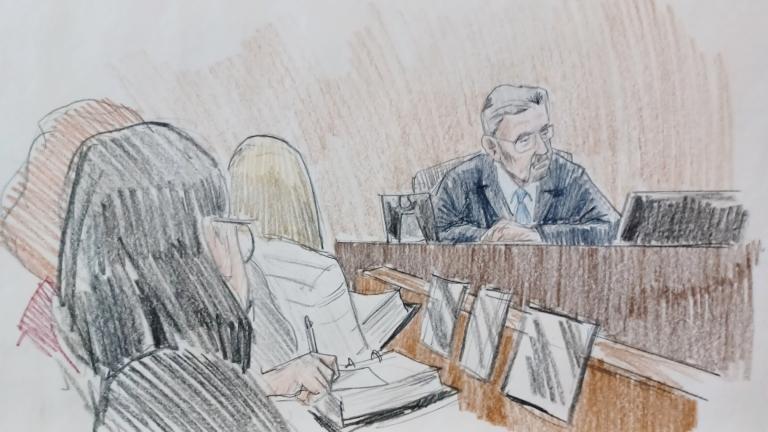
Kendall, who is weighing Burke’s request to toss his conviction on a number of the charges, is scheduled to sentence Burke on June 24.
Burke on Dec. 21 was found guilty of one count of racketeering, two counts of federal program bribery, two counts of attempted extortion and eight counts of using interstate commerce to facilitate an unlawful activity. The jury of nine women and three men, most hailing from the Chicago suburbs, also convicted businessman Charles Cui, one of Burke’s two codefendants, on five charges. Former Burke aide Peter Andrews was acquitted on the five counts he faced.
Letters Urge Leniency
Hoping to avoid prison, Burke submitted more than 200 letters from his family, friends, employees, priests and former constituents, all praising him as a man of deep Catholic faith who worked his entire career to help women and those with disabilities.
Burke has been shattered by a criminal conviction on a charge more often levied against mob bosses than public officials, according to many of the letters.
Burke “quietly performed a lifetime of private acts of personal generosity and benevolence—most often unsolicited and never seeking recognition or anything in return,” his attorneys wrote.
Had Burke avoided a conviction, his legacy would have been defined by the role he played in leading a group of White City Council members who worked to stymie Chicago’s first Black chief executive, Mayor Harold Washington, touching off what came to be known as Council Wars in the 1980s.
The “biblical flood of stories and letters” submitted by Burke’s attorneys sought to provide a counterpoint to much of the evidence Kendall and the jury heard during the six-week trial that proved Burke habitually engaged in the kind of classic pay-to-play corruption that has earned Chicago the title of the most corrupt city in the nation the last four years in a row, as measured by the political science department at the University of Illinois Chicago.
A former Chicago police officer, Burke frequently delivered impassioned speeches about the heroism of law enforcement during meetings of the Chicago City Council, and two former police superintendents asked Kendall to show Burke mercy.
Former Chicago Police Supt. Phil Cline praised Burke for making sure the city lived up to its promises to officers injured in the line of duty and cared for the families of those killed in the line of duty. Former Chicago Police Supt. Garry McCarthy called Burke “a dedicated public servant – more so than any elected official that I have ever met.”
McCarthy was fired by former Mayor Rahm Emanuel amid escalating outrage over the police murder of 17-year-old Laquan McDonald.
The only current member of the Chicago City Council to ask Kendall to show mercy was Ald. Nicholas Sposato (38th Ward), praising his “friend and former colleague” as a “decent man” who treated “everyone from the maintenance workers to the mayor with the same respect.”
Former Alds. Patrick O'Connor, Tom Allen, Patrick Levar and Terry Gabinski also asked Kendall not to send their former colleague to prison. In his letter, Gabiniski did not mention the fact that Burke was convicted of attempted extortion for threatening to block a fee increase at a museum in 2017 because officials didn’t agree to hire Gabinski’s daughter as an intern.
But the most emotional letters were submitted by Anne Burke, the former alderperson’s wife of 56 years and the former chief justice of the Illinois Supreme Court, and his children.
Anne Burke appealed to her and Kendall’s shared Catholic faith and asked her to show Ed Burke “compassion.”
“I am devastated by the prospect that I will not be with Ed at the end of our lives,” Anne Burke wrote.
Jennifer Burke, their daughter, told Kendall she was certain her father would die while in prison if sent there.
“Please consider how much he has already lost and how much suffering has already occurred,” Jennifer Burke wrote. “He gets through these days by focusing on family and finding joy in his grandchildren. He will deteriorate quickly in jail being separated from this only source of meaning left in his life. Everything else he treasured has already been taken from him. Taking this last thing from him will lead to a swift end.”
‘A Staggering Public Fall From Grace’
Burke has survived three bouts of prostate cancer and three bouts of skin cancer, according to his attorney.
In addition, Burke in 2018 suffered a stroke, which caused him to fall and injure his shoulder and knee. That incident, which occurred while Burke was still a member of the Chicago City Council and before he won reelection to his last term in office, has never been disclosed before.
Burke also experienced “several” transient ischemic attacks, which are similar to strokes, in 2019, according to his lawyers.
In April 2022, Burke suffered a seizure, according to his lawyers.
Two months after his conviction, Burke was diagnosed with anxiety and depression, according to his lawyers.
“Mr. Burke has already been significantly punished for his wrongdoing,” his lawyers wrote. “He is a convicted felon who is barred from ever holding public office, and has experienced a staggering public fall from grace.”
Prosecutors disagreed.
“As Edward Burke would have it, a senior public official at the pinnacle of his power in the City of Chicago can solicit bribes, extort the lesser privileged, and shake down local businesses for years on end, deny his guilt and express no remorse despite a parade of witnesses and overwhelming evidence to the contrary – and after refusing to accept responsibility or own up to his crimes to this day, happily retire to the comfort of his own home after being found guilty on 13 counts of corruption,” prosecutors wrote.
Kendall should not be moved by the letters submitted on Burke’s behalf, prosecutors argued.
“The fact is that Burke is not a man of high character, notwithstanding the protestations made in various character references he has submitted that appear to be entirely – and willfully – oblivious to his multiyear crime spree and the way he treated and regarded people,” prosecutors wrote, noting that he was convicted of crimes committed while he was in his 70s.
The letters also demonstrate that Burke has yet to exhaust his ample stockpile of clout, prosecutors wrote.
“But it is apparent from the character letters received so far and the reaction to Burke’s prosecution that there are those who lurk in the bowels of city government and walk in its corridors of power who are still strong allies of Burke—despite his 13 counts of conviction,” prosecutors wrote. “Burke so far has failed to accept any responsibility in this case and maintains to this day he has done nothing wrong. It would be naïve to think that there is anything stopping Burke, the consummate political insider with his coterie of misguided friends and well-wishers, from engaging in the same type of conduct in conjunction with public officials in the future.”
The four criminal schemes Burke was convicted of orchestrating cost his victims $829,525, a calculation Burke’s attorney’s objected to in a voluminous filing.
“Burke, through his pattern of corrupt and extortionate activity, deprived all the residents of Chicago of honest government,” prosecutors wrote. “Burke engaged in that conduct brazenly and boldly.”
Burke routinely sought to corruptly leverage his elected office for perks or cash, using “well-honed extortion skills” from “his corruption playbook,” prosecutors argued.
“The evidence in this case makes it obvious that Burke was no novice when it came to corruption,” prosecutors argued. “The consensual recordings and wire interceptions vividly demonstrated the ease with which Burke exploited his public position for private gain. Burke operated as a seasoned professional when it came to identifying new potential clients for his law firm and exploiting his power and position in order to secure their business.”
Contact Heather Cherone: @HeatherCherone | (773) 569-1863 | [email protected]