

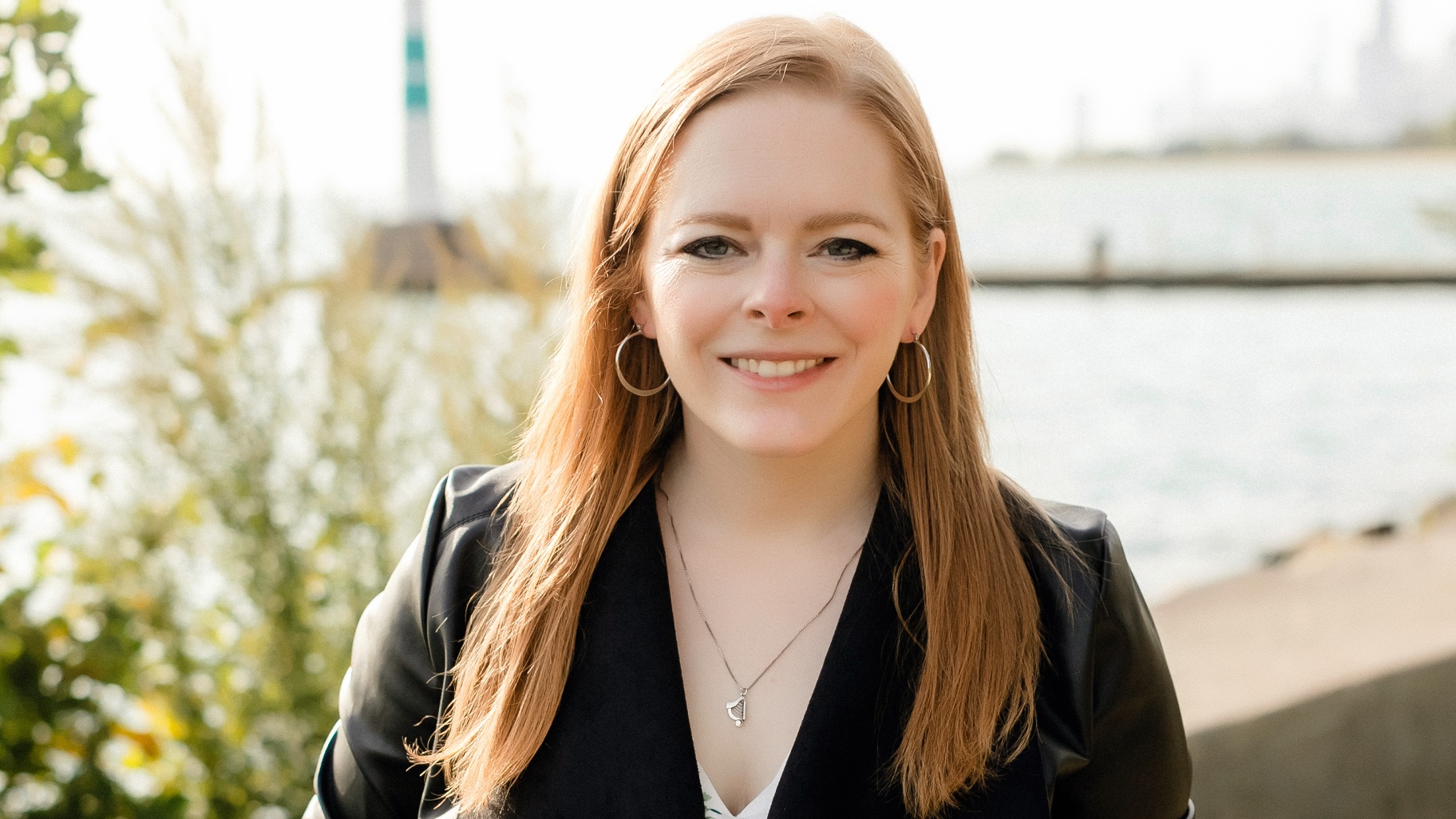
About the Candidate
Name: Marianne Lalonde
Date of Birth: Sept. 3, 1986
Occupation: Energy efficiency consultant
Political Experience: Candidate for 46th Ward Alderman, 2019; Energy and Environmental Policy Fellow, Office of U.S. Senator Sherrod Brown (D-OH) (2014-2015)
Political Party: Democrat
Website: mariannefor46.com/
Candidate Q&A
Why are you running?
I’m running because I love our ward. I give every free hour of my time back to the 46th ward through my community involvement. I also have a unique perspective to contribute because of my background in science and sustainability.
After the recent pandemic, it's more important than ever to have scientifically trained representatives at every level of government — to protect public health, promote infrastructure resilience in the face of climate change, and work as problem solvers in areas of equity, safety, and economic prosperity. I take the pragmatic approach of a scientist to problem-solving — putting data and shared values over politics. My logical and rational approach means I have zero-tolerance for corruption and pay-to-play politics. Because I already have experience translating my scientific training into policy through my work in the US Senate, I’m ready to legislate. As Alderperson, I will both work to achieve inclusivity and affordability within the ward and be the voice for environmental sustainability in City Hall.
What does this office do well, and what needs fixing?
In the past year, James Cappleman’s office has begun a Green Forum that I would like to continue if elected. It’s important we prioritize climate change resilience in our infrastructure development and improve our interior green spaces. Alderman Cappleman also does a good job sending a regular email newsletter — I think the office could be more inclusive with sharing ward happenings by translating the newsletter into common languages spoken in the ward and providing a print version for those with limited access or comfort with technology.
We have a lot of room for improvement with incorporating community feedback into the allocation of menu funding and in zoning decision making processes. Alderman Cappleman’s Zoning and Development Committee is a community feedback board he created to decide if a proposed zoning change should be advanced in City Council. It is composed of 5 experts appointed by the Alderman and 30 to 40 representatives from block clubs, high rise buildings and community organizations. It’s too big and too complicated and provides only an illusion of participatory process. Most people don’t know who represents them, and the only way to find out is to contact the Alderman’s office.
We could also improve community feedback in the allocation of menu funding by moving to 100% participatory budgeting. I would incorporate youth in the decision making process by allowing anyone age 14 or over who lives, works, or goes to school in the ward to vote on how to prioritize the ideas after they were compiled by members of my office.
What is the most pressing issue facing your constituents and how do you plan on addressing it?
From conversations I’ve had knocking doors, residents in the 46th ward seem most concerned about public safety. We need government leadership that holds police accountable, pushes back against failed “tough on crime” talking points, and works to implement impactful crime reduction strategies. When someone commits a crime, they must be held accountable. And if they serve time, they need access to employment opportunities, education, and housing to prevent recidivism. I would like to explore hiring non-sworn personnel for tasks like traffic enforcement which will help free up officers for detective work. It is not enough to simply improve CPD staffing as there should also be a focus on improving clearance rates and ensuring CPD is abiding by the consent decree.
Finally, investment in non-police services is needed. Passing the Treatment not Trauma ordinance will ensure mental illness, substance use disorders and homelessness are addressed by supportive services as opposed to police. I also want funding to be put into housing, jobs programs, and public schools so the root causes of crime are addressed.
What specific steps would you take to ensure your office is accessible and responsive to your constituents?
I will schedule weekly office hours for feedback outside of traditional working hours, provide language translations for the newsletter, and publish the newsletter in both print and virtual versions. I would ensure constituent service requests are followed up on a maximum of 48 hours after the request has been made, with regular progress updates if the request takes a long time to fulfill.
Do you believe in the tradition of aldermanic prerogative, which gives each City Council member the final say on issues in their ward?
I do not support aldermanic prerogative. Its specific powers and limits are not defined, and so it has been used to push through developments and projects in an undemocratic fashion. This major flaw has resulted in aldermanic corruption and contributed to gentrification.
Should the $1.9 billion budget for the Chicago Police Department increase, stay the same or decrease?
The budget should stay the same for now and decisions on such budgetary decisions should be made in a dynamic manner. I want to use the results of the University of Chicago Crime Lab staffing study to determine where it is appropriate to hire more police officers. We need transparency about the adequacy of current staffing levels and how, when, and where police are deployed. This will provide good guidance on how to best utilize the CPD budget.
Should the city raise the Real Estate Transfer Tax on properties sold for more than $1 million to fund programs to help unhoused Chicagoans?
Yes, I support the Bring Chicago Home ordinance. It is far more expensive in the long run to address homelessness and associated issues like mental health and substance abuse through jailing or hospitalization. A “housing first” strategy is both more effective and a lower cost solution for taxpayers.
Should the city open and operate mental health clinics to provide free care to Chicagoans?
Yes. I am not satisfied with the current mental health services provided by the City. Decreased mental health services have disproportionately impacted vulnerable populations like those experiencing homelessness. Reopening the shuttered clinics is the first step to making sure city residents have access to the care they need. Mental health issues are often correlated with difficulties in obtaining permanent supportive housing and thus exacerbate other pressing issues like public safety and unemployment.
How should Chicago build the 120,000 homes it needs for low- and moderate-income Chicagoans?
Housing for low and moderate income Chicagoans should be dispersed throughout the city to counteract Chicago’s historic racial and income segregation. Union labor, sustainable materials, and energy efficiency should be prioritized so the homes can last through many future generations to come.
The 46th Ward is the most geographically dense ward in Chicago - where viable, we should convert existing housing stock for low- and moderate-income. Uptown has the highest number of cross-class friendships in the City and neighborhood friendships offer one of the strongest predictors for upward economic mobility. Affordable housing is crucial to nurturing that mobility.
What do you see as potential solutions to address the number of shootings in Chicago?
Gun violence and homicides have unfortunately increased in Chicago over the past few years. A key focus of reducing shootings is getting guns out of the hands of those who should not have them. Illinois’ firearm restraining orders are civil orders that temporarily remove firearms from individuals who are a potential danger to themselves or others. My office will work with residents and local community groups to educate the population of this recently passed law so it can be used as an effective prevention tool.
I also want to utilize community violence intervention programs to lower gun violence. Such programs employ outreach workers, who provide counseling and mentorship to the people most likely to be perpetrators or victims of shootings. This outreach can help those most at risk of gun violence to build a life outside of gangs, guns, and the underground economy. Cities that have utilized similar programs have seen up to a 43% reduction in firearm-related crimes.
Should the city do more to encourage residents to live close to where they work and shop by building dense multi-unit apartment complexes near transportation hubs?
Yes. As businesses become more flexible with work from home policies, the city should explore conversion of some commercial properties in the Central Business District to residential properties in order to maintain a level of density proximal to downtown businesses. Density will also create an atmosphere of public safety that will increase comfort levels for visitors to resume downtown tourism and shopping.
As we plan for increased density in the 46th ward, we should prioritize creating a walkable neighborhood. Walkability is not only determined by the quantity of housing, but other urban design factors including the presence of outdoor dining, noise levels, number of landscape features, proportion of historic buildings or buildings with non-rectangular silhouettes, and proximity to parks. We can create mixed-use buildings with commercial at street level near transit, complemented by wide, accessible sidewalks and designated bike lanes on major streets.
Should the city prioritize the construction of bicycle lanes and encourage people to use bicycles to commute to work?
Yes. Unfortunately the 46th ward specifically has experienced tragic deaths as a result of collisions between motor vehicles and cyclists. I am proposing measures to enhance bike safety in the 46th Ward along the Leland Greenway and will advocate for more pedestrian and bike friendly streets throughout the city.
I am proud to endorse Chicago, Bike Grid Now! which aims for 450 miles of bike-prioritized streets and having 10% of city streets in a connected grid with a speed limit of 10 mph. These proposals will help to make our streets safer for cyclists and to encourage the use of bikes. Investing in traffic calming tools such as bump-outs, chicanes, speed humps, traffic circles, and landscaping will also contribute to keeping cyclists safe.
Should city employees continue to be required to live in Chicago?
Yes. The residency requirement is an asset to the city and its residents. Employees who live in the city are also more involved in their neighborhoods and become more familiar with the respective communities they are serving. I support allowing an 18-month grace period for out-of-city employees to move into Chicago after they are hired, too.