

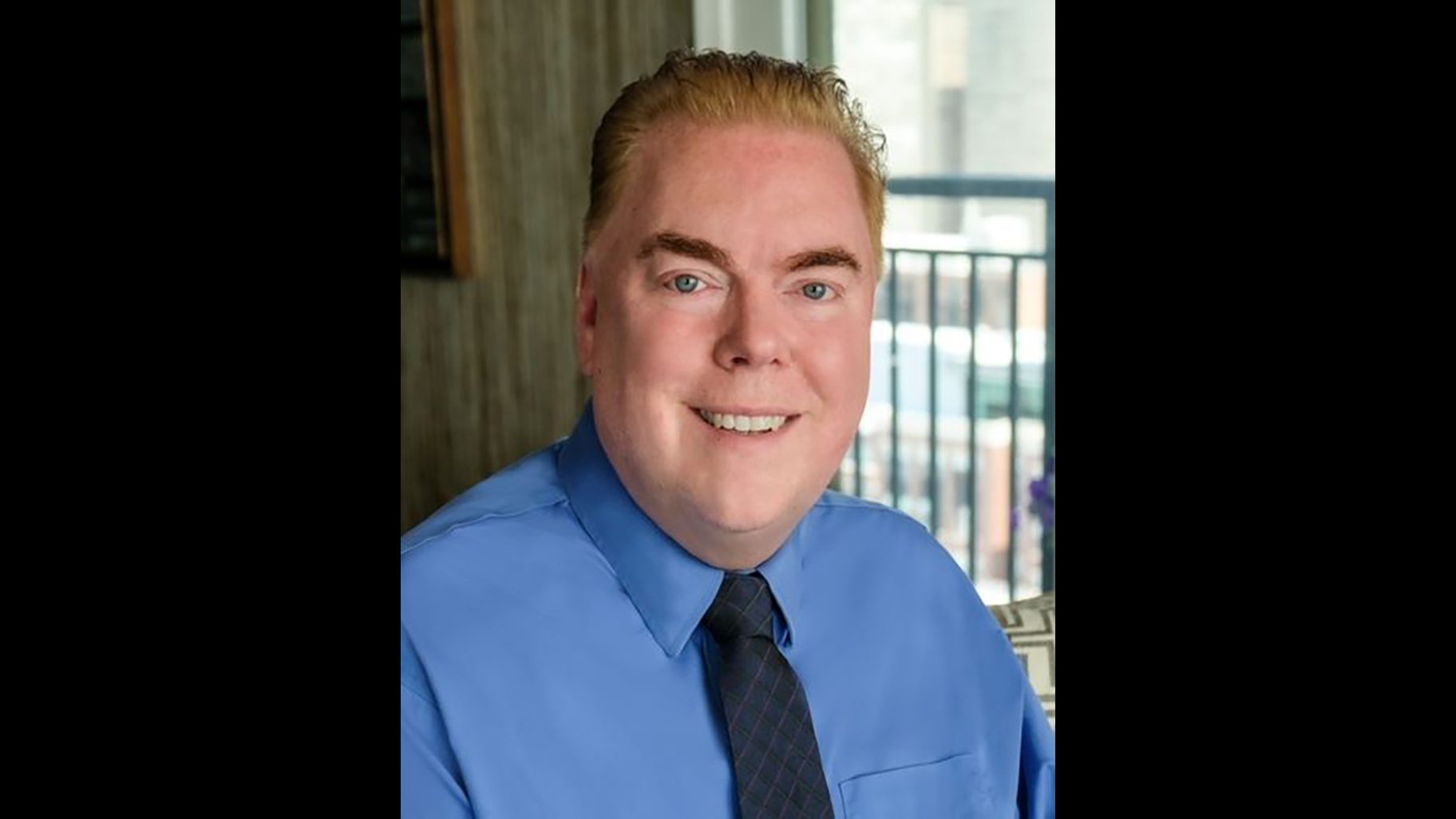
About the Candidate
Name: Patrick Nagle
Date of Birth: 1969
Occupation: Chief Judge of the Social Security Administration
Political Experience: N/A
Political Party: Democrat
Website: patricknaglefor46.com
Candidate Q&A
Why are you running?
I decided to run for alderman because we need strong leadership in city council to address the significant challenges that currently face our city. I have lived in my community for over 30 years. My wife and I are raising our family here because we love the community and everything that it has to offer. Since this neighborhood is our home, we want to see it reach its full potential.
I have spent my 28-year career working in public service, including the last 13 years as a judge. While I find my work greatly satisfying, I feel compelled to give back to my community. For over a dozen years, I have been an active member of neighborhood and community charitable organizations in an effort to improve the lives of our residents. As alderman, I will focus on solving our city’s major issues while always fighting to bring our ward the resources that we deserve. Now, more than ever, strong leaders in city council are needed to get our city back on track.
What does this office do well, and what needs fixing?
Our ward, like the city as a whole, faces many challenges that need fixing. Violent crime is our greatest concern. We must increase our 19th district police staff, develop a comprehensive city-wide plan to reduce crime, and partner with federal law enforcement to curb gun violence. We must also tackle our ward housing shortage by encouraging development while meeting our affordable housing responsibilities. I will champion a more vibrant and flourishing business community that creates jobs for its residents. Finally, we need to humanely and effectively implement a coordinated approach for solving unsheltered homelessness with housing, health care, and supportive services instead of unsafe outdoor living alternatives.
What is the most pressing issue facing your constituents and how do you plan on addressing it?
The proliferation of violent crime in our ward is of utmost concern. Car jackings, armed robberies, and other acts of violent crime have an insidious effect on victims, their families, and our community. Working with crime victims during my tenure as a federal prosecutor impressed upon me the long-term damage inflicted on people who experience violence. Studies also show that the economic consequences of crime victimization costs Americans over $200 billion a year. The implications spread further than victims and manifest in the psyche of other ward residents who become hesitant to leave their homes due to safety concerns. Likewise, our businesses suffer from the loss of customers which has a ripple effect on jobs in our local community as well as the result of fewer consumer choices for residents. Violent crime places not just our safety at risk, but also the identity of our community as a welcoming place for all people to congregate.
In addition to championing the need for a comprehensive city-wide plan to address crime, I will vigorously fight to increase staffing at the 19th police district. Additional police officers will have an immediate impact on reducing crime. Over the last ten years, we have witnessed a 40% reduction in the number of police officers who patrol the area that constitutes the current 19th district. Under-resourcing the district makes it difficult for officers to do their jobs well and frustrates the officers who want to effectively serve our community. The recruitment and retention of police officers must be our top priority. To achieve this, we need city leaders who will work in cooperation with law enforcement, not as adversaries. I will be the alderman who fights for police resources, and I will prioritize making our ward safer.
We must take a zero-tolerance policy toward violent crimes. If our efforts to prosecute gun crimes through the state’s attorney’s office prove ineffective, we should explore partnering more consistently with federal law enforcement to address these crimes, in particular gun crime and hate crime. The United States Attorney’s Office’s Project Safe Neighborhoods program is one example of how we can curb gun violence in our city through working across law enforcement agencies. As we approach an era without cash bail, we must also raise expectations for our electronic monitoring program to ensure its reliability and effectiveness. As we see now, too many people who are released from custody pending criminal charges commit additional crimes while on electronic monitoring. Last year, over 50 people on electronic monitoring were arrested for shootings or murders. In order to regain the public’s trust in the system, we need to hire more staff to perform electronic monitoring and invest the resources to verify that the technology functions properly to incentivize people who have been released from custody to comply with the program’s requirements. Working with the Cook County Sheriff’s Department and Chief Judge’s office, we must demand these improvements because more effective electronic monitoring will play a key role in curbing violent crime.
What specific steps would you take to ensure your office is accessible and responsive to your constituents?
As alderman, I will employ a data tracking system that allows me to understand the nature of constituent concerns and delineate geographical or seasonal trends to better allow me to address issues as they arise and anticipate issues in advance so that ward residents’ inquiries are treated in a responsive manner.
I also understand the frustration that residents experience when they fail to get satisfaction from various city departments. As alderman, I will advocate with the city on behalf of our residents. Sometimes community members just need help figuring out whom to talk to, what form to complete, or what the process is for getting something. As alderman I pledge to provide timely, quality public service to the constituents of the 46th Ward.
Do you believe in the tradition of aldermanic prerogative, which gives each City Council member the final say on issues in their ward?
I believe that aldermen should be leaders in their ward and advocate on behalf of their residents. Alderman, however, should not have unfettered decision making authority.
Should the $1.9 billion budget for the Chicago Police Department increase, stay the same or decrease?
We should increase the police budget in the short-term as we address our significant crime issues. We also must develop mid- and long-term plans for addressing crime which, if successful, may reduce our law enforcement budget needs.
Should the city raise the Real Estate Transfer Tax on properties sold for more than $1 million to fund programs to help unhoused Chicagoans?
Funding for programs assisting unhoused Chicagoans should come from dedicated money in the city's budget. Relying on a real estate transfer tax, on the other, comes with significant risks as uneven revenue outcomes make this an unreliable source of funding.
Should the city open and operate mental health clinics to provide free care to Chicagoans?
Yes. Mental health clinics provide services that reduce the risk of chronic disease related to stress, anxiety, and substance abuse. Those in need should have ready access to mental health treatment.
How should Chicago build the 120,000 homes it needs for low- and moderate-income Chicagoans?
Chicago has a significant housing shortage that in many areas, such as the 46th ward, has resulted in high demand, but low supply. This environment has led to significant rent increases for many who reside in high occupancy areas. Due to the byzantine development process, our city lags behind many others in housing development. As a result, efforts to solve the housing shortage have proven slow or all together ineffective.
Building more residential units will begin to address this issue and help make housing more affordable for everyone. In addition, the Affordable Requirements Ordinance encourages the production of more affordable and family-sized units. This ordinance both focuses on assisting those most in need of affordable housing while also implementing anti-displacement measures to protect long-time residents. Chicago needs to simplify and speed up the housing development process so that we can build homes for our citizens.
What do you see as potential solutions to address the number of shootings in Chicago?
Violent crime is the greatest challenge facing the city of Chicago. Many of our citizens fear going outside because of the increased likelihood of becoming violent crime victims. Our city’s businesses worry about losing customers (city residents, suburbanites, and tourists) due to the current crime climate. We also should not lose sight of the fact that violence amplifies inequality, and it traumatizes victims. We should never downplay the lasting effect that violence has on individuals, families, and communities. In order to effectively address this situation, our city government leaders need to bring stakeholders together to develop a comprehensive plan to reduce crime. This plan must include short-term, mid-term, and long-term strategies.
Our immediate priority must be to increase our police force because empirical data strongly supports this as an expeditious mechanism for reducing violent crime. Mid-range plans should focus on other tactics such as alternative approaches to addressing individuals with mental health issues. Likewise, we must look long-term at programs designed to dissuade individuals from engaging in violence. For example, the University of Chicago Crime Lab has seen promising results (albeit on a small scale) from the Becoming a Man program. We need to take different approaches to addressing crime on parallel tracks if we want to attain lasting success.
Most importantly, the plan must be transparent to our residents, and it must establish predesignated data-driven metrics to track our progress. If aspects of the plan fail to produce the intended results, we must be agile and make course corrections. The safety of our people is far too important to ignore. We need to set standards for what we expect from the police and our residents. Most importantly, we need elected leaders who take ownership of their residents’ public safety concerns, articulate a vision for the future, and work with various agencies and departments to ensure successful results.
Should the city do more to encourage residents to live close to where they work and shop by building dense multi-unit apartment complexes near transportation hubs?
I fully support transit oriented development as a mechanism for increasing density while minimizing additional congestion.
Should the city prioritize the construction of bicycle lanes and encourage people to use bicycles to commute to work?
Yes. Chicago needs a comprehensive transportation vision that incorporates and supports burgeoning bicycle usage. The commonsense approach of increasing bicycle usage as well as bicycle safety measures has several immediate impacts such as supporting a reduction of global greenhouse gas emissions and contributing to individual citizens' exercise regimens resulting in improved health outcomes.
Should city employees continue to be required to live in Chicago?
I support the concept of having city workers live within the boundaries of Chicago. However, I am open to alternatives for veteran city workers if retention issues demand that we explore alternative approaches.