

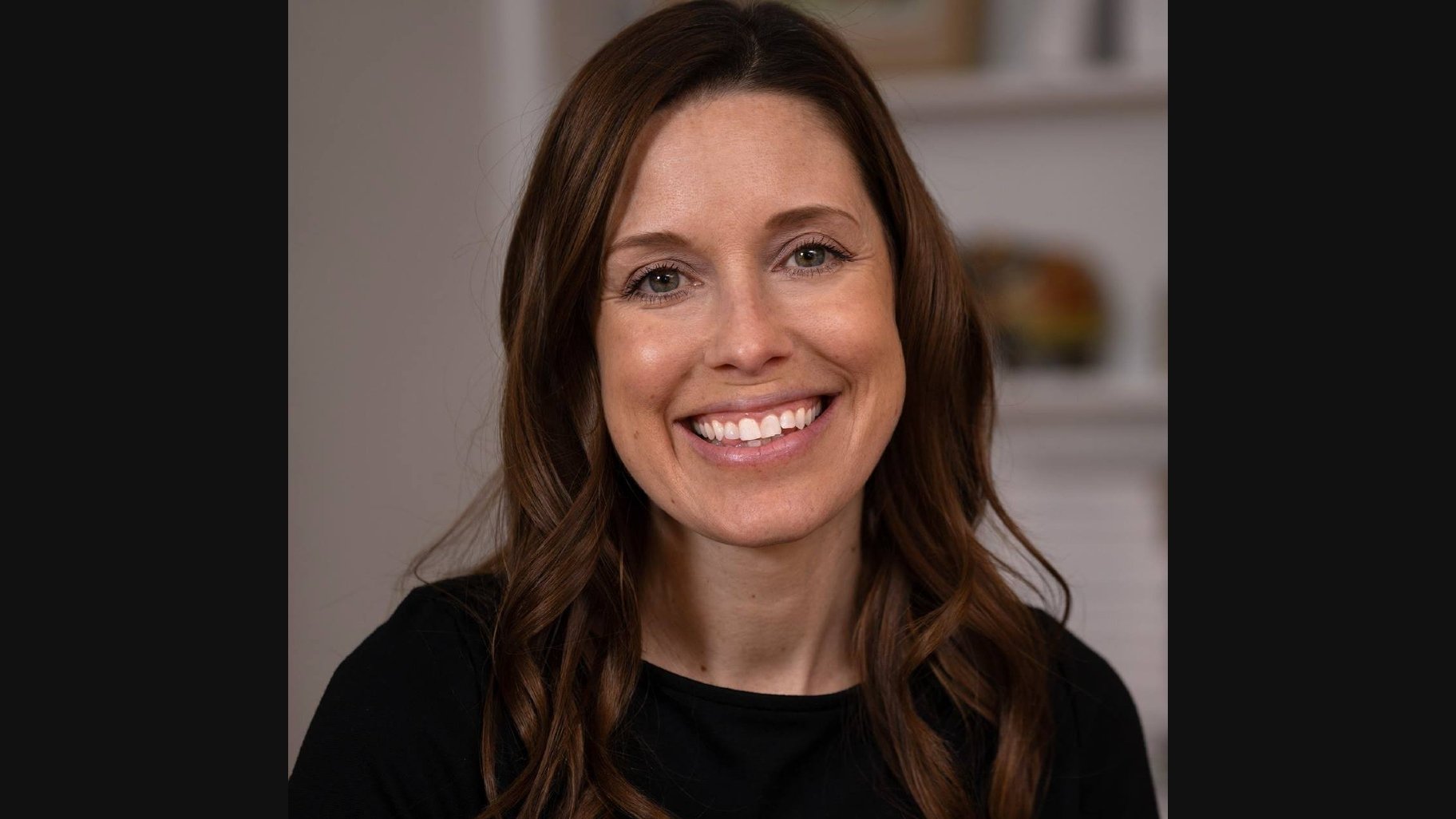
About the Candidate
Name: Samantha Nugent
Date of Birth: 1977
Occupation: 39th Ward alderman
Political Experience: More than 20 years in public service — clerking in the Attorney General's office; working in the Mayor’s office; chief of staff for Cook Department of Homeland Security to the British Consulate; and a term as Alderman of the 39th Ward.
Political Party: Democrat
Website: samanthanugent39.com
Candidate Q&A
Why are you running?
In 2019, I campaigned on a vision of increased public safety, stronger schools and support for our business community. Since being elected, major accomplishments include: increased funding for public schools with new renovated spaces; added emerging crime-fighting technologies and funding for police; created new parks and supported existing parks with renovated spaces; authored a single-use plastics ban ordinance; extended the North Park Village Easement in perpetuity; repaved streets and beautified our neighborhoods; introduced participatory budgeting to empower taxpayers; revitalized major business corridors during and after COVID-19 and created a new economic hub through a Special Service Area (SSA) in the Montrose, Elston and Pulaski corridor. I remain committed to the aforementioned items and look forward to supporting increased enhancements to our parks, improvements to our schools, additional bike paths and nature play spaces as well as additional business corridors in my next term.
Even with these priorities in mind, I spent a lot of my first term as alderman combatting the pandemic’s effects on families, communities, and businesses. My office had to prioritize emergency management efforts including triaging medical support and supplies to residents, resources to first responders, benefits to unemployed residents, and loans to small businesses. We provided staff coverage seven days a week during the pandemic to ensure residents had timely access to city services and resources, created a mutual aid program called “neighbors helping neighbors,” and protected our most vulnerable populations, like our seniors, from the devastating effects of COVID-19. We rose to meet the moment, but there was so much more planned for our public spaces in my first term that I am excited to reprioritize.
What does this office do well, and what needs fixing?
Our City Council is uniquely representative of our neighborhoods and ethnic communities, which most of the time allows us to come to a fair consensus on tough issues and learn from each other’s perspectives in the process. The next council needs to be less divisive to deliver more improvements in the day to day lives of city residents.
What is the most pressing issue facing your constituents and how do you plan on addressing it?
Public safety is a top priority for my constituents. My previous experience as the chief of staff at the Cook County Department of Homeland Security and Emergency Management has informed my public safety-related decisions as alderman.
In the long term, amplified and robust community policing and social service programs are both necessary. A policy I have supported is Invest South/West, which is showing early signs of success and the potential long-term gains are innumerable. Plus, I am a major advocate for learning and pushing trades at a young age — we need our labor unions to continue to expand apprenticeships into the most historically underinvested neighborhoods to grow the middle class and deter young people from crime. And speaking of young people, public school teachers must have the proper training and resources to teach social-emotional learning and conflict resolution in elementary and middle schools, and we need to increase our mental health and social work services in our high schools.
In the immediate term, we need to support our police officers and recruit across Chicago and beyond for qualified candidates looking to be a part of something that can truly benefit our city. I co-sponsored the Chicago Police Mental Health Preservation Ordinance which will ensure officers are not overworked and have sufficient time to recover between shifts. I will also continue to support the federally mandated Chicago Police Consent Decree. The Consent Decree guides reform that governs police training and policies and provides officers the support they need to implement safe and constitutional policing practices. It is vitally important to recognize that safety looks and feels different to each of us. I remain committed to advocating for effective, lasting reforms that build trust between Chicago’s residents and police.
What specific steps would you take to ensure your office is accessible and responsive to your constituents?
As alderman my job is to bring people to the table, discuss issues, and work towards solutions. Since day one, I have hosted weekly Ward Nights to increase transparency, accessibility, and build community in the ward.
A prime example of this approach comes to life through my community-focused zoning and development process. I introduce new businesses and developers to the neighborhood civic associations once they’ve met with my office to start talking about the impact their businesses will have on the community. After speaking with neighbors, hearing their concerns, adjusting plans, and reaching a consensus, we move forward with rezoning and development.
Do you believe in the tradition of aldermanic prerogative, which gives each City Council member the final say on issues in their ward?
I believe the job of an alderman is to be the biggest advocate for their ward. By connecting with the community, listening to concerns to learn about issues, and working to build consensus, an effective alderman represents the interests of their constituents. My pledge remains to be open, transparent, and accountable.
Should the $1.9 billion budget for the Chicago Police Department increase, stay the same or decrease?
Well-resourced social service programs that support things such as mental health, addiction and homelessness can, and should, coexist with a well-resourced police department. These goals are not mutually exclusive and together can successfully offer Chicagoans a multitude of resources and wraparound services. The Federal Consent Decree is my north star in conversations about public safety and our Police Department.
Should the city raise the Real Estate Transfer Tax on properties sold for more than $1 million to fund programs to help unhoused Chicagoans?
There is no denying that there is a housing shortage both nationally and in Chicago. Research indicates that the best indicator for a city’s high homelessness rates is its lack of supply of housing at low price points. Chicago needs to build housing at lower price points.
The impact of a transfer tax increase would be borne heavily by commercial properties. Downtown office occupancy rates have not rebounded to pre COVID-19 levels and commercial property taxes are among the highest in the nation.
As an alternative to this tax, I was proud to support the Chicago Recovery Plan which dedicated $116.5 million towards tackling homelessness in the city and included the additional staffing at DFSS I requested. We should continue to increase our city's budget for services, and the FY2023 Budget that I just voted for will do so. This budget included more than $200 million for homelessness support services like investments for the development of permanent supportive housing, non-congregate housing programs, rapid rehousing programs, shelter infrastructure investments and high utilizer diversion housing. I also support measures to ensure every CPS student experiencing homelessness receives a stable and affordable residence.
Should the city open and operate mental health clinics to provide free care to Chicagoans?
Yes — this is an immediate need in Chicago.
How should Chicago build the 120,000 homes it needs for low- and moderate-income Chicagoans?
In the 39th Ward, I have worked to bring developments to the ward that increase housing supply, promote environmentally sustainable and conscious building practices, and advance equitable development near public transit and remove boundaries that prohibit affordable development.
Earlier this year I voted in support of the Equitable Transit Oriented Development ordinance to build more housing near transit stations, which is a critical need for our working families. I also support the citywide expansion of the Accessible Dwelling Unit (ADU) pilot program.
In 2020, I worked to pass an ordinance that funded the renovation of Building H, an affordable senior housing building on the North Park Village campus. Formerly part of the Municipal Tuberculosis Sanatorium, the renovation brought necessary modernizations to each apartment, common spaces, and the exterior of the building all while preserving the historical integrity and preservation status of the structure. New energy efficiency and greening measures will also bring the building into the 21st century. This building is a model for future developments for low and moderate income Chicagoans, and it’s a project that’s possible to replicate with collaboration and financing across the city’s departments and our private partners.
What do you see as potential solutions to address the number of shootings in Chicago?
We need to increase collaboration with public safety partners — the FBI, ATF, the Sheriff, the Chicago Fire Department, the Joint Terrorism Task Force, the State’s Attorney's office, the Attorney General’s Office and the U.S. Attorney’s Office to infiltrate the criminal underworld and take firearms off our streets.
Should city employees continue to be required to live in Chicago?
Yes.