

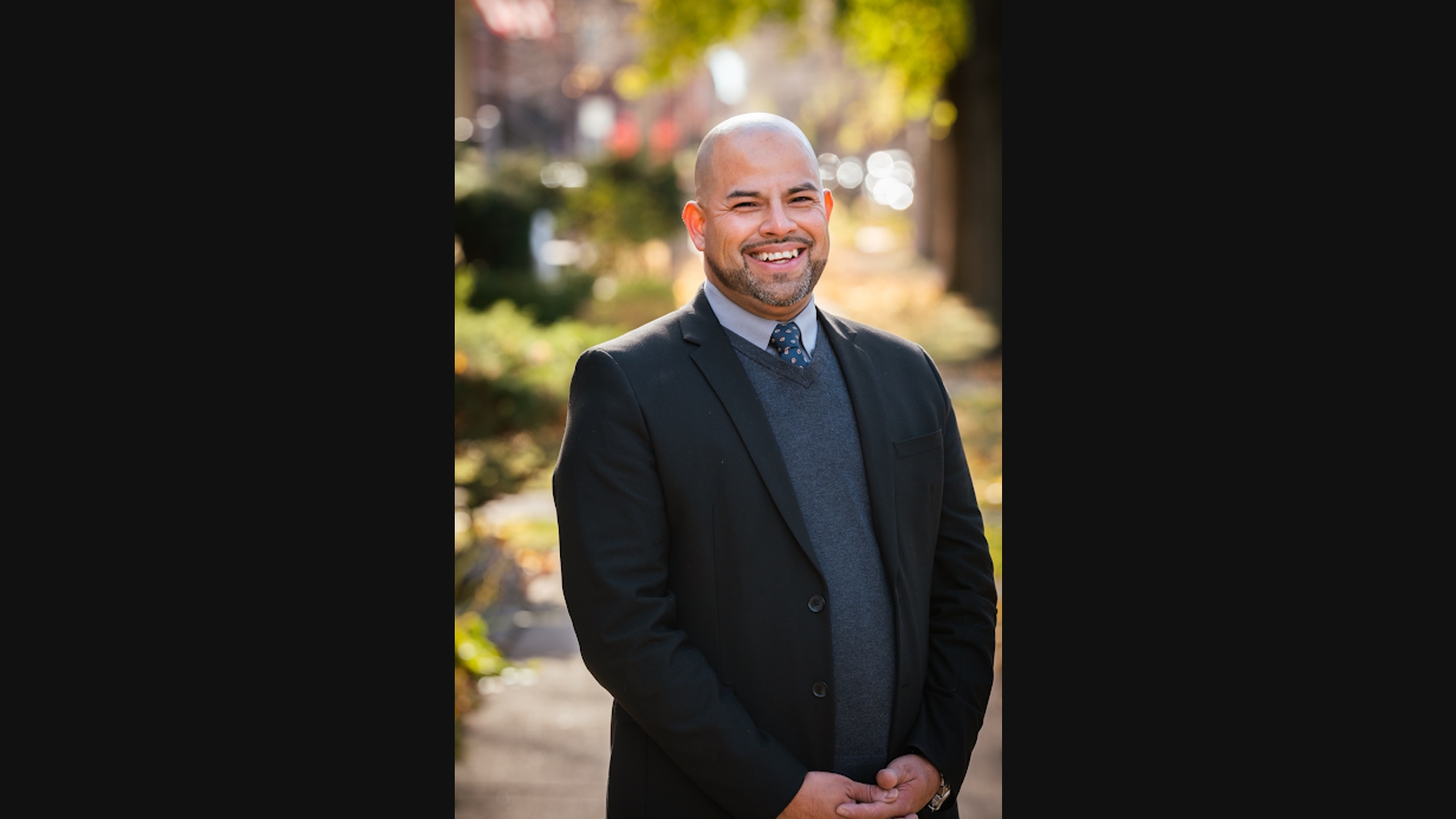
About the Candidate
Name: Andre Vasquez
Date of Birth: 1979
Occupation: 40th Ward alderperson
Political Experience: Prior to serving a 4-year term as 40th Ward alderperson, I was a grassroots community organizer for Reclaim Chicago, and an executive director for Chicago Progress.
Political Party: Democratic Socialist
Website: andrefor40th.com
Candidate Q&A
Why are you running?
I’m running for re-election because our work isn’t done. We want to build the inclusive coalition that will help us rectify the direction our city is headed in. We need to improve public services like the CTA for our neighbors. We need to continue the work of police accountability. We need to create affordable housing to desegregate Chicago and we need a Department of Environment to make sure we are a world class sustainable city and a model for our country.
We accomplish this by continuing to create open government models that give power back to the people so that together we can move our city forward.
What does this office do well, and what needs fixing?
We connect community and communicate to neighbors in a way that's most convenient to them while improving services, developments and support systems in our ward. Constant improvement in central to what we do.
What is the most pressing issue facing your constituents and how do you plan on addressing it?
The most pressing issue facing the 40th Ward and every Ward, is public safety. What I have done and will continue to do, is to center policing around accountability. After 100 years of police torture, misconduct, racial profiling and a lack of accountability, the trust in the institution continues to erode. I believe that police should serve three core functions — apprehension, investigation, and emergency response. Due to a lack of funding for other departments and programs (non-police crisis response, substance use support, mental health intervention, homelessness), our city places responsibilities that are not suitable to the police department onto officers, which leads to less public safety.
I support investing considerably more to address these underlying issues that impact safety and community and that are outside of the training and mission of the police department, as identified in Treatment not Trauma, Bring Chicago Home, and some of the gang intervention work we have been involved with in the 40th Ward. I am also proud to have been an integral part in the passage of the Empowering Communities for Public Safety (ECPS) Ordinance, which established the most progressive Civilian Oversight Board in the nation. It establishes a policy making body that can directly investigate and address deficiencies and flaws in our current policing institution. It also establishes District Councils, which gives the public transparency into their police districts.
What specific steps would you take to ensure your office is accessible and responsive to your constituents?
In terms of accessibility, I give constituents in our ward my personal phone number and invite them to reach out to me over any social media platform they choose. I work to answer questions and address issues as they come up. My dedicated staff maintains records of constituent communication to promptly follow up and find solutions and answers.
Do you believe in the tradition of aldermanic prerogative, which gives each City Council member the final say on issues in their ward?
I think by creating democratic processes as we have in the 40th Ward, we make sure the community comes first, while making sure we don't lead to more mayoral prerogative through departments.
Should the $1.9 billion budget for the Chicago Police Department increase, stay the same or decrease?
The current challenges we see in the Police Department are not related to funding but to mismanagement. In order to have an effective police department that people can have restored faith in, we need a full audit of the Chicago Police Department and a new superintendent.
Should the city raise the Real Estate Transfer Tax on properties sold for more than $1 million to fund programs to help unhoused Chicagoans?
Yes.
Should the city open and operate mental health clinics to provide free care to Chicagoans?
Yes.
How should Chicago build the 120,000 homes it needs for low- and moderate-income Chicagoans?
I would expand the ADU Ordinance citywide, disincentivize tear downs of 2-4 flats and work to make sure developers can better avail themselves to the subsidizes and resources the city currently has to incentivize more affordability.
What do you see as potential solutions to address the number of shootings in Chicago?
In order to have an effective police force to do so they need to be focused on investigations, apprehensions and emergency response when appropriate. In order to do that we need to fund city departments that address all the other issues that get put on an officers plate — primarily, mental health, homelessness and substance use disorder. To create an effective police force they need to focus on their core function.
Should the city do more to encourage residents to live close to where they work and shop by building dense multi-unit apartment complexes near transportation hubs?
Yes.
Should the city prioritize the construction of bicycle lanes and encourage people to use bicycles to commute to work?
Yes, we should prioritize construction of bicycle lanes to create safer streets for all and give people the option to use bicycles to commute to work if desired.
Should city employees continue to be required to live in Chicago?
Yes.