

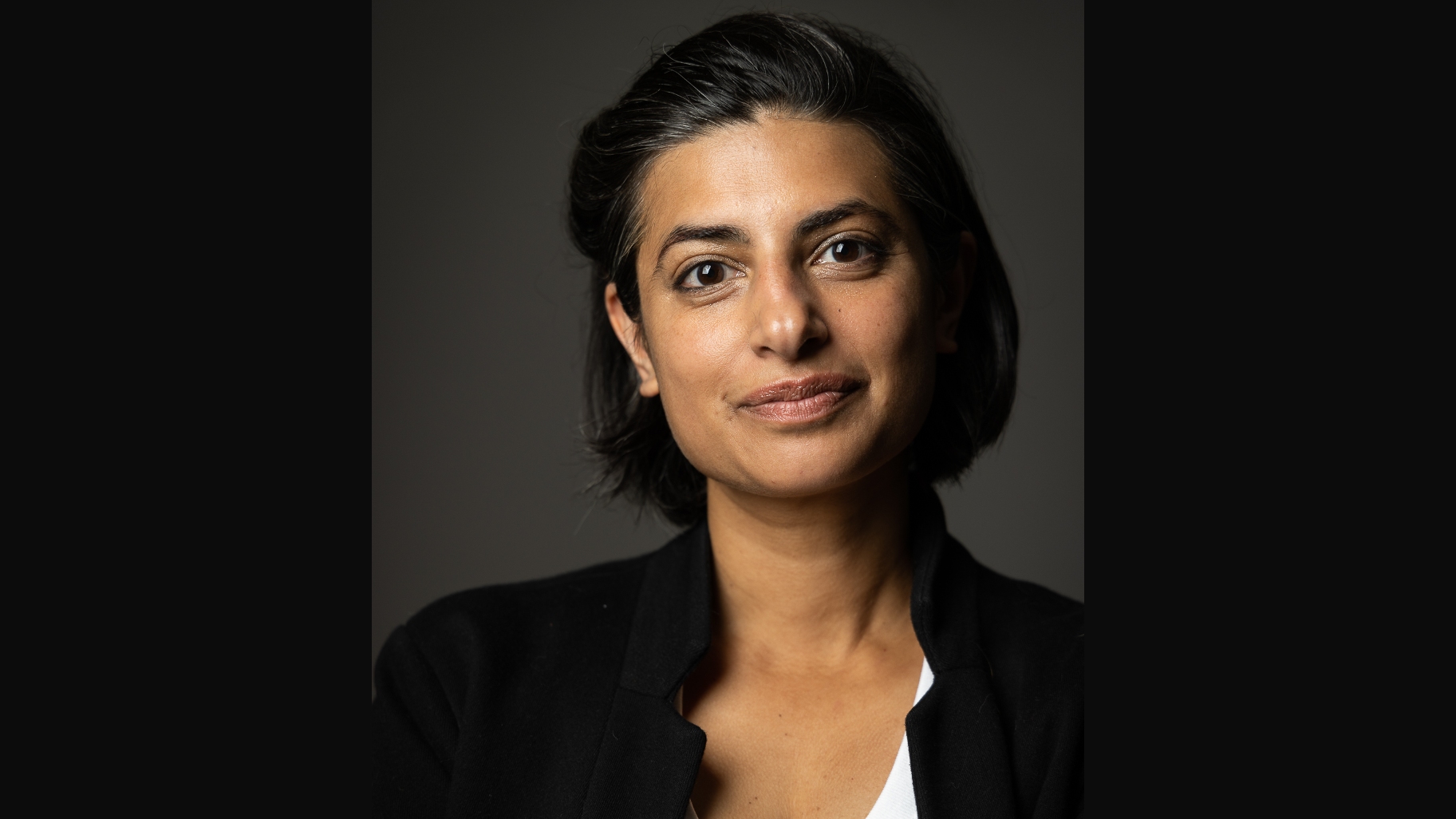
About the Candidate
Name: Denali Dasgupta
Date of Birth: 1983
Occupation: Owner/Principal of Higher Ground Data
Political Experience: I have never run for or held political office but I have worked on political campaigns and in public agencies.
Political Party: Democrat
Website: denalifor39.com
Candidate Q&A
Why are you running?
I’m running for alderman because I believe we have the opportunity both locally and citywide to create a fiscally sound, future-oriented, and compassionate local government that respects the dignity, autonomy, and aspirations of every person in this city. I’m running a community campaign together with organizers and civically minded neighbors who want transparent, responsive, and accountable leadership in the 39th ward. Some of our campaign team have joined off the doors after being canvassed and some have been working against our local political machine since before I was born. All of us are joined by the idea that a better 39th ward is possible and the only way to build it is to do the hard work of coalition democracy.
Today, at the crossroads of crisis and possibility, taking decisive and bold action can feel daunting or improbable. Our current challenges are urgent and complex. They require courage, compassion, and creativity. They require a willingness to take on systemic challenges and not just look for quick fixes. This election we have the chance to repair and tend to our communities and institutions. We have the choice to do something today that can change the Chicago of tomorrow or we can return to business as usual, a strategy that isn’t working now and that fails us a little more each day. This is a moment: for the city, for the progressive movement, and for so many people like me who have stepped up to do extraordinary things in these extraordinary times.
What does this office do well, and what needs fixing?
Our alderman's office prides itself on delivering timely ward services, but our research has shown that distribution of services and infrastructure spending has been far from equitable. Additionally, local services have dwindled as staffing turnover and the slow attrition structures built and maintained by the previous administration. What needs fixing is the idea that focusing on the city and focusing on the ward are two distinct things. Informing, engaging, and representing the people of the ward in all constituent and legislative spaces is possible and ultimately the best use of the strange jumble of explicit and soft powers of the alderman’s office.
What is the most pressing issue facing your constituents and how do you plan on addressing it?
I think the biggest issue in our ward is the equitable distribution of services and the inclusion of all voices in the constituent facing and legislative decisionmaking of the alderman. It’s not a what but a how: We need to harness the civic engagement of the communities in our ward and meaningfully activate it in representative democracy. For too long, the ward level and the city level, the service and the legislative, have been intentionally separated and treated as a tradeoff but when leaders who are accountable to their community and value active civic engagement, we have the power to make real change in our neighborhoods. It’s not customer service. It’s not done to us or for us. It’s something we do together.
The most heartening thing about this challenge is that we can start addressing it on day one by creating better systems of public information, consultation, and engagement. With greater community engagement in the political process we can start developing a ward level public safety plan including addressing crime and violence, we can begin to tackle the local, citywide, and global environmental and climate challenges facing us.
What specific steps would you take to ensure your office is accessible and responsive to your constituents?
As part of my job I assess public systems, particularly those serving traditionally underserved or hard to reach populations, and figure out how to make them more accessible. On day one I would enact plans to expand the reach and responsiveness of the channels for contacting the office. I would make sure there is proactive and responsive communication to individuals and our community, starting with a really good constituent newsletter. Sometimes access isn’t about a where but about a who and so part of our campaign is developing a network of trusted messengers and strong neighbor to neighbor communication that would allow us to reach and hear from everyone. I know that language access, cultural barriers, and complicated power dynamics mean that some people can’t or won’t just walk into an office but that doesn't make their needs any less important or urgent.
Do you believe in the tradition of aldermanic prerogative, which gives each City Council member the final say on issues in their ward?
I am a big believer in community autonomy and holding larger institutions accountable to individuals and from that perspective I think aldermanic prerogative is a useful check on citywide planning powers. However, I have also seen that alderman prerogative is ripe for abuse both by self-interested alders and scarcity minded communities. I think it works if and only if the alderman has a process for fully engaging the community and also is able to inform that community about the necessity of sharing costs and burdens of urban living as well as opportunities and benefits.
Should the $1.9 billion budget for the Chicago Police Department increase, stay the same or decrease?
While I am concerned with the budget of the police department, I am much more attuned to the true cost of policing in the city both financial and otherwise.
I think we’ve maxed out what we can spend on policing before looking to supplement public safety planning with other resources and supports that are directly focused on the immediate and urgent needs of our residents. So many of the acute and urgent needs in our community are related to mental health, substance use and abuse, well-being checks, and domestic violence. I want to see more resources for those things. I’d also like to see more emphasis placed on community trauma from violence, starting with good communication in the wake of a violent event.
In terms of policies and programs that I support that will change the budget and the spending of the police department I’d include the following initiatives that would reduce the police budget: Treatment not Trauma, Shotspotter cancellation, sunset the IGA for School Resource Officers, and increase police accountability in a way that would decrease the number and volume of lawsuits and settlements. I would include the following initiatives that might increase the police budget: police department takes on costs for all POD cameras and other law enforcement infrastructure that is currently carried on other budgets, police fund recommendations from Peace Book committees. I also support increasing civilian positions within the police department. The budget impact of this would depend on how it is done but it would represent a significant shift of costs within the police budget.
Should the city raise the Real Estate Transfer Tax on properties sold for more than $1 million to fund programs to help unhoused Chicagoans?
Yes. I fully support the Bring Chicago Home Ordinance. I am proud to have organizers from the Bring Chicago Home Coalition on our campaign and even prouder that we have been providing public education on the proposal and galvanizing our community after our alder no-showed the hearing. Permanent supportive housing is community infrastructure and requires a dedicated funding stream. It has been historically underfunded and inconsistently maintained and as Chicago lost its stock of single room occupancy housing, the need for permanent supportive housing has only grown.
Should the city open and operate mental health clinics to provide free care to Chicagoans?
Yes. Throughout my career I have worked in health and human services and I have seen that public system capacity is critical to creating a resilient and sustainable system of care. We currently don’t have enough high quality consistent care available to people who need it most. Public mental health clinics are the first step in building out capacity to treat the urgent, complex, and recurring mental needs of Chicagoans.
How should Chicago build the 120,000 homes it needs for low- and moderate-income Chicagoans?
Affordable housing is a crisis that requires preservation of the existing housing stock, development of new affordable and public housing, and neighborhood and citywide protections against eviction and displacement. Our campaign enthusiastically supports Bring Chicago Home, the Just Cause Ordinance, and lifting the statewide ban on rent control. Preservation of affordable housing is one of the most direct ways of increasing the available housing stock. Creating new housing within existing structures, such as accessory dwelling units, is another The single family housing stock in the community where I live is well-designed for ADUs. Not only would these preserve affordability in our communities, it would help us keep people in our communities, either through the availability of units to seniors looking to downsize or as an additional source of income for older homeowners. New investments in public housing development would also help create more housing, ensure that it remains affordable, and rebuild and restore
What do you see as potential solutions to address the number of shootings in Chicago?
I’m a childhood survivor of terrorism and violent gun crime and I deeply understand how the effects of violent crime can change a person’s life. My experience working as a researcher with youth development and violence prevention programs in Chicago’s most affected communities have also given me a close look at the ways that violence in a community is violence to a community.
Reducing violent crime long term and sustainably means making long term commitments in making people well, whole, and safe. When I look at what people in my ward call 911 for I see a lot of mental health calls, well-being checks, and domestic disturbances are high on the list. Citywide, we also saw a spike in overdoses and substance related deaths. Along with violent crime these reveal despair and need that we cannot continue to ignore.
Enacting violence prevention means we need to focus on identifying conflicts and safety threats before they escalate to violent crime.We need to repair trust and community connection, provide information, and begin to center survivors, not just those directly affected but the individuals and communities whose sense of safety is shattered by violent crime. We need greater community participation and oversight in public safety and policing, including ECPS and the Peace Book. We need community violence prevention initiatives that develop authentic and trusted community relationships to identify potential threats and intervene with individuals and families, such as Treatment Not Trauma and family crisis support for domestic violence and child abuse and those affected by violent crime.
It means investing in trained professionals and stronger response systems and expanded domestic violence supports instead of spending more on surveillance technology that compromises all of our safety and privacy or unreliable and expensive systems like Shotspotter. It means creating better networks of community information, engagement, and oversight, starting this year with the new ECPS District Commissioners. Our campaign has been talking and listening to neighbors about public safety and across the board people are eager to talk with their neighbors and not just worry on NextDoor or Citizen.
Should city employees continue to be required to live in Chicago?
Yes. I think it helps city employees commit to building a better city when they feel like they’re doing it with their neighbors and communities. That being said, I think it’s critical to make housing and childcare more affordable in the city so that city employees won’t see the residency requirement as a burden but as an opportunity to put down roots. I look around my neighborhood and see how many of the people who make this community what it is are city and school employees. They are service and community minded people who keep our neighborhoods safe and stable and we all benefit from public pensions when those employees retire and remain in our community.