Crime & Law
Chicago Taxpayers Must Pay $4.2M to Attorneys for 2 Men Wrongfully Convicted of 2003 Murder After Record-Setting Verdict: Federal Judge
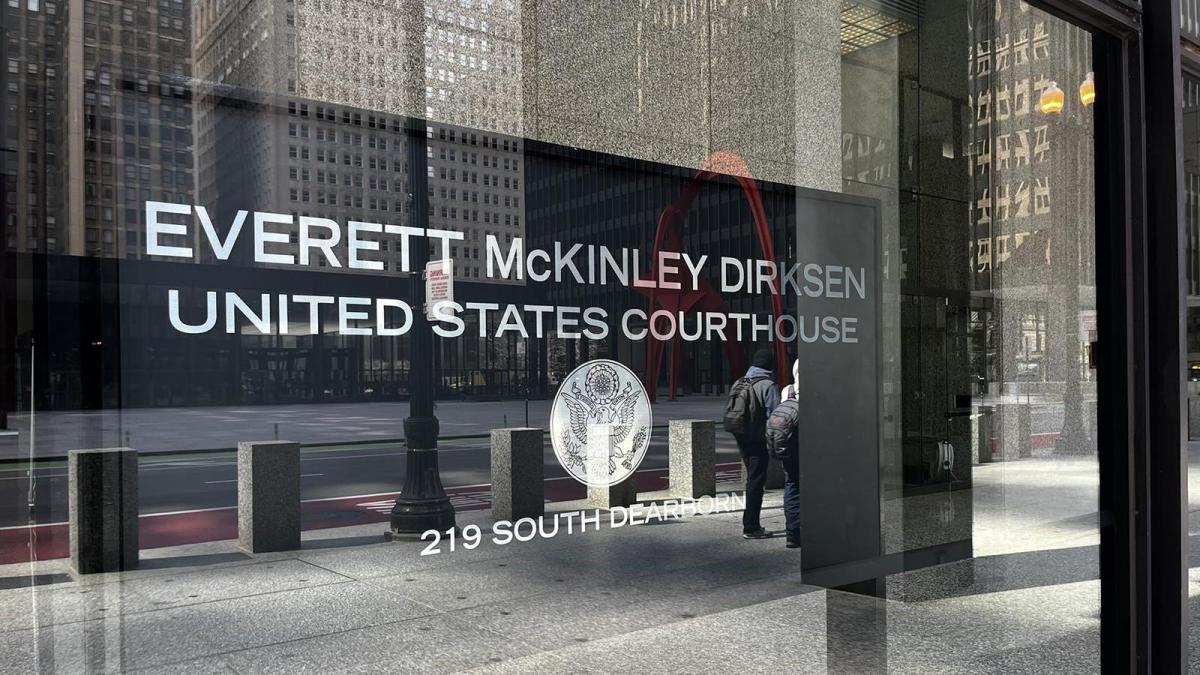 (Capitol News Illinois)
Chicago taxpayers must send $4.17 million to the attorneys who represented two men who sued the city after being wrongfully convicted of a 2003 murder, setting a new city record, a federal judge ordered.
A federal jury awarded $60 million each to John Fulton and Anthony Mitchell in March 2025, finding they were wrongfully convicted of a 2003 murder and spent a combined 32 years in prison after being coerced into confessing by Chicago police detectives.
Lawyers for the city of Chicago have appealed that verdict, the largest ever in a lawsuit alleging misconduct by members of the Chicago Police Department.
Fulton and Mitchell also sued Cook County and resolved those claims after the Board of Commissioners agreed to pay $15 million to both men.
Efforts to resolve the case before it reaches the appellate court and resolve the lawsuit for less than $105 million have so far been unsuccessful, records show.
A spokesperson for the city’s Law Department declined to comment on the order when contacted by WTTW News, citing the city’s policy of not discussing pending litigation.
Loevy and Loevy, the lawyers for Fulton and Mitchell, did not respond to a request for comment.
Originally, Loevy and Loevy asked Judge Joan Lefkow to force the city to pay $4.4 million to cover their fees.
The city responded by asking Lefkow to authorize no more than $1.8 million in attorney fees.
Lefkow ruled that was reasonable for lead attorney Jon Loevy to demand the city compensate him for his time at a rate of $1,500 per hour, citing his “exceptional record as a trial attorney, and his unique role as a market leader within the context of civil rights litigation.”
In addition, Lefkow ruled that Fulton and Mitchell won a “stunning victory,” giving her no reason not to ensure their lawyers were adequately compensated for the work that led to that result.
“In the end, plaintiffs won handily, the city lost badly, and the city spent 3,000 more attorney hours than plaintiffs in the process,” Lefkow wrote.
However, Lefkow made no determination on whether the city should pay Loevy and Loevy an additional $256,000 to cover the costs the firm incurred during the trial, ordering both sides to attempt to reach an agreement.
Fulton was 18 years old and Mitchell was 17 years old when they were arrested in connection with the March 10, 2003, murder of 18-year-old Christopher Collazo, whose body was discovered bound with duct tape and partially burned in a Back of the Yards alley.
Both Fulton and Mitchell were convicted of first-degree murder and kidnapping in 2006 and sentenced to 31 years in prison. They were released in 2019 after a Cook County judge overturned their convictions and ordered a new trial, prompting prosecutors to drop the charges against them.
No physical evidence tied either Fulton or Mitchell to Collazo’s gruesome death. Both testified they confessed to killing Collazo after Chicago police detectives promised them leniency, threatened them with physical violence and physically abused them.
A police officer testified that Fulton spontaneously confessed to the murder just before he administered a lie detector test. The same officer made the same claim in other cases more than 100 times in a five-year period, according to Fulton’s lawsuit.
The only evidence against the two Black teens in the murder of the White teen came from a 17-year-old girl who told police Collazo sold guns to people in the neighborhood and clashed with Fulton. She later recanted her identification of Fulton and Mitchell as the killers.
Cook County Circuit Court Judge Lawrence Flood granted Fulton and Mitchell a new trial after ruling that the jurors in their cases should have heard evidence that a camera surveilling the back door to Fulton’s home did not capture him leaving before the murder and returning before he went to school the next day.
That door was also opened with an electronic key that would have shown Fulton’s key was not used to enter the door around the time of Collazo’s murder.
Lawyers for Fulton and Mitchell accused prosecutors with the Cook County State’s Attorney’s Office of deliberately obscuring evidence about the cameras and the electronic key.
Note: Loevy and Loevy has done legal work for WTTW News.
WTTW News coverage of policing and police reform is supported by The Joyce Foundation.
Contact Heather Cherone: @HeatherCherone | (773) 569-1863 | [email protected]