Politics
Congressional Candidate Daniel Biss on Primary Win, State of the Democratic Party
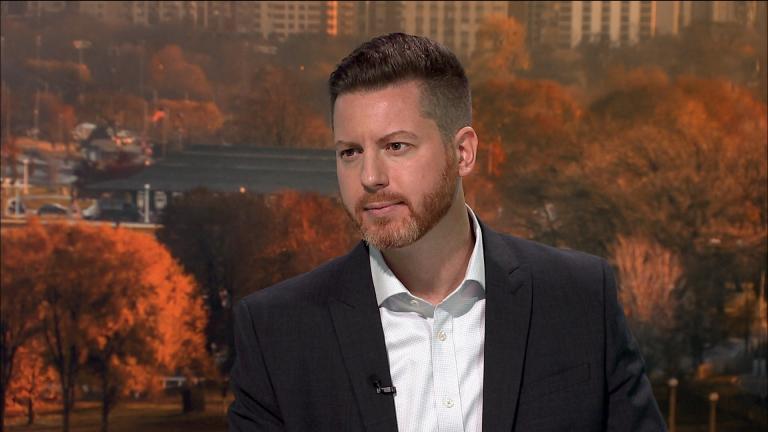
After last month’s win in the Democratic primary, congressional candidate and Evanston Mayor Daniel Biss is gearing up for the Nov. 3 general election, where he will face Republican John Elleson and independent Delila Barrera.
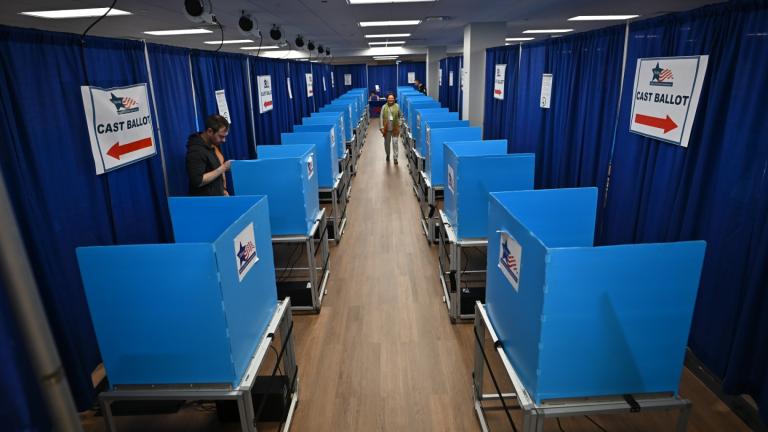
In a stacked March 17 primary, Biss won with 29.6% of the vote, beating out second- and third-place candidates Kat Abughazaleh and Laura Fine, along with 13 other contenders.
If elected, he would represent Illinois’ 9th Congressional District in the U.S. House of Representatives. The district includes parts of Chicago’s North Side, Evanston, Skokie, Glenview, Gilmer and Algonquin.
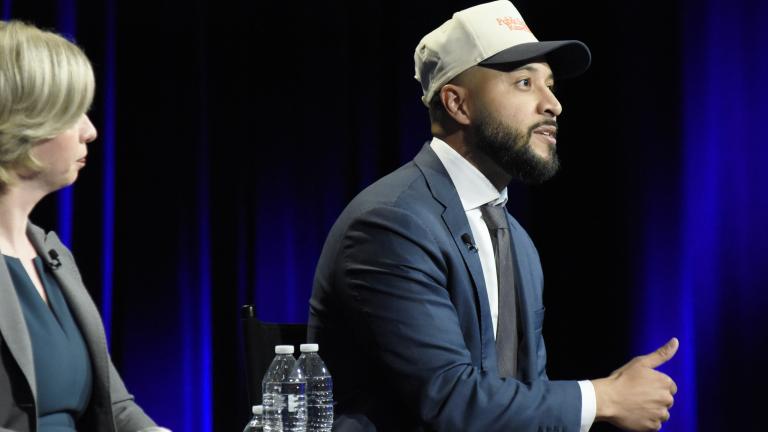
Biss spoke with “Chicago Tonight” to reflect on his win and what comes next for his campaign.
On why his message resonated with voters:
“...In this moment, this moment of emergency with Donald Trump as the president and the fundamental values and priorities of our community under threat, we need somebody with two qualities: the ability to fight and win inside of government and the ability to win out in the streets as an activist, because, by the way, this moment will not be solved without a movement of people rising up across the country to demand something different. And I believe I’ve shown both of those qualities, and I think that helps set me apart in this very crowded field.”
On how he plans to reach the roughly 70% of voters who didn’t cast their ballots for him:
“I’m very clear and humble about this: 70% of the people voted for someone besides myself, and so I’m spending time now reaching out across the district, working to bring people together to unite not only the Democratic Party and the progressives in our community, but our whole community, because, listen, there’s so much at stake in this moment. Every day brings more alarming, terrifying, horrifying, sickening news from Washington and we need to fight back together, unified.”
On Thursday, DNC members rejected a symbolic resolution condemning corporate dark money groups and AIPAC spending in Democratic primaries. On how AIPAC support is affecting the Democratic Party:
“Well, I was disappointed by that decision at the DNC today. … It’s important for the Democratic Party to send a clear message: Here’s where we stand on dark money, and here’s where we stand on these key issues. Listen, the conduct of the Netanyahu government in Gaza, in the West Bank, the violence, the starvation is a weapon of war. It’s unacceptable. And I think the overwhelming majority of Democratic voters feel that and know that, and I think they’re looking for candidates who are willing to stand up to that and not kind of toe a hard line, far right party line, which is really what AIPAC demands.”
On confronting Border Patrol chief Greg Bovino during ‘Operation Midway Blitz’:
"Well, I think our community, across the Chicago area, was deeply traumatized by the violence, the brutality, the indiscriminate racism of ‘Operation Midway Blitz’ with ICE and CBP. I think that was really the forefront of most of our minds as we were trying to figure out how do we heal as a community. How do we fight back against Trump and who do we put in office to really be fighting in the most aggressive way possible, using every tool at their disposal? And unfortunately, as mayor of Evanston, I had the responsibility of showing how I fight back against ICE, and I think that was important in the campaign.”
On President Donald Trump and the 25th Amendment:
“I would support invoking the 25th Amendment. I would support impeachment. The way this president has been speaking and acting with the war in Iran and launching an illegal war, but now with the rhetoric that he’s using with a threat to wipe out a civilization, right? We’re kind of used to having this attitude of, oh, that’s just wacky Donald Trump, let’s not pay too much attention. We can’t afford to treat this kind of threat of genocide, threat of an obvious war crime, as just something to roll our eyes at. This is dangerous, it’s wrong, it’s immoral, it’s a threat to our core values, and it’s a threat to America’s ability to ever enter into productive partnerships in any other country. We gotta end it. This person is dangerous, and he’s obviously falling apart mentally. He’s gotta go.”
On lessons learned as mayor of Evanston:
“Well, so many. I feel that this is really a gift, the experience of having been the mayor of a city and having managed a municipal budget is gonna be really important for understanding how federal law is going to interact with municipal governance. But also the things that we’ve done, for example, on housing, for example, on reparations, for example, on climate. We’ve tried to use Evanston as a kind of a laboratory to test out policies that really ought to go national. And I’m excited to go to Washington and say, ‘Hey, listen, we did this in Evanston, it worked. It made an impact. It’s time to bring it to D.C.’”