Arts & Entertainment
Chicago Stock Exchange Trading Room, Pope Leo XIV’s Childhood Church Among ‘Most Endangered’ Sites for 2026
Video: Joining “Chicago Tonight” on March 11, 2026, is Ward Miller, executive director of Preservation Chicago. (Produced by Blake Thor)
The Chicago Stock Exchange Trading Room at the Art Institute, Pope Leo XIV’s childhood church and the bridge tender houses along the Chicago River are among the at-risk sites highlighted in an annual list released Wednesday by the historic preservation nonprofit Preservation Chicago.
Preservation Chicago’s annual “Chicago 7 Most Endangered” list aims to sound the alarm on historic buildings and sites at risk of demolition. By spreading awareness, the organization aims to mobilize the support necessary to save the threatened buildings from demolition.
Buildings added to the “most endangered” list remain on the list until they are saved or lost, according to the organization. A list of all the buildings featured since the initiative began in 2003 can be found here.
“Despite seemingly impossible odds, the public interest generated by the Chicago 7, coupled with devoted advocacy, has resulted in a remarkable number of preservation victories over the past 20 years,” Preservation Chicago Executive Director Ward Miller said in a news release.
Below are the sites added to the list this year.
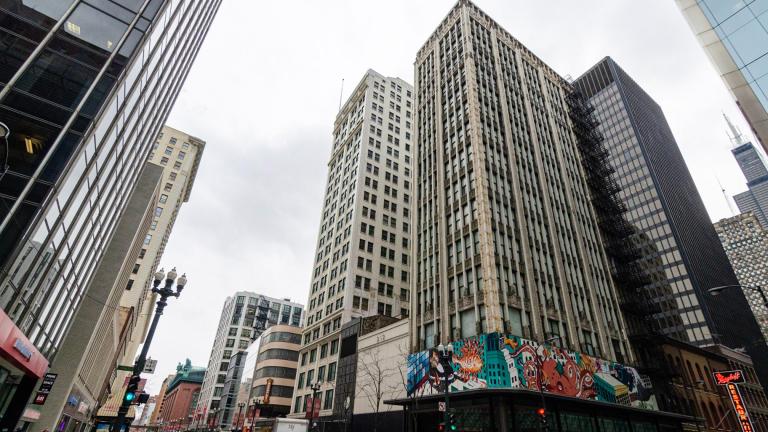
The Chicago Stock Exchange Trading Room and McKinlock Court at the Art Institute of Chicago
111 S. Michigan Ave., Loop
Chicago Stock Exchange Trading Room: Built in 1894, dismantled in 1972 and reconstructed 1977
McKinlock Court: McKinlock Court Building built in 1898; Triton Fountain built in 1931; additions in 1977
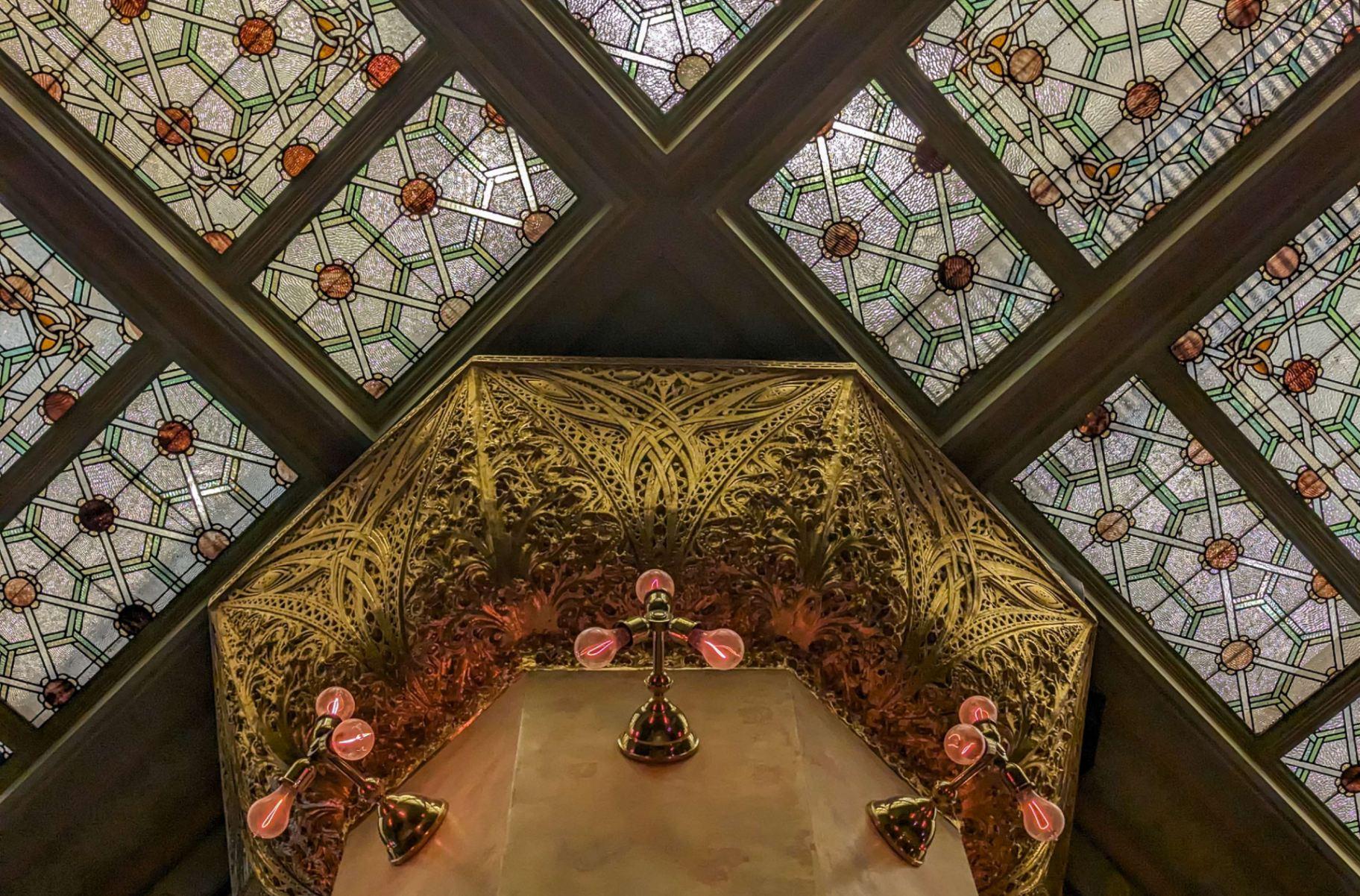 The Chicago Stock Exchange Trading Room, 1894 Dankmar Adler and Louis Sullivan, dismantled in 1972 and reconstructed 1977 Vinci-Kenney Architects, 111 S. Michigan Ave. (Eric Allix Rogers)
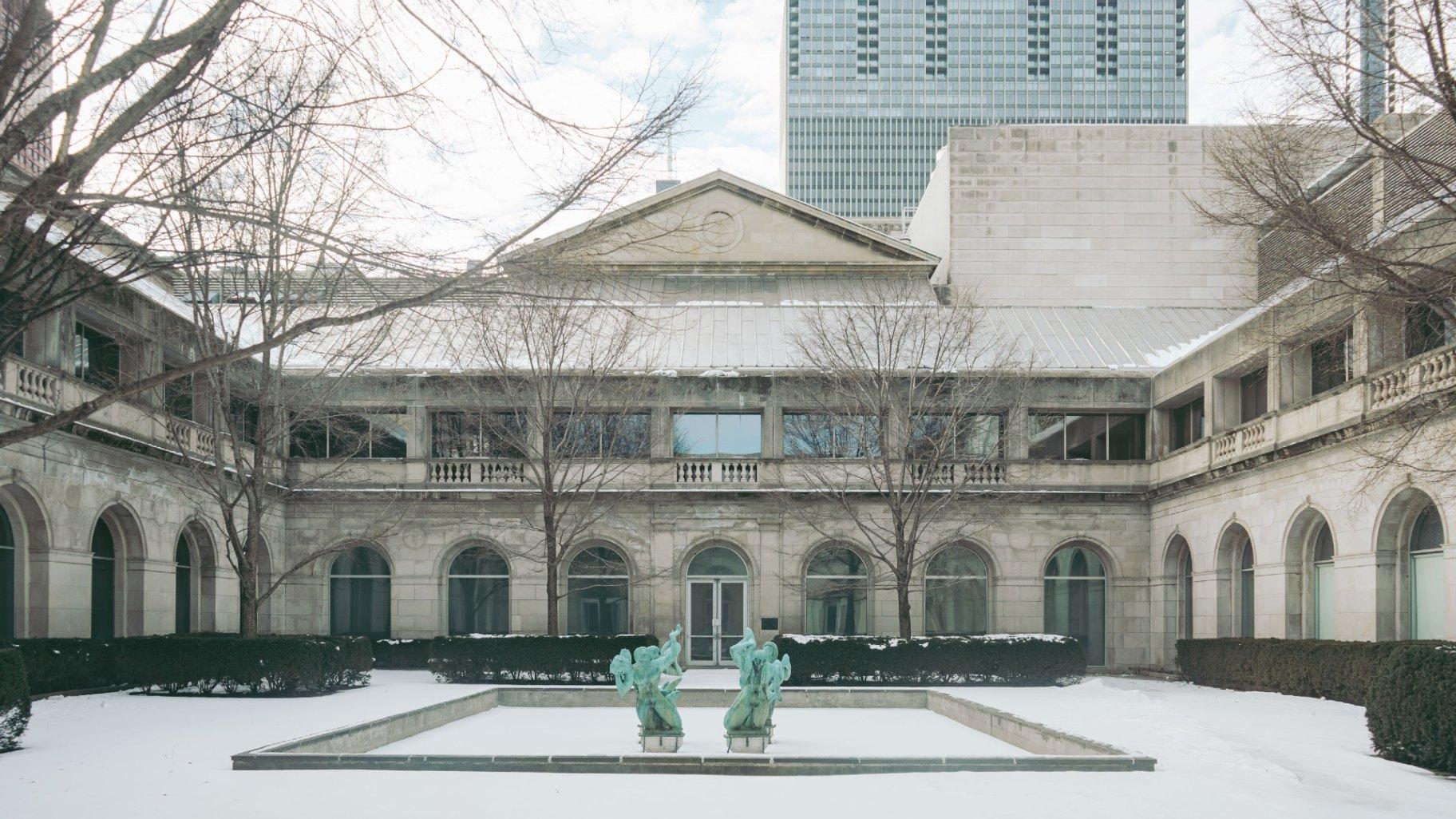 McKinlock Court Building, 1898, Shepley, Rutan and Coolidge, Coolidge and Hodgdon, with 1977 rooftop addition by Walter Netsch, Skidmore Owings and Merrill with “Fountain of the Tritons” sculpture by Carl Milles, 1931. (Lily Ma / Numi Studio)
The Chicago Stock Exchange Building, designed by architects Louis Sullivan and Dankmar Adler, was demolished in 1972 despite protests from preservationists. Architectural fragments of the building landed into the collections of various museums. An effort was led to reconstruct the building's Chicago Stock Trading Room at the Art Institute.
The Chicago Stock Exchange Trading Room, now used as an event space at the museum, features stained-glass skylights and intricate wall stenciling. After nearly 50 years in the museum, Preservation Chicago said, the room is now at risk of demolition again for a proposed new wing at the museum.
In a statement, the Art Institute said, “We are currently exploring ways to increase gallery space and put more of our collection on view for visitors. As we have assessed which part of our campus has the most potential for expansion, the east side of the building—where the Trading Room is located—represents the area where gallery space could increase the most. If our campus evolution did impact the Trading Room, our first priority would be to work with partners to find a new location for the space. No decisions have been made at this time.”
Preservation Chicago also listed as endangered the Art Institute’s McKinlock Court Building and Courtyard Garden. The Art Institute said it has no plans to remove McKinlock Court.
The McKinlock Court Garden and Memorial Building were designed by Coolidge and Hodgdon as an addition to the Art Institute’s original central building called the Allerton Building. The enclosed garden and limestone-clad structure contains “The Fountain of the Tritons” by artist Carl Milles.
Chicago River Bridges and Tender Houses
Chicago River Main, North and South Branches
Built: 1910-1940
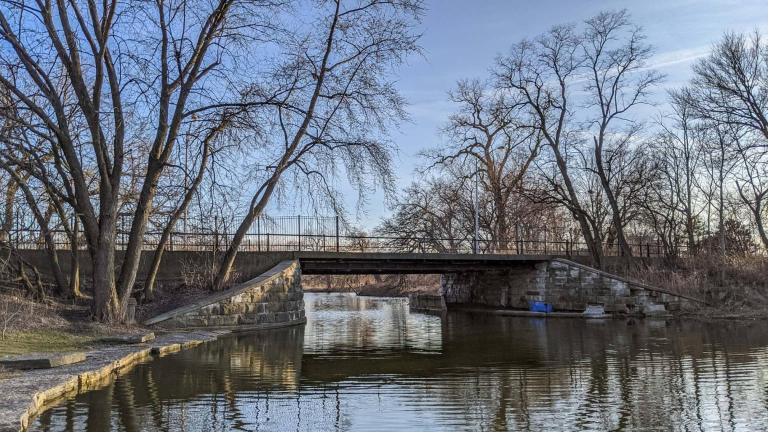
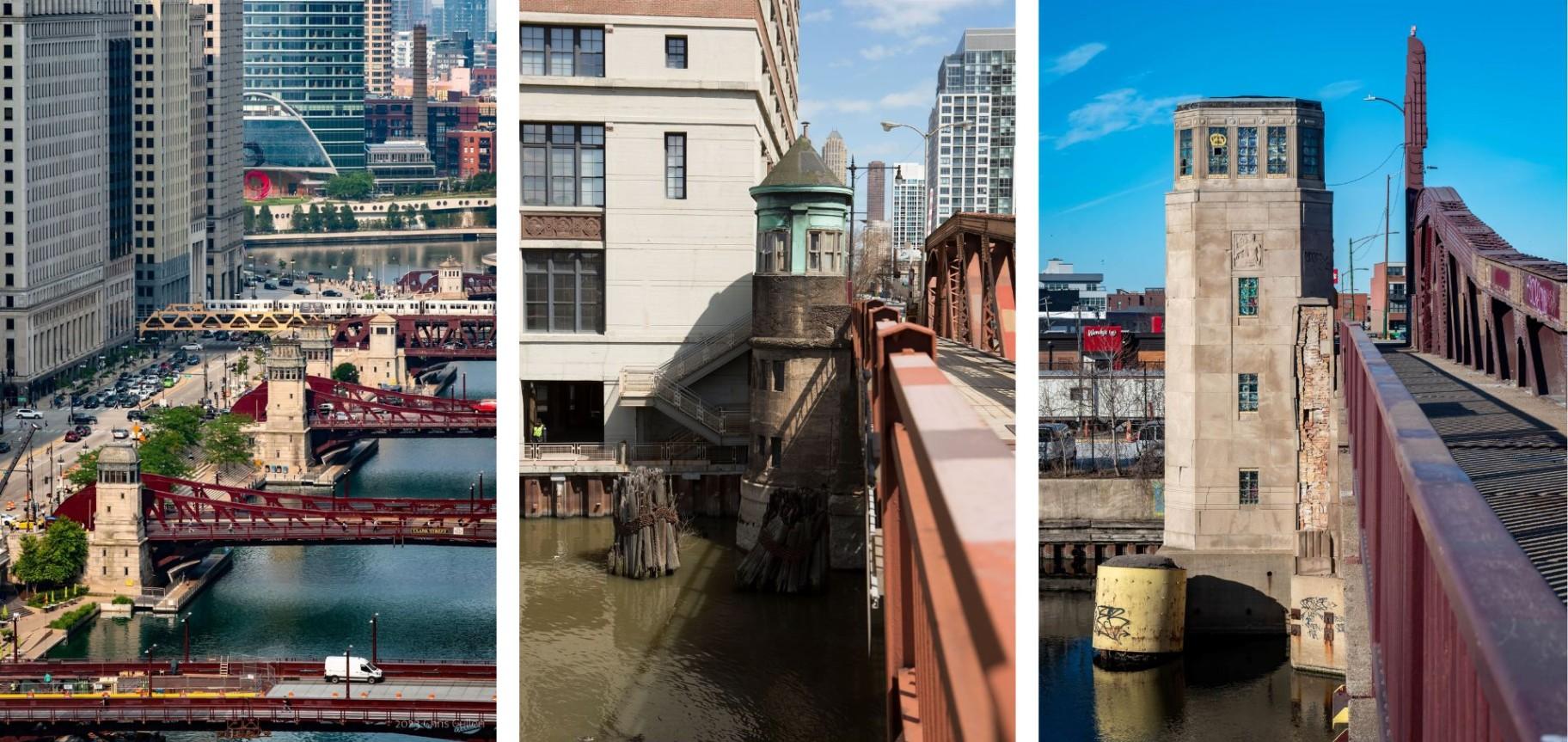 Left: Chicago River bridges and bridge tender houses. (Chris Cullen) Center: Chicago Avenue Bridge prior to demolition. (Mejay Gula / Tender House Project) Right: Ashland Avenue Bridge tender house. (Chris Cullen)
During the late 19th and early 20th centuries, the Loop and the Chicago River were the epicenter of the city’s economic engine, which resulted in a collection of movable bridges paired with bridge tender houses, which house the operations for raising and lowering the bridges.
Preservation Chicago said many of the bridges and bridge tender houses are in need of significant repair. The organization is advocating for them to be repaired, saved and restored.
Preservation Chicago specifically highlighted the Ashland Avenue North Branch Bridge, LaSalle Street Bridge, Chicago Avenue Bridge, Clark Street Bridge, Michigan Avenue DuSable Bridge, Washington Boulevard Bridge and the Wabash Avenue Irv Kupcinet Bridge.
In the past year, the organization said it has submitted a “suggestion for landmark” document and presentation to request the city establish city landmark designation for many of these bridges and tender houses.
St. Mary of the Assumption Church and School (Pope Leo XIV’s Childhood Church and School)
310 E. 137th St., Riverdale
Church: Built in 1957
School: Built in 1918
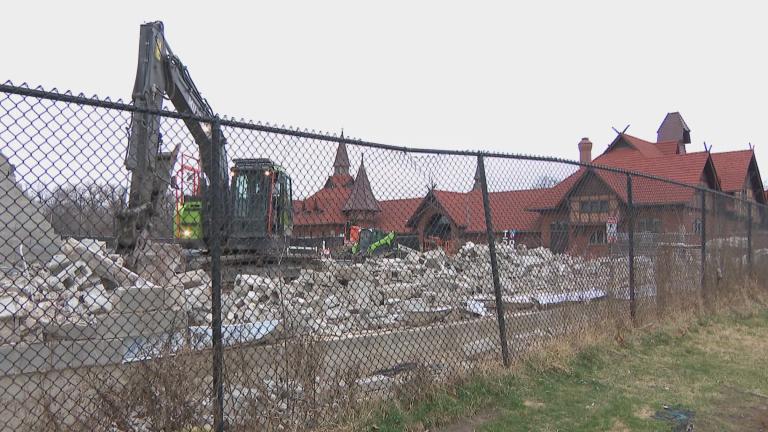
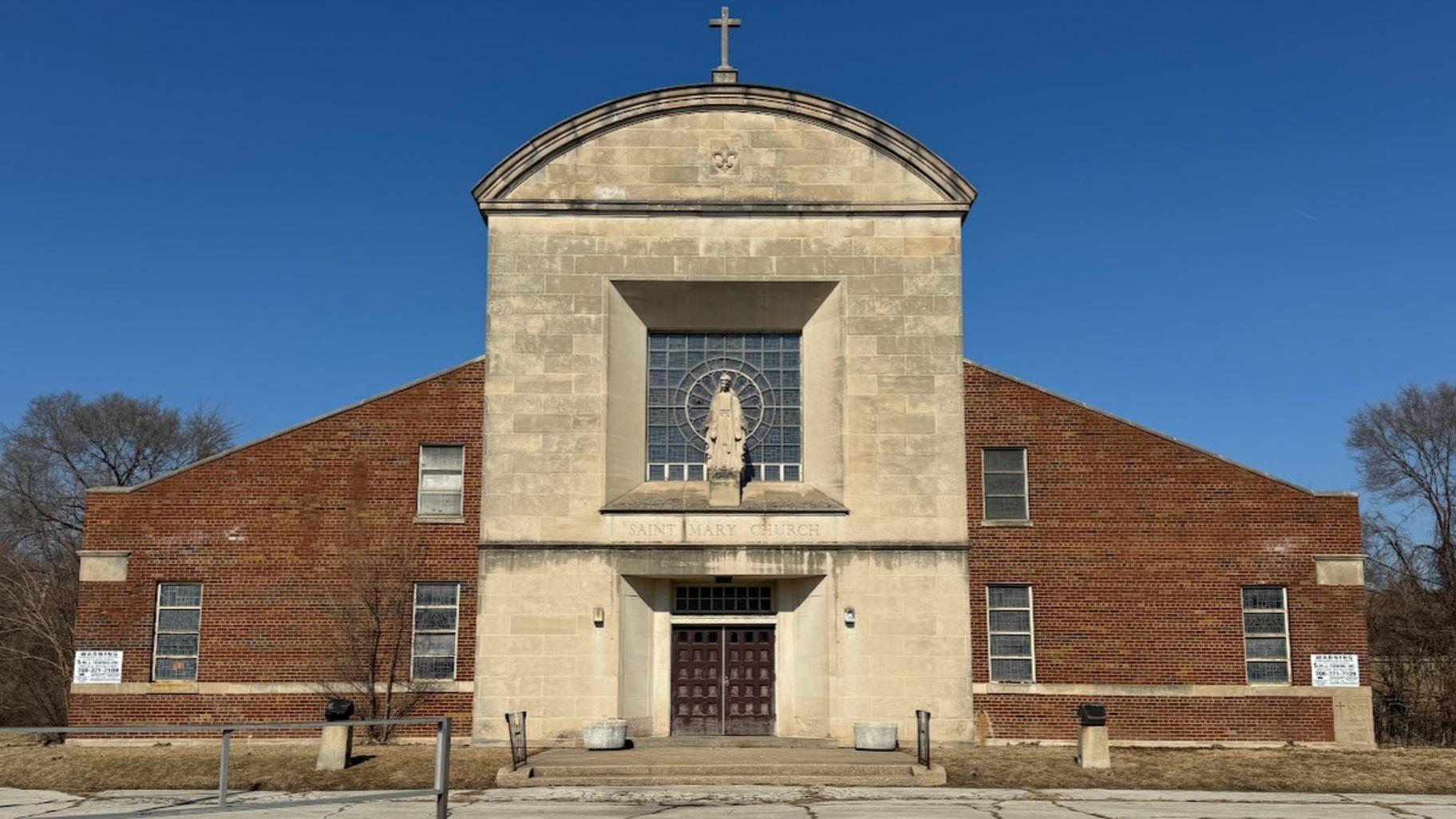 “The Pope's Church,” St. Mary’s / St. Mary of the Assumption Roman Catholic Church, 1957, George S. Smith, 310 E. 137th St. (Cristen Brown)
Located in Chicago’s Riverdale neighborhood, the mid-century church structure was completed by Chicago architect George S. Smith in 1957. The school was constructed in 1918 and was designed by Hermann Gaul.
Following the election of Pope Leo XIV last year, the St. Mary’s church and school complex gained renewed historic significance as Pope Leo’s childhood parish.
The parish has been out of operation since 2011 and merged with nearby parishes due to declining membership. The vacant church and school buildings have experienced significant deterioration because of a damaged roof and windows, according to Preservation Chicago.
Last year, the organization formally requested designation of the church as a city landmark to protect it from demolition and support its restoration.
“Realizing that Pope Leo holds incredible influence over many aspects of world diplomacy and is the respected leader of over 1.3 billion Catholics across the globe, this campus could easily become a pilgrimage site for visitors from all over the world,” according to the Preservation Chicago annual report.
Chicago’s Labor Union Halls
Various locations
Built: 1880-1970s
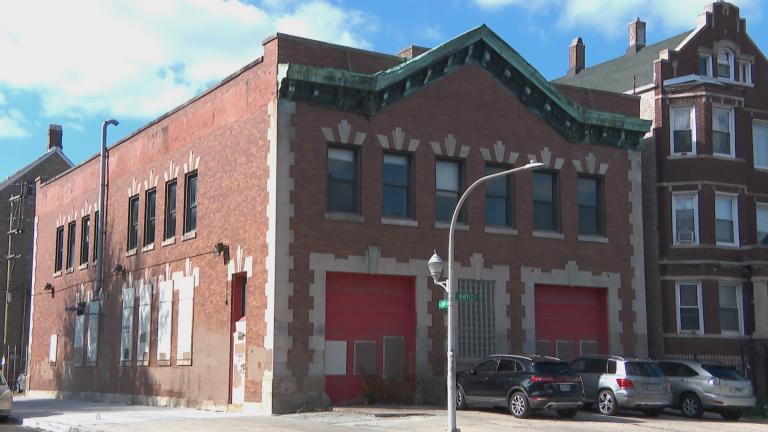
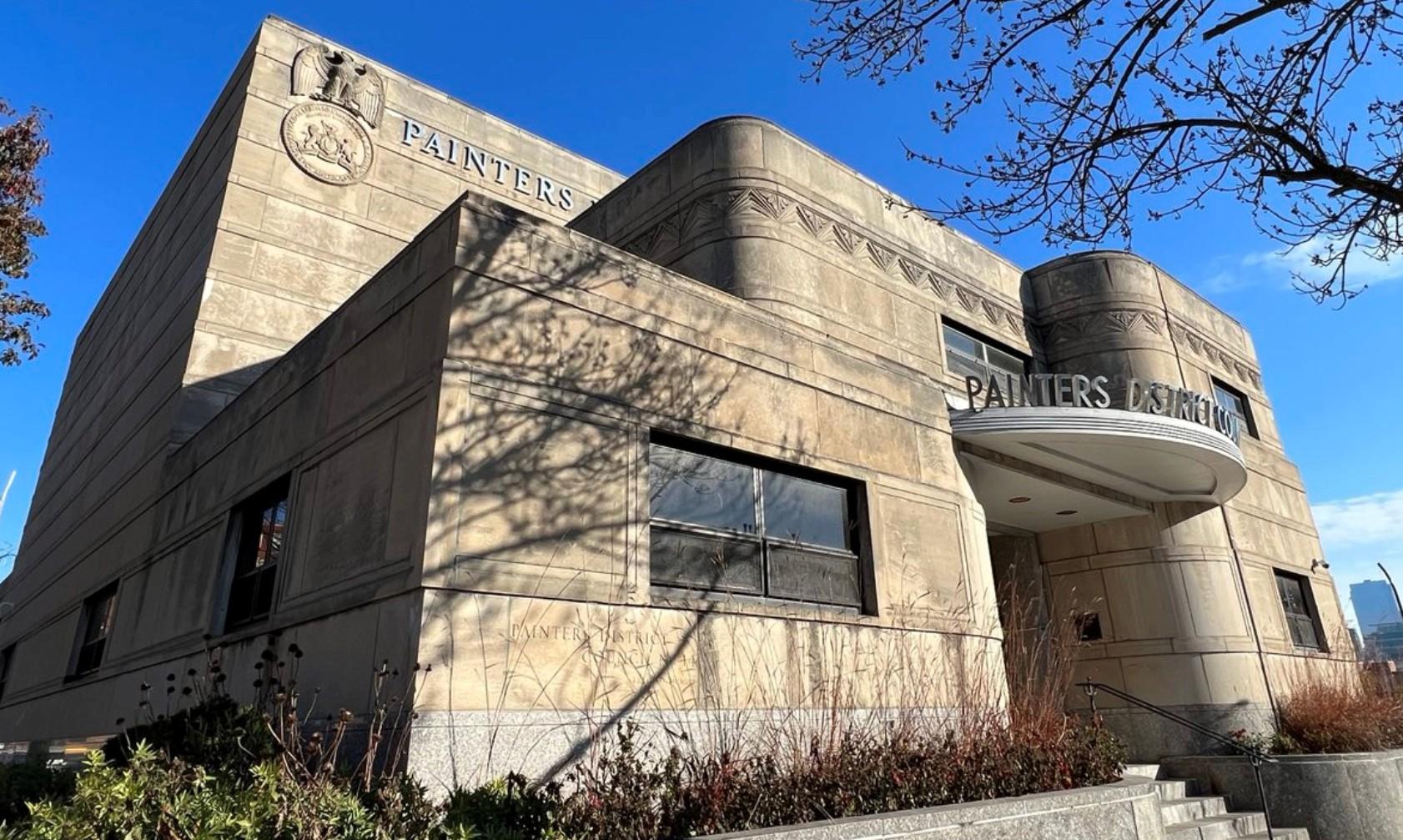 Painters District Council #14, a 2026 Chicago 7 Most Endangered. Painters District Council #14, 1456 W. Adams St., 1956, Vitzthum & Burns. (Debbie Mercer)
Chicago’s union history can be traced back to the rapid industrialization of the late 19th century, and the proliferation of railroads, stockyards, manufacturing, steel production, printing and shipping.
Many unions built their own union halls on Chicago’s Near West Side. The neighborhood was home to more than 30 labor groups by the mid-20th century and became known as “Union Row,” according to Preservation Chicago. Other union halls are located on the South Side and Far South Side due to proximity to the Union Stock Yards, Pullman Car Works and steel mills.
Preservation Chicago said several union labor halls are in need of repairs, have been listed for sale in recent years or are facing demolition threats.
Chicago Loop Synagogue
16 S. Clark St., Loop
Built: 1957
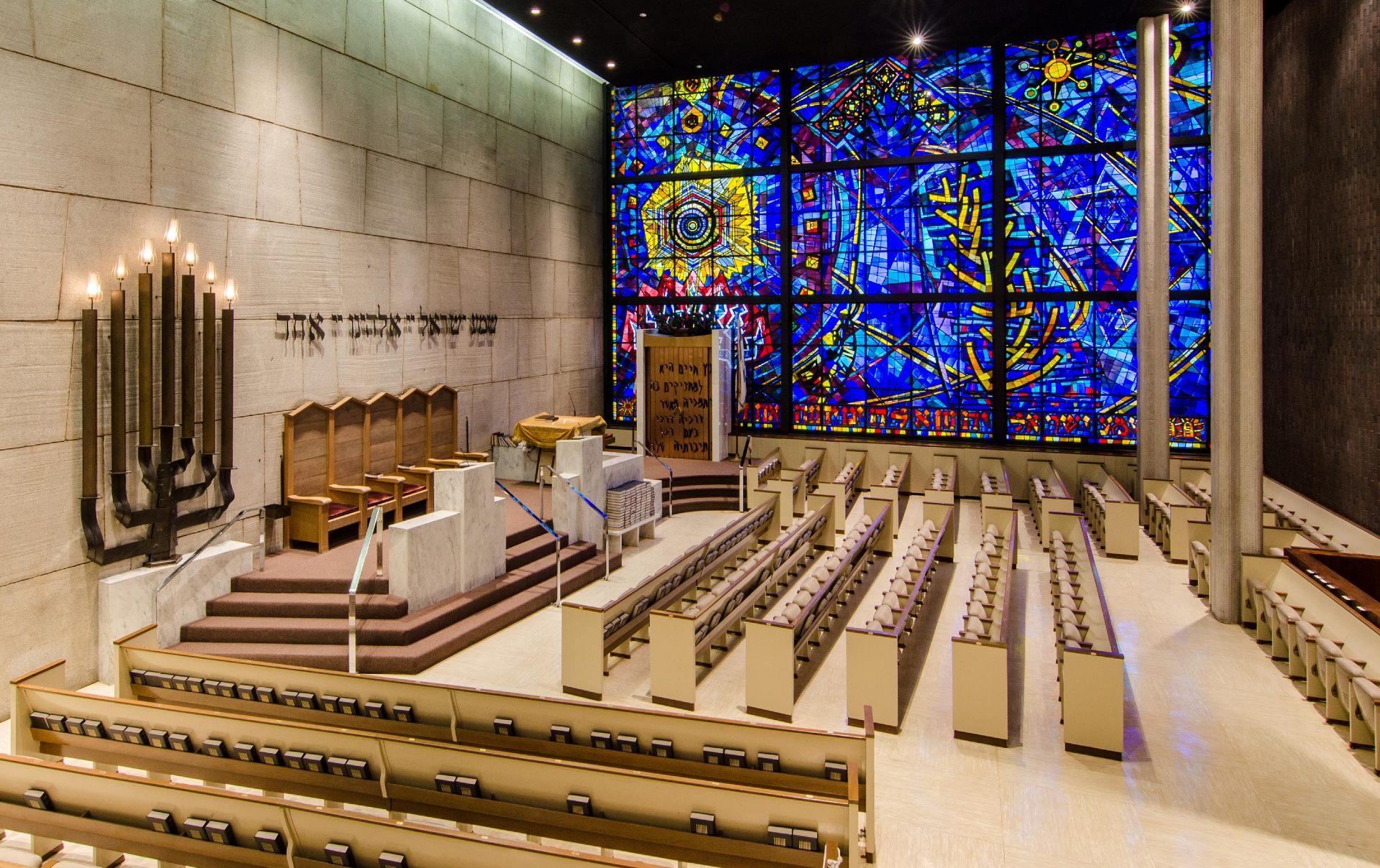 Chicago Loop Synagogue, a 2026 Chicago 7 Most Endangered. Chicago Loop Synagogue, 1957, Loebl, Schlossman & Bennett, 16 S. Clark St. (Eric Allix Rogers)
The Chicago Loop Synagogue was founded in 1929 to serve the religious needs of Jews working downtown as well as Jewish visitors to Chicago. The synagogue’s current mid-century building was designed in 1957 by the Chicago firm Loebl, Schlossman & Bennett.
The synagogue also contains a stained-glass window designed by Abraham Rattner that is considered one the most exceptional works of Jewish art of the 20th century.
Attendance at the Chicago Loop Synagogue has been in decline for years following a wave of retirements and a shift toward remote work, with a significant portion of congregants being Jewish professionals who commuted to their Loop offices and attended the morning services.
As synagogue leaders continue to explore ways to serve the Jewish community and secure the building’s future, Preservation Chicago recommends incremental adaptive reuse and repairs, and the potential use of an adjacent property to provide additional program space and generate income for the synagogue.
South Park Terrace Apartments
6116-6134 S. Dr. Martin Luther King Jr. Drive, Washington Park
Built: 1905
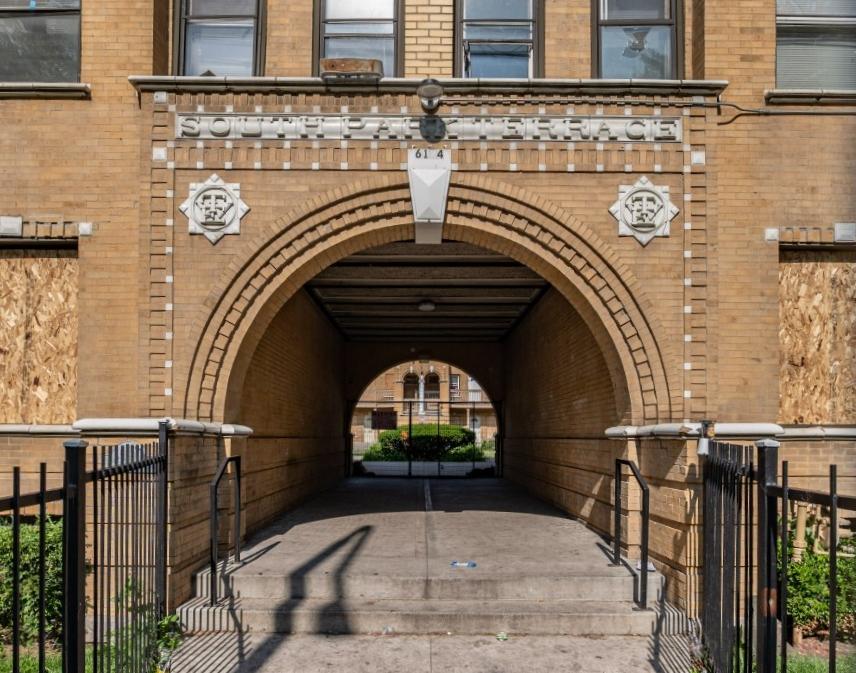 South Park Terrace Apartments, a 2026 Chicago 7 Most Endangered. South Park Terrace Apartments, 1905, Harry Hale Waterman, 6116-6134 S. Dr. Martin Luther King Jr. Drive. (Lee Bey)
As population growth continued into the late 19th century and early 20th century, architects and builders moved from a focus on single-family homes to developing higher density housing. South Park Terrace Apartments was constructed in 1905 and designed by architect Harry Hale Waterman, a Frank Lloyd Wright associate.
The South Park Terrace Apartments is a two-story brick courtyard apartment building with 52 apartments.
The South Park Terrace’s condition has deteriorated, according to Preservation Chicago. Last March, a portion of the building caught fire, leaving visible burn marks on the blonde facade’s brickwork around boarded-up windows on the building’s second floor.
Preservation Chicago recommends the city of Chicago take steps toward preserving the building, and involving a partner agency like the Chicago Housing Authority or the Cook County Land Bank Authority to acquire, repair and restore the property as needed.
Yukon Building
400 S. Clark St., Loop
Built: 1898
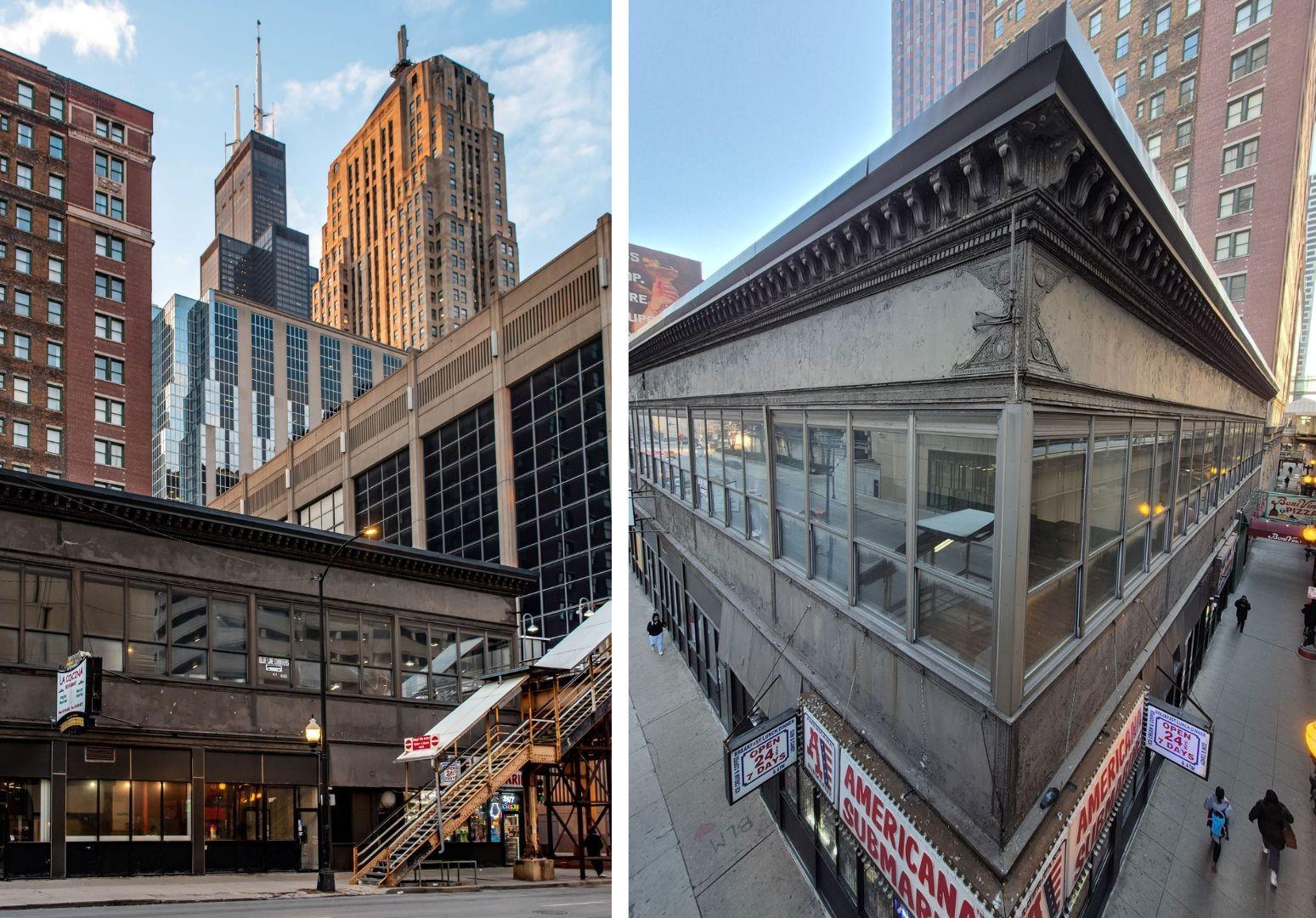 Yukon Building, a 2026 Chicago 7 Most Endangered. Yukon Building / Bock Building, 1898, Holabird & Roche, 400 S. Clark St. / 105-111 W. Van Buren St. (Left: Chris Cullen. Right: Ward Miller / Preservation Chicago)
Originally conceived as an eight-story or a twelve-story building, the two-story Yukon Building was designed by Chicago architectural firm Holabird and Roche in 1898. The simplicity of the building’s design and integration of continuous glass storefronts made it truly modern for its era.
The Yukon Building is a survivor of the city’s “Old Chinatown,” predating the movement of the Chinese community and businesses further south in the 1920s, according to Preservation Chicago.
The nonprofit is concerned that recent large vacancies, including several storefronts and a sales listing may signal an uncertain future for the historic structure.
St. Mark Roman Catholic Church Campus
2516 W. Cortez St., Humboldt Park
Built: 1963
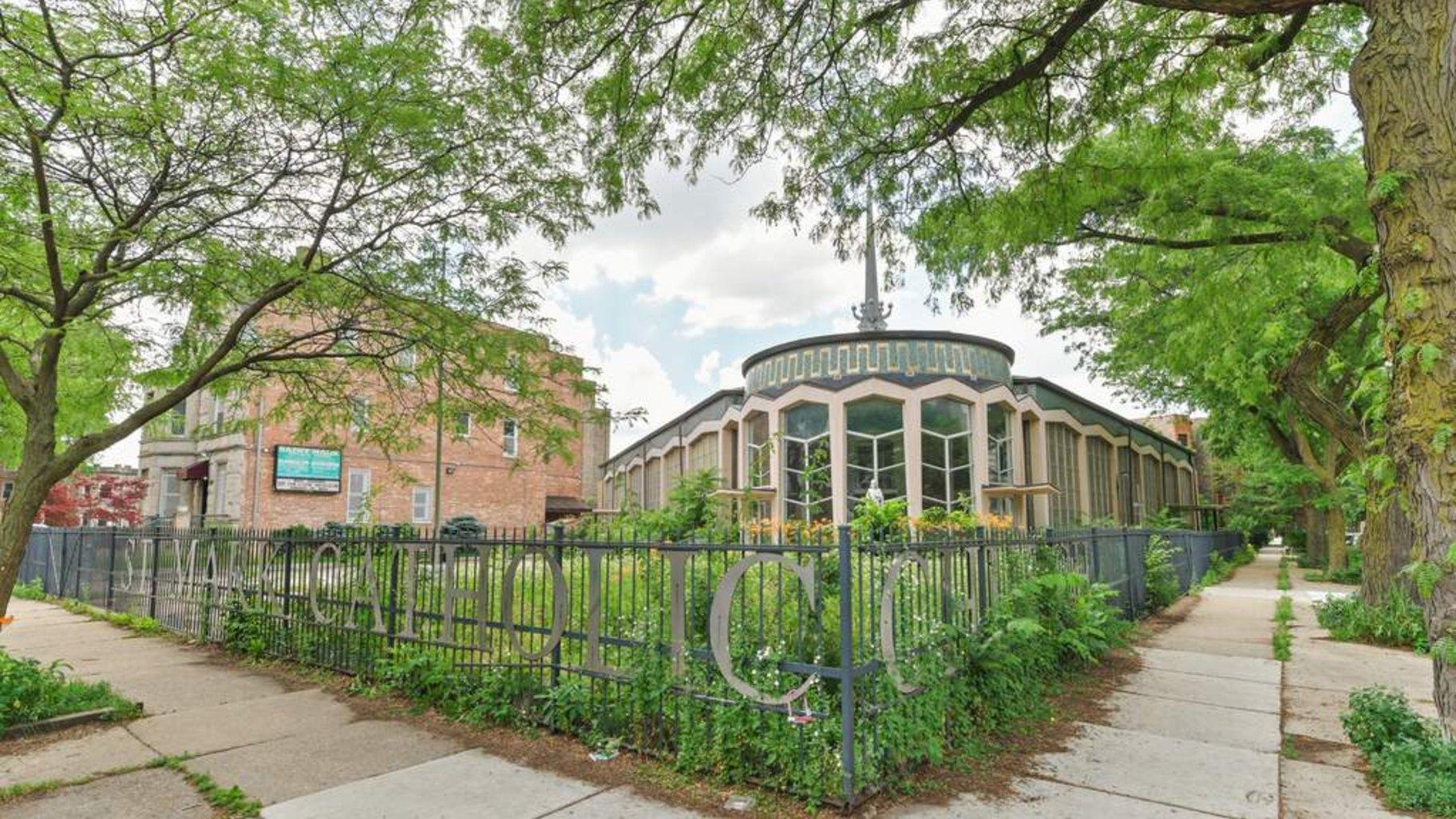 St. Mark Roman Catholic Church, a 2026 Chicago 7 Most Endangered. St. Mark Roman Catholic Church, 1963, Barry and Kay, 2516 W. Cortez St. (VHT Studio)
St. Mark Roman Catholic Church Campus has served the Catholic community in Humboldt Park since the parish was founded in the 1890s, first serving an Irish community, then a Polish community and now a Puerto Rican and Mexican community. The mid-century modern church was completed in 1963 by Chicago architects Barry & Kay.
The parish was consolidated by the Archdiocese of Chicago, and the church was closed and listed for sale. Ald. Gilbert Villegas (36th Ward) insisted that the school building, home to a charter school, be withdrawn from the sales listing, according to Preservation Chicago.
Preservation Chicago said it supports the creative reuse of the church building as a community center or a Chicago Public Library branch location. The organization also said St. Mark’s merits designation as another city landmark recognizing Puerto Rican heritage.
Note: This article was published March 4, 2026, and updated with video March 11, 2026.
Contact Eunice Alpasan: [email protected]