Health
Planned Parenthood of Illinois CEO on the Future of Reproductive Care Amid Federal Threats
Illinois health care providers are bracing for more patients after Planned Parenthood of Wisconsin paused abortions last week.
Local organizations like Planned Parenthood of Illinois have said they anticipate an uptick in out-of-state patients and are preparing to meet the increased demand.
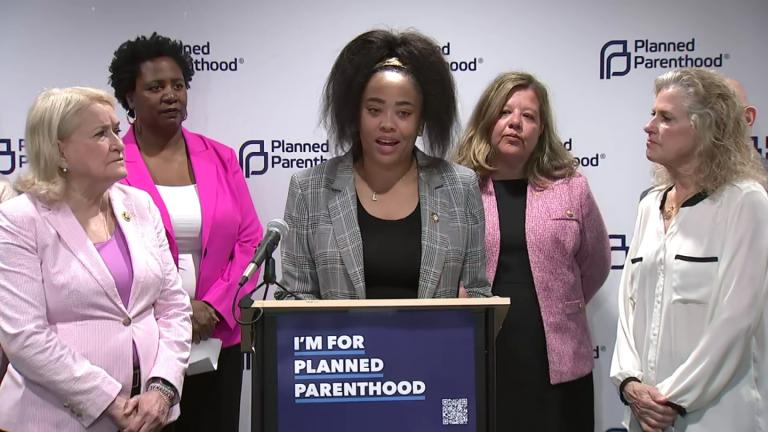
“This week alone, we’ve seen a doubling of the abortion cases that we usually receive from Wisconsin,” Planned Parenthood of Illinois CEO Adrienne White-Faines said.
White-Faines said the organization has been helping Wisconsin abortion patients with travel and food expenses as they head to Illinois to seek care.
This isn’t the first time Illinois has had to step up to fill the gap in abortion care. White-Faines said there’s been a higher demand for abortions in the state since the 2022 Dobbs U.S. Supreme Court decision that overturned Roe v. Wade abortion protections.
“Health care, overall, was already in a state of change,” White-Faines said. “As we move into 2025, under the new administration, many of the challenges in health care were exacerbated by changes in coverage, payment, eligibility, as well as research and levels of information.”
Planned Parenthood of Illinois is taking on more patients after a period of uncertainty in leadership. The nonprofit went without a permanent CEO for seven months and appointed White-Faines as president and CEO in July. Its previous CEO, Jennifer Welch, left the job in January.
Before her new role, White-Faines was on the board of Planned Parenthood of Chicago for eight years and comes from a long line of Planned Parenthood employees in her family.
The change also comes as local clinics face potential Medicaid cuts from President Donald Trump’s spending bill. The provision bans Medicaid reimbursements to abortion providers — a move that’s working its way through the courts after several legal challenges.
Last month, an appeals court allowed for the Trump administration to cut Medicaid reimbursements for abortion providers as part of the spending bill that passed in July.
A federal court just denied the Trump administration’s request for a stay of that case due to the government shutdown.
White-Faines said she’s not optimistic about what will come from the case and anticipates more federal threats to hit next year.
“Where it becomes challenging is when you take away or alter the insurance payment and payment structure so that we don’t have the financial resources to maintain that expansion,” White-Faines said.
More than 40% of Planned Parenthood of Illinois patients — nearly 30,000 people — rely on Medicaid to access services, according to the nonprofit.
While federal Medicaid dollars don’t pay for abortions, Illinois Medicaid patients get services covered through state laws and budgeting.
Despite the federal uncertainties, White-Faines said the organization is committed to providing care to everyone who needs it.
“The challenge is on us as providers to make sure that we are filling every gap financially to meet that need,” White-Faines said. “I’m not going to tell you that it’s easy, but we’re committed to do it.”