Politics
Will Chicago Cops Be Allowed to Turn Off Body-Worn Cameras While Being Questioned After Shootings? Judge to Decide
 (WTTW News)
A federal judge is set to decide whether Chicago police officers can turn off their body-worn cameras while being questioned by their supervisor immediately after they shoot a member of the public, court records show.
Illinois Attorney General Kwame Raoul’s office urged U.S. District Court Judge Rebecca Pallmeyer to order CPD officers to keep their cameras on “in the immediate aftermath of an officer-involved shooting or death” over the objections of CPD leaders and city lawyers.
Those cameras must record the interactions in order to comply with state law and the federal court order requiring CPD to change the way it trains, supervises and disciplines officers, according to the attorney general’s office.
State law requires “officers to record on body-worn camera all law enforcement-related encounters or activities, and the consent decree specifies that, once an officer’s camera has been activated during a law enforcement-related activity, it must” continue to record until the end of the incident, according to lawyers for the attorney general.
Everything that occurs after a police officer shoots a member of the public and before the scene of the shooting is declared “safe and secure” by the commanding officer must be recorded by a body-worn camera “to ensure transparency, accountability and public trust,” according to the filing signed by Raoul.
However, lawyers for CPD and the city told the judge that officers should be allowed to turn off their cameras during what the department refers to as a “Public Safety Briefing” and “Walkthrough” which are designed to assist the officer in charge of the fatal incident and “address any ongoing life-safety threats and secure the scene.”
“The challenge to these provisions rests on a flawed premise that any pause in BWC recording is inherently suspect,” according to a court filing from city lawyers that uses an abbreviation for body-worn cameras. “The record proves otherwise. The deactivation is brief, circumscribed and essential to fulfilling CPD’s fundamental and life-and-safety obligations without infringing required officer protections or compromising safety. The deactivation is also documented, reviewable and overseen.”
After months of negotiations between the Office of the Attorney General and CPD, it will be up to Pallmeyer to resolve the deadlock unless the two agencies reach a last-minute resolution.
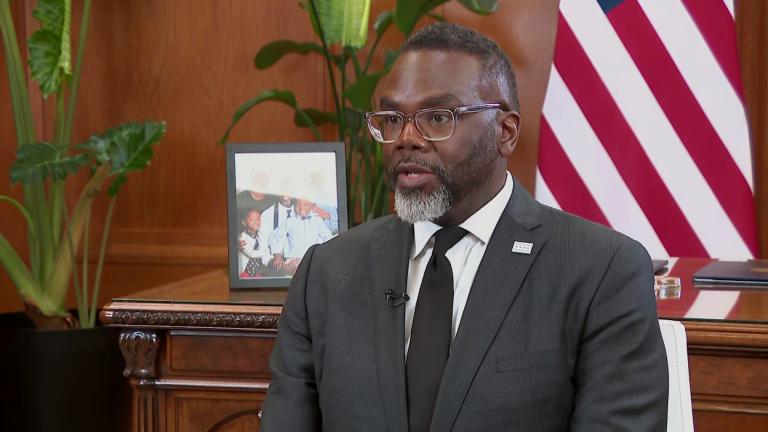
If the federal judge does resolve the issue, it will mark the first time she has been forced to intervene in a dispute between the department, led by Mayor Brandon Johnson’s hand-picked top cop, Supt. Larry Snelling, and Raoul, the state’s top law enforcement officer. Both Johnson and the attorney general are members of the Democratic Party.
In May 2024, Pallmeyer rejected nearly all of the demands made by the coalition of police reform groups, which sued the city in an effort to force them to agree to federal court oversight, to ban no-knock warrants or tighten restrictions on when — and how — officers can raid Chicagoans’ homes.
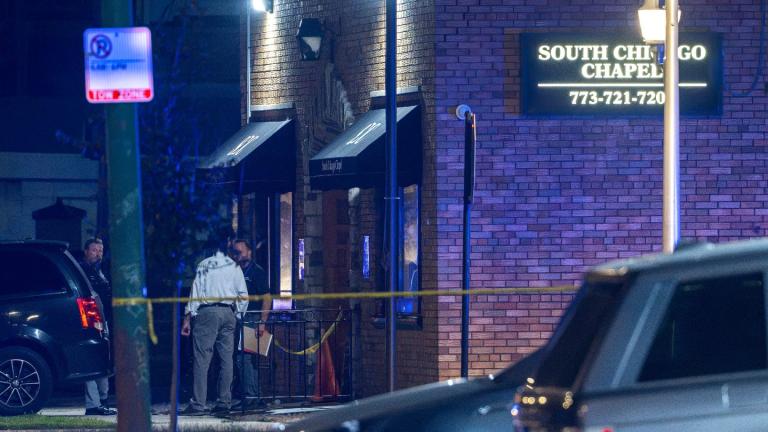
CPD officers have shot 16 people, killing eight, less than nine months into 2025, more than in all of last year, records show. In 2024, CPD officers shot 12 people, killing six, records show.
After a police officer shoots an individual, they must answer questions during a “public safety briefing (that) consists of a list of specific, prescribed questions, including questions about the existence and location of injured individuals; the number of rounds fired, in what direction, and by whom; the existence, description, and direction and method of travel of at large subjects; the existence and location of perishable evidence; and a catch-all question requesting any other information the supervisor may ‘need to know to ensure public safety, preserve perishable evidence, or secure the incident scene,” according to the attorney general’s office.
CPD policy orders both officers and the supervisor involved to deactivate their body-worn cameras before that briefing takes place. After it is complete, the supervisor takes custody of the officer’s body-worn camera and turns his camera back on, according to the attorney general.
CPD policy also requires a deputy chief to report to the scene and begin an investigation. As part of that investigation, the deputy chief can conduct a “walkthrough” with the officers involved in the shooting if they deem it necessary.
While officers cannot decline to participate in the walkthrough, nothing they say can be used against them during a criminal proceeding, according to CPD policy.
The Civilian Office of Police Accountability is charged with investigating every time a Chicago police officer shoots a member of the public. The deputy chief is required to brief the investigators who respond from COPA, but that interaction is not recorded by body-worn camera, in keeping with state law and the consent decree, because it is part of an investigation that could result in discipline for the officer, according to the attorney general’s office and lawyers for the city.
If the public safety briefing and the walkthrough are required to be recorded, the union representing Chicago police officers will likely argue those interactions are now part of the disciplinary proceedings, allowing officers to request a delay before answering any questions and request an attorney be present, according to lawyers for the city.
“That would cause critical delays, undermining the very purpose of the public safety briefing and the walkthrough,” according to lawyers for the city and CPD.
Shootings by police “demand immediate, unfiltered communication between the involved officer and the on-scene supervisor — communication that cannot wait for the formalities of a recorded investigative interview without jeopardizing lives and the preservation of evidence,” according to lawyers for the city and CPD.
There is no deadline for Pallmeyer to rule.
WTTW News coverage of policing and police reform is supported by The Joyce Foundation.
Contact Heather Cherone: @HeatherCherone | (773) 569-1863 | [email protected]