Arts & Entertainment
Uncommon Impressionism: The Worldly Artwork of Gustave Caillebotte at the Art Institute
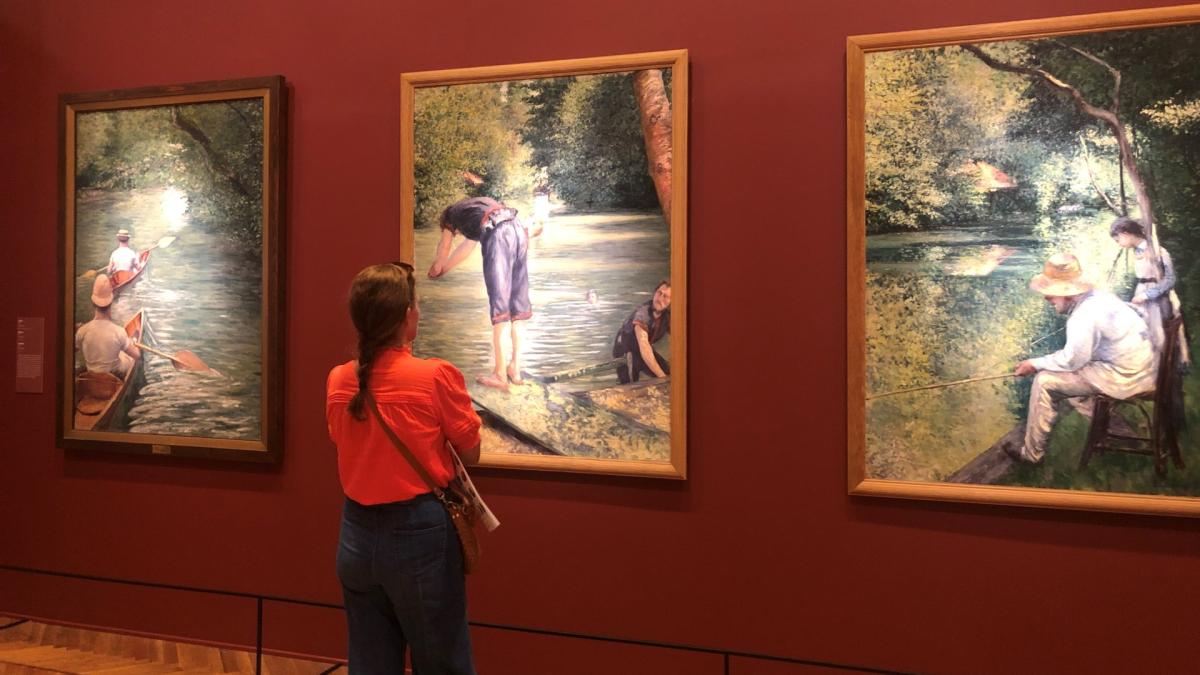 “Gustave Caillebotte: Painting His World” at the Art Institute of Chicago runs through October 5, 2025. (Marc Vitali / WTTW News)
The world of Gustave Caillebotte gets a rare moment in the sun this summer at the Art Institute of Chicago.
I recently caught up with the Caillebotte [ky-bot] exhibition after a previous attempt to visit was run over by NASCAR.
The artist’s large canvas “Paris Street; Rainy Day” is a true icon in the Art Institute collection, and it’s one of the centerpieces of a show titled “Gustave Caillebotte: Painting His World.” The exhibition features more than 120 works that capture people and places in and around 19th century Paris.
Curator Gloria Groom told WTTW News how Caillebotte is distinct from his often better-known peers in Impressionism.
“While Edgar Degas is known for his interest in figure painting and is even said to have been allergic to the outdoors,” Groom said, “Caillebotte was both a painter of interiors and landscapes, especially focusing on waterscapes and watersports that were integral to his fledgling years as an artist.”
Born into a wealthy family, Caillebotte’s financial independence affected his subject matter. He often chose to paint friends, families, sportsmen and the people he employed.
“He identified as a working artist, which you can see reflected in his paintings of manual labor. At the same time, he lived comfortably and identified with his class and family heritage, which influenced his choice of subjects,” Groom said. “This is different from his impressionist colleagues, who often hired models and focused on ballerinas, laundresses, coquettes, nocturnal entertainments and fashionable couples.”
And he generously patronized the art of Monet, Renoir and Degas.
“Not only did he have the necessary funds to paint on a large-scale, but also to help sustain his artist colleagues by purchasing their works and organizing Impressionist exhibitions,” Groom said.
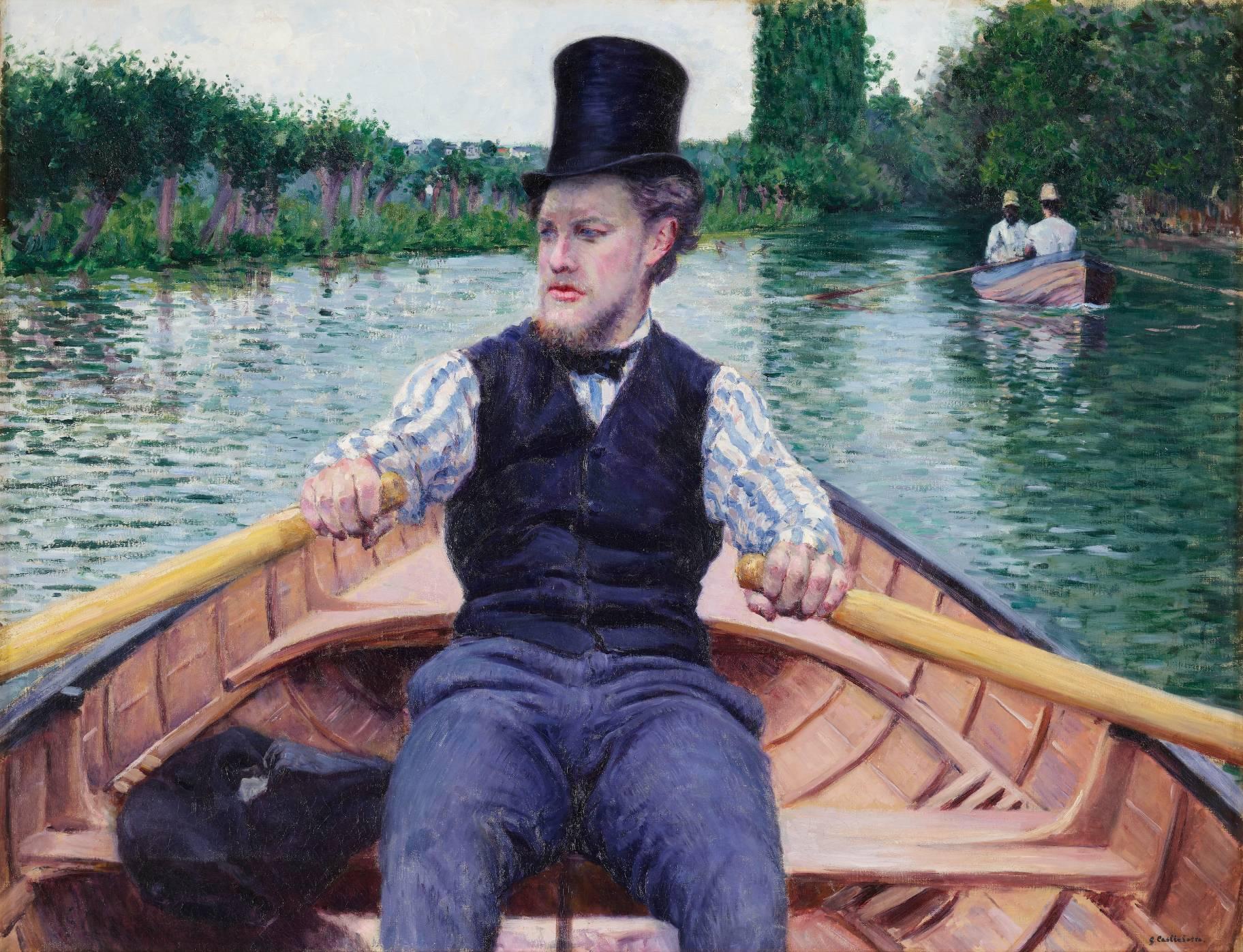 “Boating Party” by Gustave Caillebotte (Courtesy of Musée d’Osay)
Many of Caillebotte’s works, including “Paris Street; Rainy Day,” employ a bold perspective that feels very modern.
“Caillebotte’s interest in experimenting with perspective is apparent even in his early work,” Groom said. “In ‘Floor Scrapers,’ painted in 1875 and now one of his most well-known works, he positions himself and the viewer above the workers planning the floor of his studio. He uses the dramatic diagonals of the floor to draw the viewer into the scene.”
He carried this technique into his street scenes as well.
“Caillebotte was inspired by the long viewpoints created by the newly constructed boulevards of Paris,” Groom said. “This can be seen in his 1876 painting ‘The Pont de l’Europe,’ where he utilizes the unique geometry of the modern bridge’s X-shaped girders to create a bold diagonal vanishing point.”
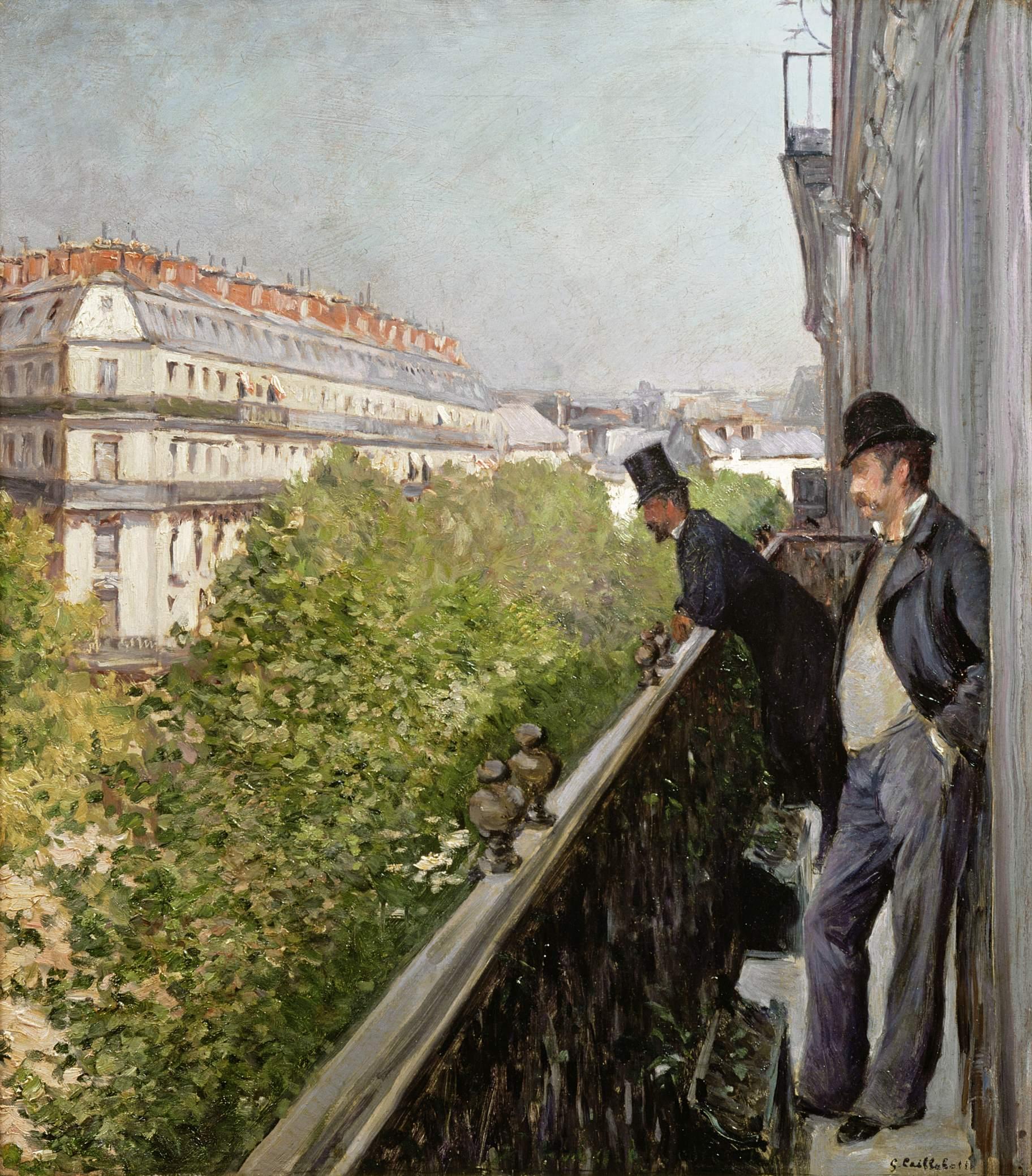 “Balcony” by Gustave Caillebotte.
Some works are incredibly realistic. Others have points-of-view that add an abstract quality to his compositions.
“As Caillebotte developed as an artist, he grew even more radical with his use of perspective, particularly in the 1880 works ‘A Traffic Island,’ ‘Boulevard Haussmann’ and ‘Boulevard Seen from Above.’ In these paintings, he is looking down at the streets from his apartment balcony and directly translating what he sees into paint, resulting in a level of abstraction that was unusual at the time,” Groom said.
The exhibition was jointly organized by the Art Institute, the J. Paul Getty Museum in Los Angeles, and the Musée d’Orsay in Paris.
It gave the curator a reason to revisit an artist who is not as well-known as his peers in the Impressionism.
“I was involved with the retrospective the Art Institute of Chicago organized with the Musée d’Orsay in 1995, so this show has special meaning to me,” Groom said. “We’ve even uncovered works that were simply not known or available 30 years ago. This exhibition has raised more questions about Caillebotte’s stylistic evolution, technique, and his personal life, which he is keen to express in the many large- and small-scale paintings in this exhibition.”
“Gustave Caillebotte: Painting His World” is at the Art Institute of Chicago through October 5, 2025.
Marc Vitali is the JCS Fund of the DuPage Foundation Arts Correspondent.