Science & Nature
After Nearly Vanishing, the Beach Is Back at Illinois Beach State Park. That’s Big News for Local Ecosystems and Economies
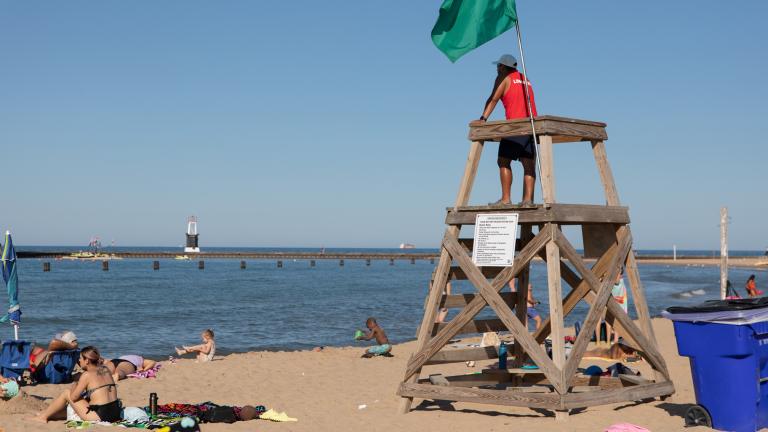
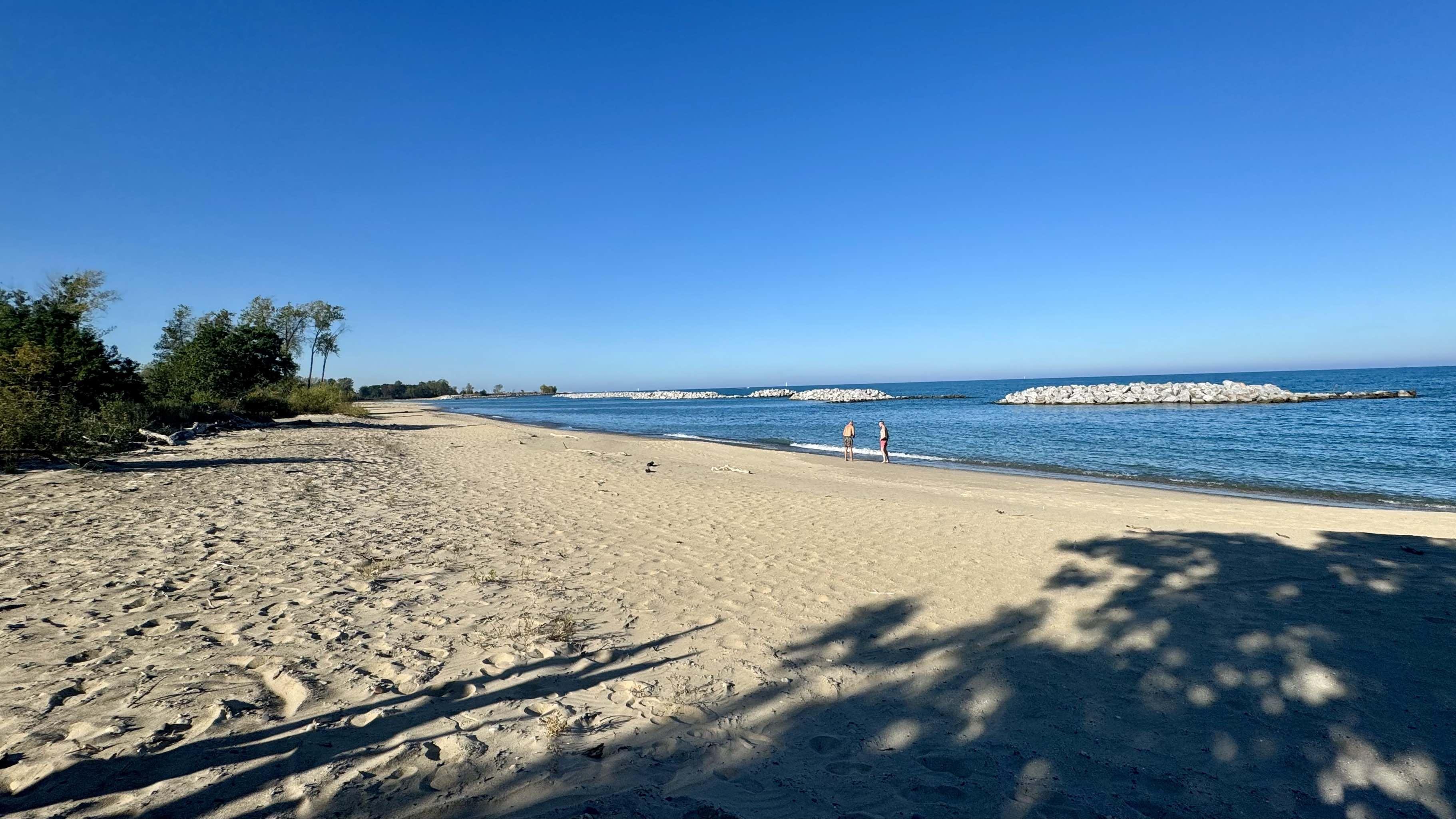 The newly “nourished” shoreline at Illinois Beach State Park, with breakwaters in the distance designed to protect against erosion of this valuable ecosystem. (Patty Wetli / WTTW News)
Two years ago, a first-time visitor to Illinois Beach State Park may have questioned the park’s name.
Where’s the beach?
Erosion, fueled by increasingly stronger storms, had eaten away the shoreline, consuming up to 100 feet per year in some areas. Roads, bikes and even buildings were swallowed up by the lake.
“Sheet piles had to be installed at the edge of the (park’s) parking lot to keep (it) from becoming part of the lake. It was about a six-foot drop off to the beach there,” said John Hucker, mayor of the village of Beach Park.
Equally alarming was the loss of habitat for the communities of rare and endangered plants and animals that had long thrived in this unique landscape — Illinois’ last remaining stretch of natural shoreline, which encompasses dunes, woodlands and wetlands, including an extremely rare type of wetland known as a panne (also called an interdunal wetland).
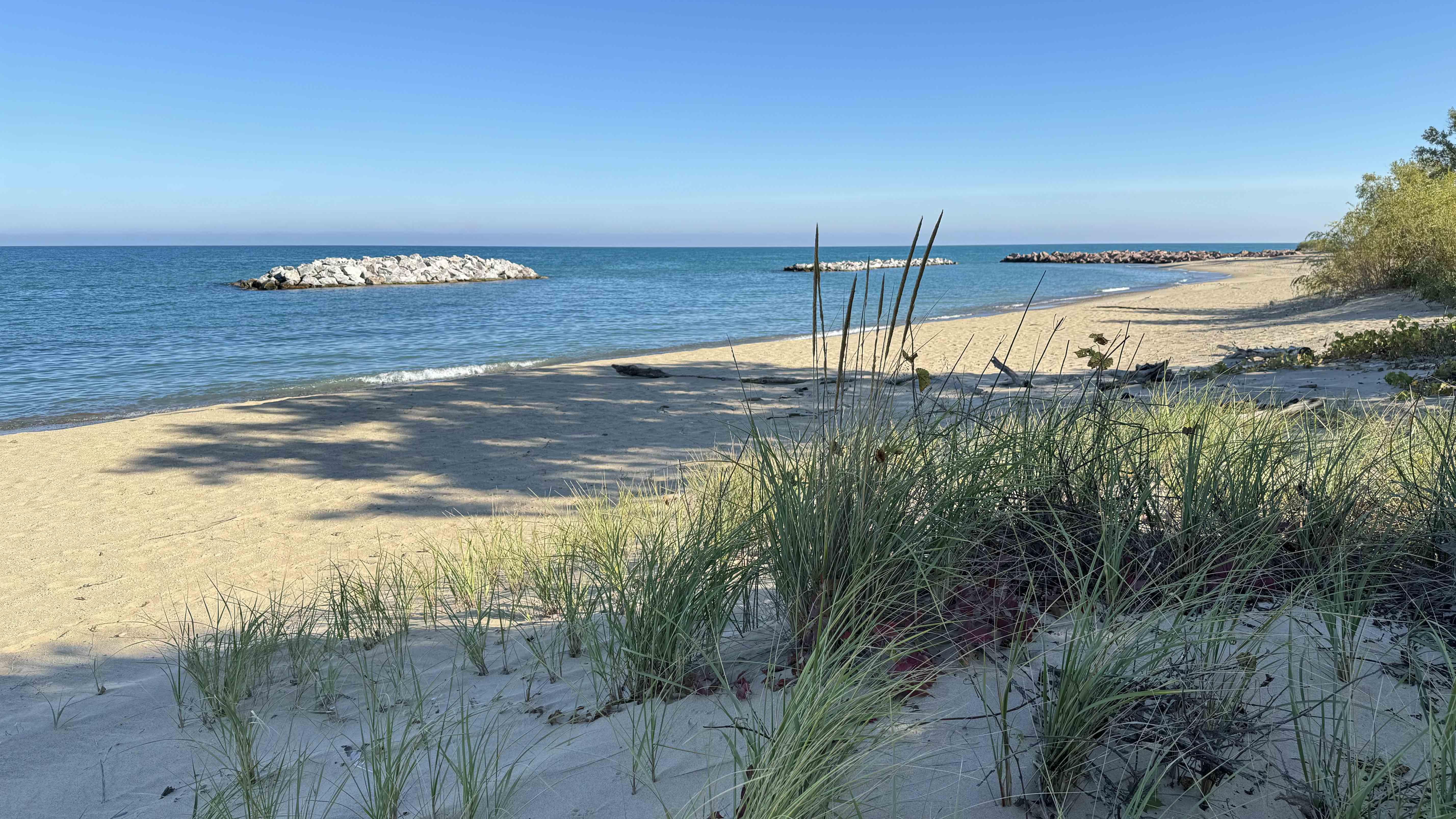 Without the breakwaters (seen in the distance), Illinois Beach State Park’s rare dune and swale habitat was bearing the brunt of erosion. (Patty Wetli / WTTW News)
Both the ecosystem and the region’s tourism economy were in danger of vanishing, as efforts to stem the effects of erosion failed.
“I have great memories of road trips here and camping as a kid, and really special memories of raising my kids here, playing on the beach in the waves, collecting seashells and rocks. It seems like just yesterday my daughter was out there in her swim diapers, almost 25 years ago,” said state Rep. Joyce Mason (D-Gurnee).
“Sadly as I watched my kids get bigger on these beaches, I watched the beaches rapidly getting smaller,” Mason said. “I’ve seen the expensive temporary fixes of dumping sand in the lake, only to see it wash away with a few big storms.”
In 2019, the state stepped in with a rescue plan, in the form of a $73 million shoreline stabilization project funded through the Rebuild Illinois program.
While much of Rebuild Illinois was focused on roads and bridges and airports, “rebuilding our natural infrastructure is just as vital to our economy and our future,” Gov. J.B. Pritzker said Monday at a news conference held at the park’s hotel to celebrate the completion of the shoreline project.
Speaking from a podium intentionally positioned in front of a wall of floor-to-ceiling windows in the hotel’s ballroom, the governor only had to turn his head to point to the project’s success.
Today, the beach is back. Thanks to 22 massive piles of rocks.
Twenty-two offshore breakwater structures, totaling more than 300,000 tons of stone, now protect miles of shoreline by reducing wave energy. Another 35,000 truckloads of sand — 430,000 cubic yards — was hauled in to replenish, or “nourish,” the park’s beaches.
If creating big piles of rocks and sand sounds like an obvious and low-tech solution, well, it was and it wasn’t.
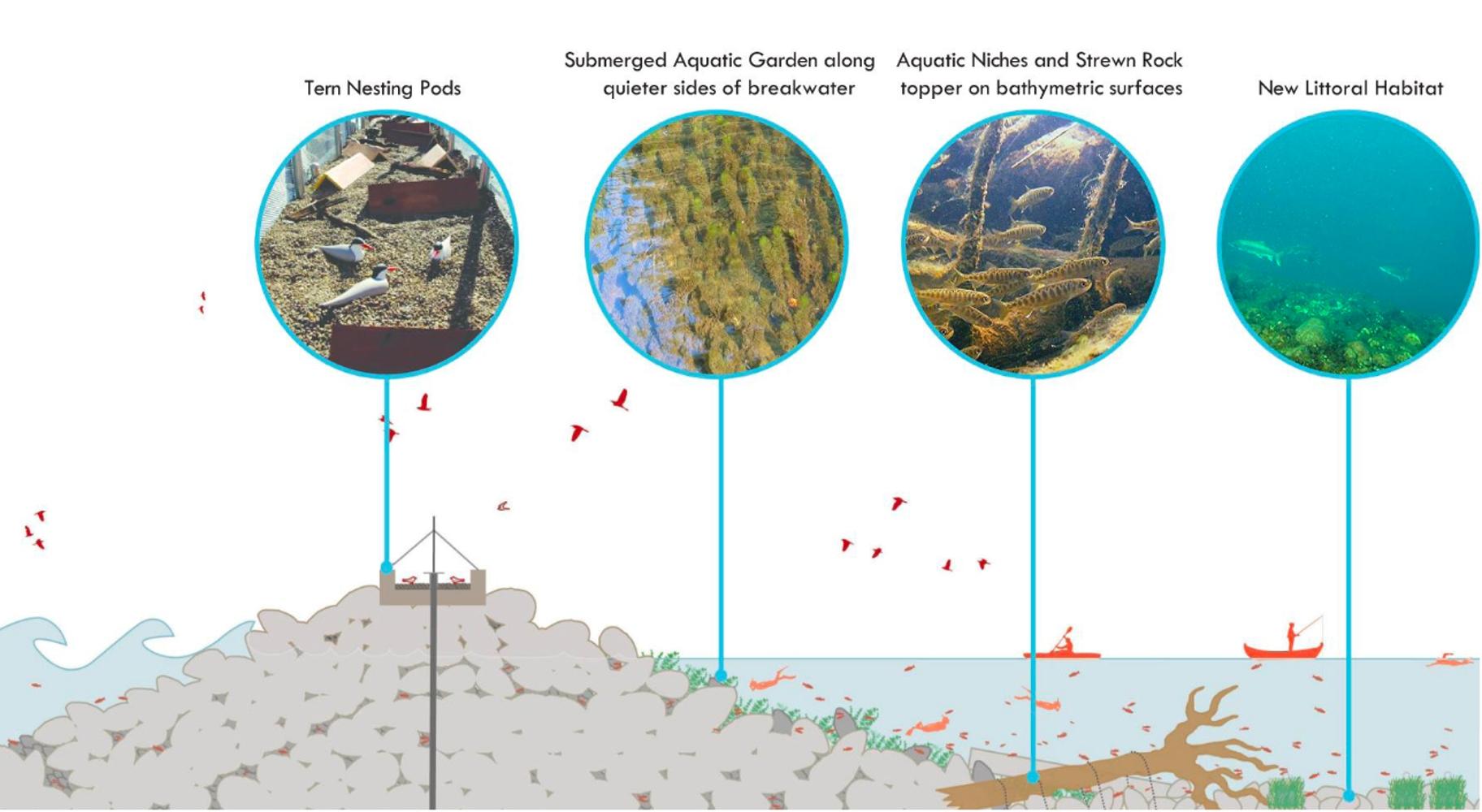 The new breakwater structures at Illinois Beach State Park will create new habitats for native species including tern nests and aquatic gardens. (Courtesy of the Waterfront Alliance’s WEDG Verified Project Case Study)
What people can see above the surface is just the tip of a breakwater’s composition — the aptly named “armor” rock. Below deck there are additional layers of filter rock and bedding rock. Some breakwaters also incorporate above-water nests for terns, as well as sunken vegetation and other habitat features designed to benefit aquatic wildlife.
“It will allow for small fish to be protected from predators,” said Laura Verden, regional landscape architect for the Illinois Department of Natural Resources.
The hope, Verden said, is to attract species including yellow perch and the state-threatened mudpuppy by giving them a place to hang out and reproduce in relative safety.
“We have seen some of these species, or we have known that the species existed in the lake,” Verden said. “The yellow perch, we’ve not necessarily seen it since we’ve had erosion, but we know that it’s in the lake.”
On land, the breakwaters will slow erosion and help shoreline habitat recover, particularly the dune communities and panne wetlands (which have been recognized as internationally significant).
“Those are the (habitats), as the erosion occurred, that it really messed with,” Verden said. “We anticipate that we’re going to see that ‘dune-y’ look returning. If you were ever here as a child, and you remember those dunes, we’re hoping that ... it will return to the look it had.”
The good news is that the type of plant community specific to Illinois Beach can quickly revive, she said.
“You can already see here where some of the disturbance occurred ... you can see what’s happening with the vegetation,” Verden said. “It’s already starting to reestablish in the sand.”
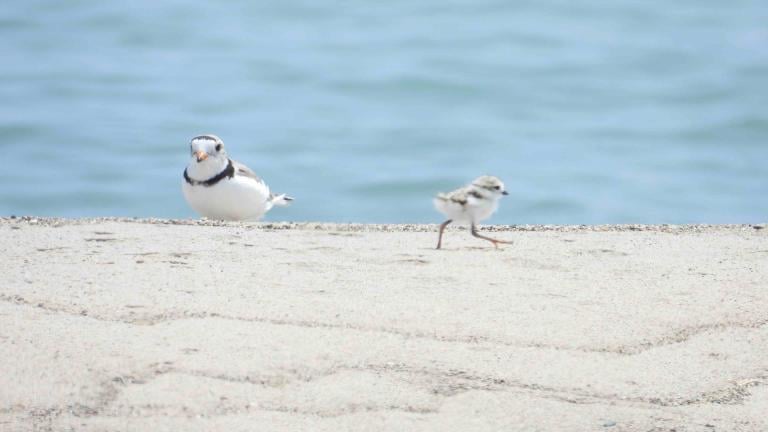
Wider beaches populated with native dune plants is good news for fans of the Great Lakes piping plover. It’s just the sort of habitat these endangered shorebirds are in need of, and more of them might now be encouraged to nest at Illinois Beach, following 2024’s successful breeding season of one mated pair and three fledged chicks.
The Illinois State Geological Survey and the Illinois Natural History Survey have research stations at the park and will be keeping an eye on how well plants and wildlife respond to the shoreline recovery, Verden said.
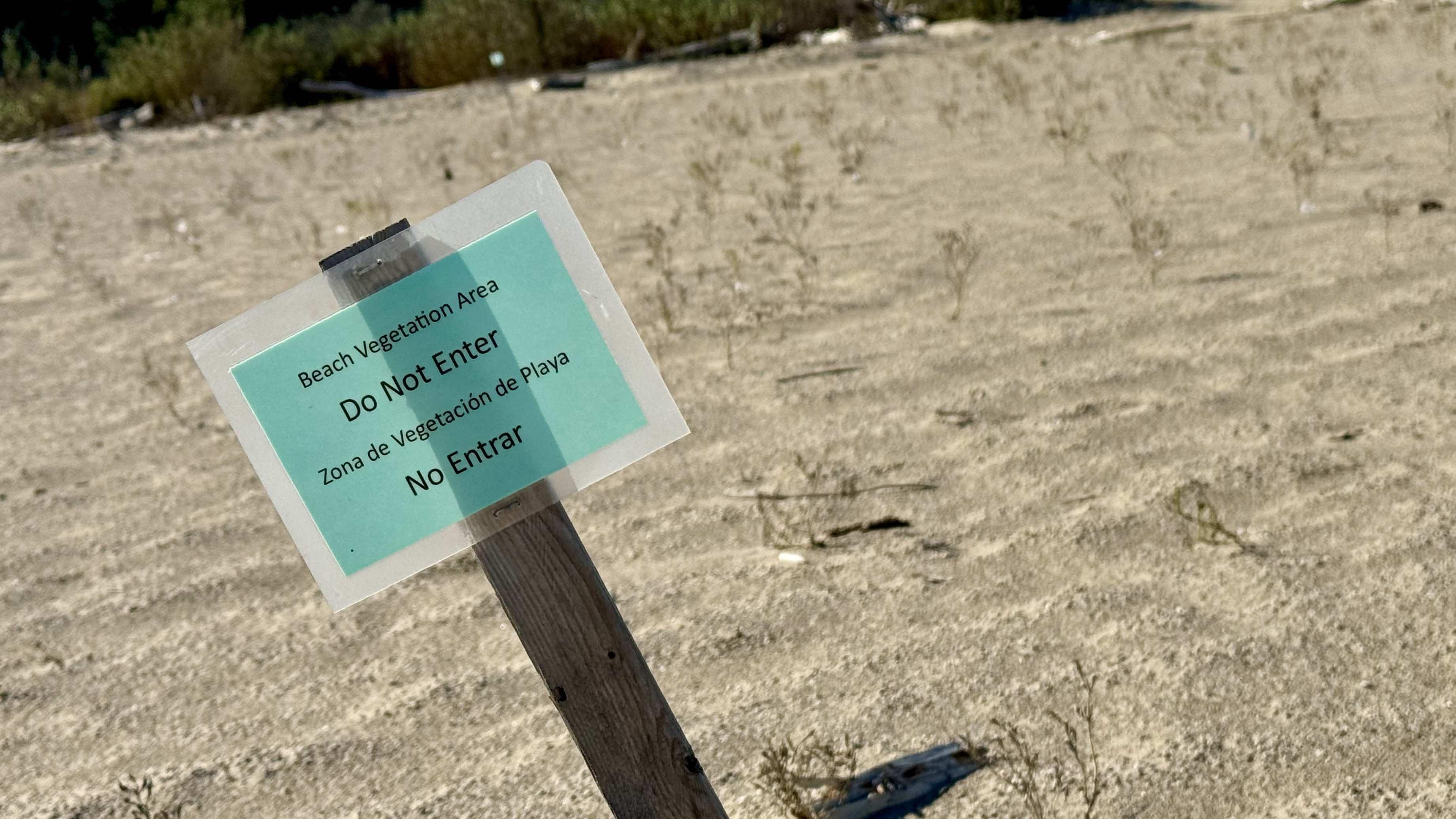 Plant communities are already being reestablished on the beach. (Patty Wetli / WTTW News)
Verden emphasized that the breakwaters won’t stop storms — “The storms are natural,” she said — but they’ll lessen the blow.
Though it’s not really detectable from eye level, the breakwaters have been oriented in the direction the most punishing storms come from, which is the northeast, according to 150 years of historical data, she said.
“These breakwaters were always aligned at an angle to our shore in order to intercept the northeast storm waves,” Verden said, and IDNR will be monitoring them to see if they shift.
While they may look a jumble, the breakwaters are carefully designed, she said, consisting of extremely durable granite — quarried in Wisconsin — a rock that’s shown it can take a pounding from the roughest waves.
“It also can take ice pushing up over it,” which had to be factored in as well, Verden said.
It’s actually the rock, which is quite expensive, and the sand that racked up the project’s total cost, she said.
But if the breakwaters prove to be the permanent solution to Illinois Beach’s erosion problem, it will be money well spent, officials said.
“This has been a godsend to have this beach back, to have this area vibrant again,” Hucker said. “Between that and the obvious preservation of the dunes, the flora and fauna of the area, I think we’ve got a treasure here that will continue to be a treasure.”
For Mason, saving Illinois Beach has been personal.
A few weeks ago, she said, her daughter — the toddler who collected shells and jumped in the waves — took her engagement photos at the beach.
“Families like mine will continue to make great memories on the beach and think big thoughts and ponder the world,” Mason said.
Contact Patty Wetli: @pattywetli | (773) 509-5623 | [email protected]