



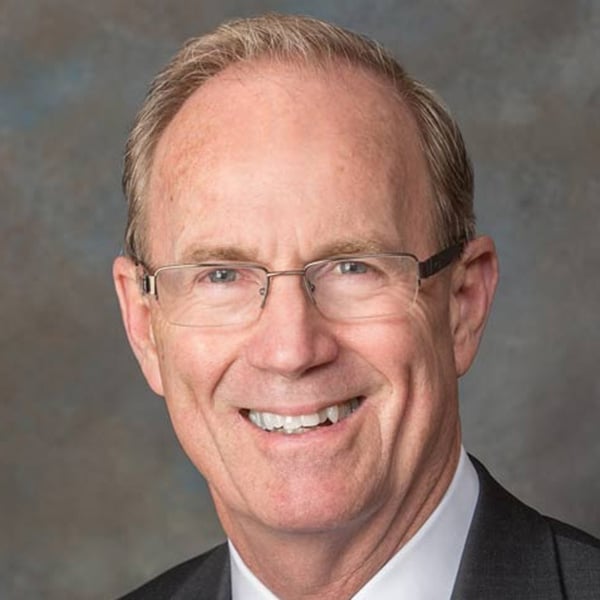
Candidate Q&A
Why are you running?
I’m running for the U.S. Senate because I believe everyday Illinoisans deserve strength, leadership, and common sense, qualities that at times seem missing in Washington.
I stepped up because I’ve seen what career politicians with extreme progressive agendas are doing to our country and our state. While families struggle to afford groceries, gas, utilities, housing, and health care, politicians are favoring special interests, chasing extreme ideological causes, and putting politics ahead of people. That’s not leadership. And Illinois families are paying the price.
I’ve spent my life working for a living, not building a political career. I started working in my family’s business at age 10, ran a small business, made payroll, raised a family, and spent decades fighting for working families and small businesses as an attorney. I understand what it means when costs go up and paychecks don’t.
The American Dream shouldn’t feel out of reach, but for too many Illinois families, it does. My top priority in the U.S. Senate will be lowering the cost of living and championing common sense solutions that make life more affordable and communities safer.
I’m running to represent all Illinoisans and to be a voice for everyday people who want leaders focused on results, not rhetoric.
What do you think is the most pressing issue facing your constituents and how do you plan on addressing it?
The most pressing issue facing Illinois families today is the cost of living. Across every region of our state, people are working harder than ever but falling further behind. Utility bills are at record highs, housing is unaffordable for many young people, groceries cost too much, and health care expenses continue to rise. For many families, the American Dream feels out of reach.
I stepped up to run for the U.S. Senate because career politicians with extreme agendas have made life more expensive by supporting special interest agendas instead of delivering solutions. Working families need strength, leadership, and common sense, not policies that raise taxes, increase energy costs, and reward inefficiency and waste.
My priority in the Senate will be lowering the cost of living for working families. That means pursuing a reasonable energy policy that lowers utility and gas prices, reducing health care costs through transparency and competition, cutting wasteful government spending that fuels inflation, and supporting small businesses, manufacturers, and farmers so they can grow and create good-paying jobs. It also means demanding accountability and efficiency in government so taxpayer dollars are used wisely.
I’ve spent my career working with families and small businesses, and I understand the real-world impact of rising costs. I will work for everyday Illinoisans, not special interests, so every family can pursue their version of the American Dream.
What do you think federal immigration reform should look like?
Federal immigration reform must start with enforcing the law and keeping the border secure. Under the Biden administration, the border was effectively opened, incentivizing illegal crossings and allowing more than 10 million people to enter the country without proper vetting. That failure is unfair to legal immigrants, dangerous for our communities, and costly for working families who are already struggling with higher prices and fewer resources.
A serious reform plan must maintain operational control of the border, end policies that reward illegal entry, and ensure immigration laws are enforced consistently and humanely. That includes stopping taxpayer-funded benefits for non-citizens and prioritizing public safety.
At the same time, America is a nation of immigrants, and I support a lawful, structured path to legal residency for people who follow the rules, work hard, pay taxes, and contribute to our communities.
I believe immigration policy should be grounded in realism, fairness, and accountability, and the best interests of the nation, not political agendas or extreme ideologies. Illinois families deserve a system that is orderly, secure, and humane, and as U.S. Senator, I will fight for reforms that reflect common sense.
How should the Senate address the rising costs of health care?
Rising health care costs are squeezing working families across Illinois, forcing too many people to choose between paying medical bills, buying groceries, or keeping the lights on. The Senate must address this problem with common sense, rather than the same top-down, government-centric approaches that have driven costs even higher.
Affordability starts with empowering patients, not politicians. We should increase price transparency so families know what care actually costs before they receive it. We also have to expand competition across state lines, reduce unnecessary regulations that drive up premiums, and promote innovative care models that reward outcomes instead of bureaucracy. Like in any other sector of the economy, when competition increases, costs come down.
We also have to be honest about what’s driving costs higher. Taxpayer-funded health care for non-citizens, unchecked fraud and waste, and one-size-fits-all mandates all strain the system and push prices higher for everyday Illinoisans. Those are political choices made by career politicians, and working families are forced to pay the price.
I will work for common sense solutions that lower health care costs while protecting access and quality. Illinois families don’t need extreme agendas. They need leaders who understand real-world pressures and will put patients, families, and affordability first.
What approach would you take on tax policy?
Tax policy should be guided by one simple principle: make life more affordable for working families and small businesses, not more expensive.
If we are to make the American Dream attainable, we have to start with a tax policy that rewards work.
I support a pro-worker tax approach that lets people keep more of what they earn while encouraging investment, job creation, and domestic manufacturing. That means opposing tax increases that hit working families through higher prices, higher utility bills, and higher housing costs. It also means simplifying the tax code, closing loopholes that benefit special interests, and ensuring the system is fair to families, farmers, and small businesses across all 102 counties of Illinois.
Lower taxes alone aren’t enough. We must also rein in reckless government spending. Inflation is a hidden tax that hurts seniors, families, and those living paycheck to paycheck. I will fight to reduce waste, fraud, and inefficiency so we can ease inflationary pressure and protect taxpayers.
I’ve run a small business, made payroll, and raised a family. I understand the real-world impact of tax policy, and I will work every day to make sure Washington works for everyday Illinoisans, not political insiders.
Should any changes be made to the size of the Supreme Court or the confirmation process?
I oppose court packing and efforts to manipulate the Supreme Court’s size or rules for short-term political advantage. Changing the rules because you’re losing the game is cynical partisan gamesmanship, and it undermines confidence in one of the most important institutions in our country.
The Supreme Court’s legitimacy depends on stability, independence, and respect for the Constitution, not on which party happens to be frustrated with recent decisions. Preserving institutional integrity is essential to preserving our republic. The judiciary is not supposed to function as a political weapon. It exists to interpret the law as written, not to deliver policy wins to political parties.
Do you believe the structure of the Senate leads to legislative gridlock? What would you change?
The structure of the U.S. Senate is not the primary cause of legislative gridlock. The Senate was intentionally designed to slow things down, encourage debate, and force compromise so that major decisions reflect the will of the people, not the demands of the loudest activists or political elites.
Gridlock today is driven far more by career politicians who are more committed to advancing extreme ideological agendas, serving activist groups, or generating social media likes than solving real problems for the people who sent them to Washington. When politicians treat government as a political weapon rather than a place to do the people’s work, nothing moves forward except the cost-of-living and public frustration.
The solution isn’t tearing down Congress, but restoring accountability and common sense within it. We don’t need to weaken the Senate, we need senators who show up ready to work, negotiate in good faith, and focus on results.
If elected, I will prioritize problem-solving over posturing. That means advancing practical policies to lower the cost-of-living, strengthen public safety, and support working families—while resisting the extreme agendas that divide us and keep Washington stuck. Illinois families deserve leadership, not excuses.
What is the most pressing foreign policy issue facing the country and what role should the Senate play in dealing with it?
The most pressing foreign policy challenge facing our country is the erosion of American strength and credibility abroad, especially in the face of rising threats from adversaries like China, Iran, and Russia.
For too long, career politicians have pursued incoherent foreign policies that weaken our national security while driving up costs for working families here at home. Dependence on hostile foreign supply chains, energy insecurity, and reckless spending abroad all contribute to higher prices for gas, groceries, and everyday necessities. When America projects weakness, Illinois families pay the price.
The U.S. Senate plays a critical role in restoring strength, accountability, and common sense to our foreign policy. Senators must exercise real oversight of foreign aid, demand clear objectives and accountability, and ensure taxpayer dollars are advancing American interests, not funding endless conflicts or enriching corrupt regimes. We must rebuild our domestic manufacturing base, protect critical supply chains, and confront China’s economic and geopolitical aggression with clarity and resolve.
Strong foreign policy starts with strong leadership: leaders who put America first, support our military families, and understand that national security and economic security are inseparable.
How do you view AI and the role the government should play in its regulation?
Artificial intelligence has the potential to be a powerful tool for economic growth, innovation, and lowering costs for working families, but only if it’s approached with common sense. I do not believe Washington should rush to impose sweeping, top-down regulations driven by fear, ideology, or pressure from extreme activist groups. That kind of approach would stifle innovation, drive jobs overseas, and put small businesses and manufacturers at a disadvantage.
Government does have a role to play, but it should be a limited and practical one: protecting Americans from clear harms, safeguarding personal data, ensuring transparency where AI is used by the government itself, and holding bad actors accountable. What we should not do is create massive new bureaucracies or regulatory schemes that only large corporations can afford to navigate while small businesses and entrepreneurs are left behind.
Used responsibly, AI can help improve efficiency, reduce costs, strengthen manufacturing, support farmers, and make health care and energy systems more affordable, exactly the kinds of outcomes Illinois working families need right now.
As someone who has spent decades working with small businesses and employers, I understand how overregulation drives up costs and slows growth. I will champion a balanced, commonsense approach to AI that encourages innovation, protects individual liberty, strengthens American competitiveness, and helps lower the cost of living for everyday Illinoisans.
How will your approach differ from or mirror that of U.S. Sen. Dick Durbin?
The U.S. Senate seat I am running for is open because Springfield resident Dick Durbin is retiring. When he retires, all statewide elected officials in Illinois will reside in Chicago or Cook County. All of my likely Democrat opponents reside in Cook County, as well. That means the other 101 counties in Illinois will not have representation.
That’s one reason why voters should elect me to the U.S. Senate. I will represent all of Illinois, not just Chicago.
I have deep ties to all of Illinois. I was born in Urbana in Eastern Illinois, raised in Mt. Sterling in Western Illinois, and I raised my own family in Springfield in Central Illinois. I have helped lead statewide civic organizations. I have represented families, farmers, and small businesses throughout Illinois.
This experience has shown me just how diverse our state is. My approach will be grounded in real-world experience, not political ideology. I’ve spent my career working with small businesses, farmers, and families who live with the consequences of Washington’s decisions. I will focus on common-sense solutions that lower the cost-of-living, strengthen public safety, and restore accountability in government.
How would you describe the current state of your party and what changes or new approaches would you like to see your party adopt?
The Republican Party is at an important crossroads. And that’s a good thing. Nationally, Republicans are growing stronger because we are refocusing on the real concerns of everyday Americans: affordability, public safety, secure borders, and an economy that rewards work and innovation. That shift is long overdue, and it’s moving the needle in ways that challenge the political status quo.
Here in Illinois, Republicans have an opportunity to build on that progress. Our state presents unique challenges, and success requires a disciplined, solutions-focused approach that meets voters where they are. Illinois families are facing sky-high taxes, rising utility and housing costs, and growing concerns about public safety. The party’s future depends on speaking clearly and consistently to those realities, with practical solutions instead of political rhetoric.
The path forward is common sense: focus on lowering the cost of living, defend public safety, support small businesses, farmers, and manufacturers, and represent all 102 counties in Illinois. That means we have to offer clear, practical solutions that improve people’s lives.
Republicans are the party of working families again. If we stay focused on results instead of rhetoric, we can earn back trust and win in 2026.